
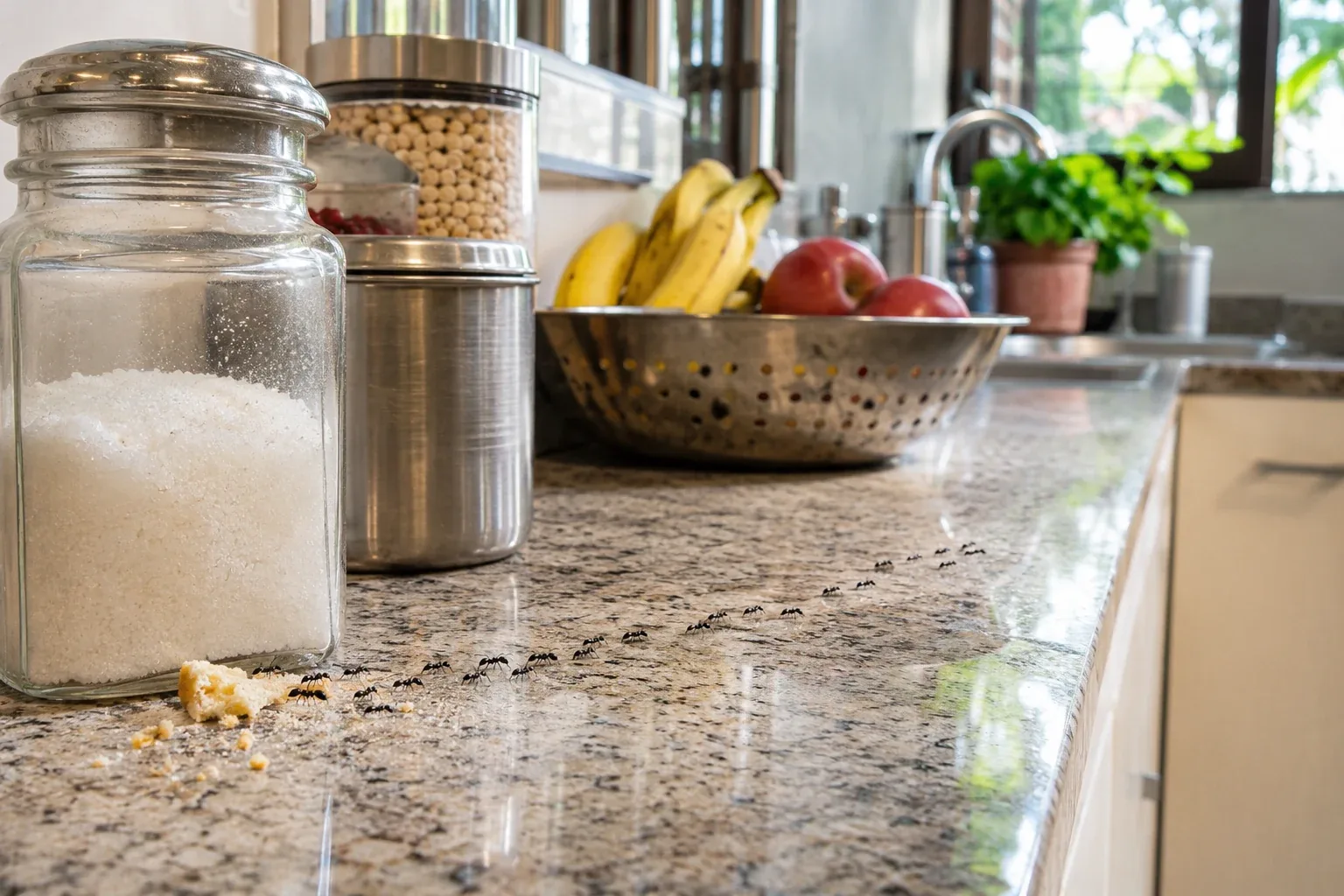
Have you noticed a line of ants moving across your kitchen countertop, gathering around the sugar jar or appearing near your food storage containers? Ant pest control becomes important when these tiny insects repeatedly enter your kitchen, contaminate food and establish trails throughout your home.
Ant infestations are common in Bangalore homes, apartments, restaurants and commercial kitchens. Even a clean kitchen can attract ants when food particles, moisture or small entry points are available. Understanding why ants enter your kitchen is the first step towards preventing an infestation and keeping your surroundings hygienic.
Why Are Ants Attracted to Your Kitchen?
Kitchens provide ants with three essential things: food, water and shelter. Ants are constantly searching for resources to support their colonies. Once a worker ant discovers a reliable food source, it can leave a chemical trail that helps other ants follow the same route.
This is why you may initially notice only a few ants, followed by a much larger trail within a short period. Simply removing the visible ants may not solve the underlying problem if the colony continues to access your kitchen.
7 Common Reasons Why Ants Invade Your Kitchen
1. Food Crumbs and Spills on Kitchen Surfaces
Even small food particles can attract ants. Crumbs around dining areas, spilled curry, leftover rice, fruit juice and food residue on countertops provide an easy food source.
Ants have a strong ability to locate food, and they can quickly discover areas where food particles are regularly left behind.
How to prevent it:
- Wipe kitchen countertops after preparing meals.
- Clean food spills immediately.
- Sweep or vacuum floors regularly.
- Pay attention to corners, cabinets and areas beneath kitchen appliances.
2. Improper Food Storage
Open containers of sugar, jaggery, honey, biscuits and other food items can attract ants. Thin plastic packaging and loosely closed containers may also provide easy access.
In many Bangalore households, ants are commonly noticed around grocery storage shelves and pantry cabinets, particularly when sweet food items are not properly sealed.
How to prevent it:
- Store sugar, flour, cereals and other groceries in airtight containers.
- Avoid leaving food packets open overnight.
- Clean pantry shelves regularly.
- Check grocery containers for ants before storing them.
3. Moisture and Water Leakage
Ants need water to survive, which makes damp areas particularly attractive. Leaking kitchen pipes, wet sink cabinets, dripping taps and water accumulation near appliances can encourage ant activity.
Moisture problems can become more noticeable during Bangalore's rainy periods, especially in kitchens with poor ventilation or plumbing issues.
How to prevent it:
- Repair leaking taps and pipes.
- Keep the area beneath the kitchen sink dry.
- Avoid leaving wet cleaning cloths on countertops.
- Improve ventilation in damp kitchen areas.
4. Small Cracks and Gaps Around the Kitchen
Ants can enter through surprisingly small openings. Cracks along walls, gaps around plumbing pipes, spaces beneath doors and openings near kitchen windows can become entry points.
Once ants discover a suitable route, they may repeatedly use the same pathway to access food and water inside your kitchen.
How to prevent it:
- Inspect walls, floors and kitchen corners for cracks.
- Seal gaps around plumbing and electrical openings appropriately.
- Install suitable door and window sealing strips.
- Check areas where kitchen cabinets meet walls.
5. Nearby Ant Colonies Around Your Property
Sometimes the source of an ant infestation is outside your kitchen. Ant colonies may develop in garden soil, wall cavities, pavement cracks, potted plants and damp areas around your property.
Worker ants can travel indoors in search of food and water. This is particularly relevant for ground-floor apartments, independent houses and commercial buildings with gardens or outdoor landscaping.
How to prevent it:
- Keep the area around your home free from food waste.
- Remove accumulated debris near walls and foundations.
- Check potted plants for ant activity.
- Address outdoor ant activity before it spreads indoors.
6. Uncleaned Kitchen Appliances and Hidden Corners
Ants do not always gather in visible areas. Food residue beneath refrigerators, microwave ovens, kitchen chimneys and other appliances can attract them.
These hidden spaces may remain undisturbed during routine cleaning, allowing ants to find food and establish regular movement routes.
How to prevent it:
- Clean beneath refrigerators and kitchen appliances.
- Remove food residue from microwave interiors.
- Clean cabinet corners and storage spaces.
- Inspect areas behind appliances for ant trails.
7. Changes in Weather and Seasonal Conditions
Weather conditions can influence ant activity. During heavy rainfall, ants may move away from flooded nesting areas in search of drier shelter and accessible food sources.
Similarly, warmer conditions can increase visible ant activity as colonies search for resources. This is one reason homeowners may notice ants entering kitchens during seasonal weather changes in Bangalore.
How to prevent it:
- Inspect kitchen entry points regularly.
- Keep food storage areas properly sealed.
- Address dampness and water accumulation.
- Monitor recurring ant trails around doors and windows.
Seeing ants repeatedly in your kitchen? Book a professional ant inspection and get a suitable treatment plan for your property.
Get a Free Quote Call NowHow to Get Rid of Ants in Your Kitchen
Getting rid of ants requires more than removing the insects you can see. Effective control involves identifying their entry points, reducing food sources and addressing the colony responsible for the infestation.
Clean and Remove Food Sources
Start by thoroughly cleaning the kitchen. Remove food crumbs, wipe down surfaces and wash containers that may have attracted ants. Pay particular attention to areas where you regularly notice ant trails.
Follow Ant Trails to Identify Entry Points
Observe where ants are entering your kitchen. They may be travelling along wall edges, cabinet joints, window frames or plumbing openings. Identifying these routes can help you locate potential entry points.
Seal Accessible Gaps and Cracks
Once you identify possible entry points, seal suitable cracks and gaps. This helps reduce opportunities for ants to enter your kitchen from outside or neighbouring spaces.
Use Pest Control Products Carefully
Different ant species may respond differently to pest control treatments. Avoid randomly applying household insecticides around food preparation areas. Always follow product instructions and keep children, pets and food items away from treated areas as directed.
Consider Professional Ant Pest Control
If ants continue appearing despite regular cleaning and preventive measures, professional treatment may be necessary. A pest control technician can inspect the property, identify ant activity and recommend an appropriate treatment based on the infestation.
Professional ant pest control focuses on understanding the source of the problem rather than simply treating the visible ants.
Why Professional Ant Pest Control Matters
Recurring ant infestations can be difficult to manage without identifying the colony and its movement patterns. Professional pest control helps address the infestation through a planned inspection and suitable treatment approach.
At Kiran Pest Control, we understand the importance of maintaining hygienic kitchens in residential and commercial properties. Our approach focuses on identifying infestation patterns, locating potential entry points and recommending appropriate pest management measures.
What Does a Professional Ant Inspection Involve?
- Identifying ant activity: Understanding where ants are gathering and the areas they frequently visit.
- Locating entry points: Checking cracks, gaps and other possible access routes.
- Assessing infestation conditions: Identifying food sources, moisture and environmental factors contributing to the problem.
- Recommending suitable treatment: Selecting an appropriate pest control method based on the ant activity and property conditions.
- Providing prevention guidance: Sharing practical recommendations to reduce the chances of recurring infestations.
For other household pest concerns, you can also explore our cockroach control services, rodent control services and termite control services.
Ant Prevention Tips for Bangalore Homes and Businesses
Whether you manage an apartment, independent house, restaurant, hotel or office, maintaining good sanitation practices can help reduce ant activity.
| Area | Recommended Prevention Practice |
|---|---|
| Kitchen countertops | Clean food spills and crumbs immediately. |
| Food storage | Use airtight containers for groceries and ingredients. |
| Kitchen sinks | Repair leaks and prevent water accumulation. |
| Cabinets | Inspect corners and clean hidden food residue. |
| Doors and windows | Check and seal suitable gaps and openings. |
| Outdoor areas | Remove food waste and monitor ant activity near the building. |
| Commercial kitchens | Maintain regular cleaning and food storage procedures. |
Restaurants and food businesses should pay particular attention to hygiene because ant activity around food preparation and storage areas can affect cleanliness and customer confidence.
Need professional ant pest control in Bangalore? Contact Kiran Pest Control for an inspection and a treatment recommendation suited to your property.
Get a Free Quote Call NowFrequently Asked Questions
1. Why do ants suddenly appear in my kitchen?
Ants may suddenly appear when they discover an accessible food or water source. Open food containers, sugar spills, moisture, nearby colonies and small entry points can attract them into your kitchen.
2. How can I prevent ants from returning to my kitchen?
Keep food in airtight containers, clean spills immediately, repair water leaks, maintain dry countertops and seal suitable entry points. If ant activity continues, consider professional ant pest control.
3. Are kitchen ants harmful to humans?
Some household ants can contaminate food and food preparation surfaces while moving between different areas. Certain species may also bite or sting. Maintaining kitchen hygiene and addressing infestations helps reduce these risks.
4. Why do ants keep coming back after spraying?
Spraying visible ants may not address the colony or its nesting location. Other ants may continue entering through the same pathways. Identifying the infestation source and selecting an appropriate treatment approach is important for effective control.
5. When should I call a professional ant pest control company?
Consider professional assistance when ant trails repeatedly appear, ants are found in multiple rooms, colonies are suspected inside walls or cabinets, or routine cleaning and preventive measures have not resolved the problem.
Conclusion
Ants invading your kitchen are often attracted by easily available food, moisture, shelter and accessible entry points. Understanding these reasons and following simple hygiene and prevention practices can help reduce ant activity in your home or business.
If you are experiencing recurring ant infestations, Kiran Pest Control (Kiran Enterprises) is here to help. Serving customers in Bangalore since 2006, we provide professional pest management solutions for residential and commercial properties. Contact us at +91 98452 73699 or reach us on WhatsApp to discuss your ant pest control requirements. Visit our homepage or explore more helpful articles on our pest control blog.
Need help with a pest problem?
Contact Kiran Pest Control to discuss the issue and arrange an inspection.
Contact our teamNeed Pest Control in Bangalore?
Get a same-day inspection from our certified technicians.
Contact Our Team Chat on WhatsAppOr call +91 98452 73699