
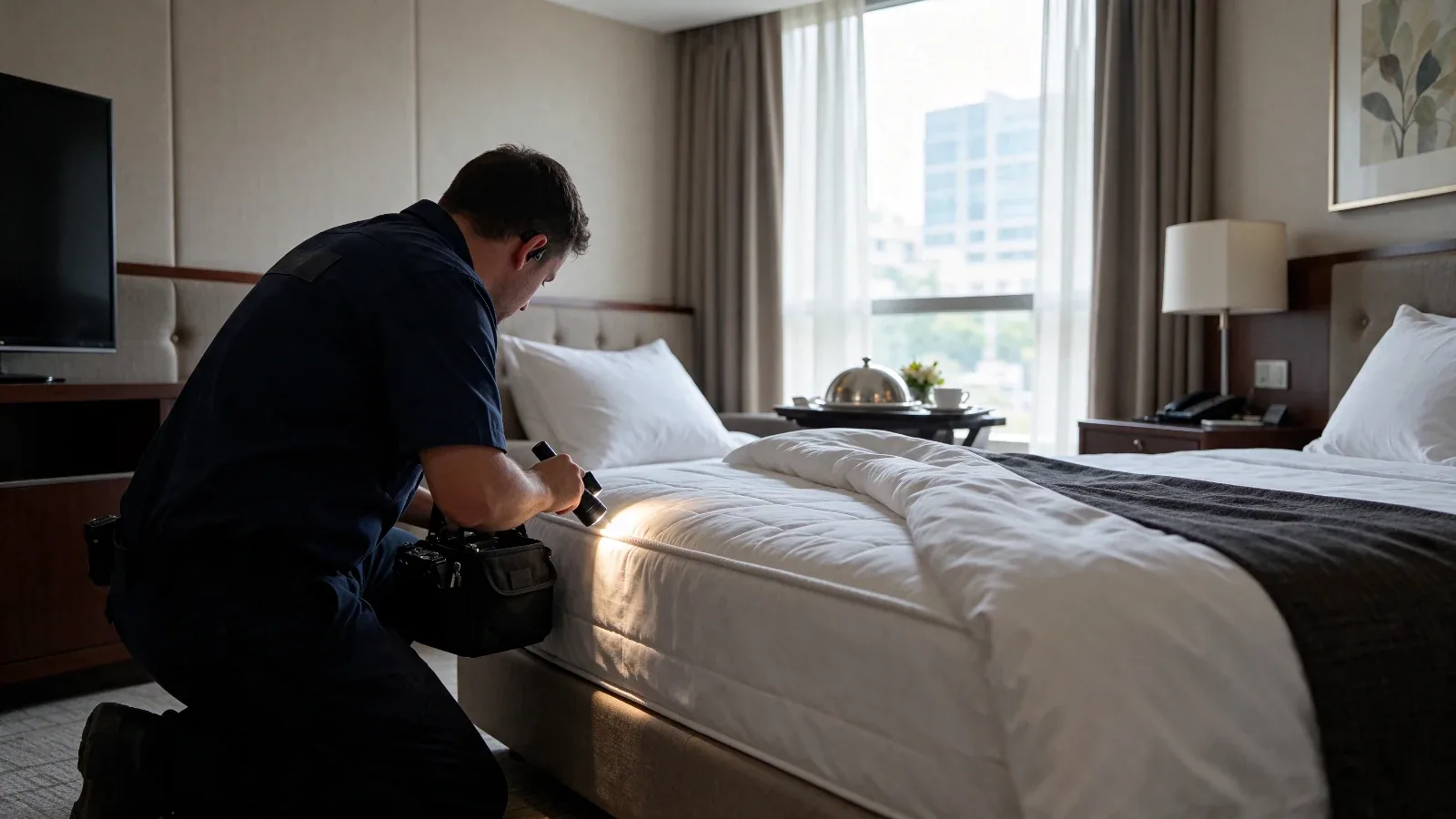
Bed Bug Inspection for Commercial Accommodation is an important part of maintaining comfortable, well-managed guest facilities in Bangalore. Hotels, hostels, guesthouses, serviced apartments, paying guest accommodations, and staff lodging facilities may encounter bed bugs through luggage, clothing, furniture, and other belongings brought into the property.
Bed bugs can remain concealed inside mattress seams, wooden bed frames, upholstered furniture, and narrow structural gaps, making early infestations difficult to identify. This guide from Kiran Pest Control explains the warning signs, professional inspection process, common hiding places, and practical prevention measures for commercial accommodation providers.
Why Bed Bug Inspection Matters for Commercial Accommodation
Commercial accommodation facilities experience regular movement of guests, staff, luggage, and furniture. These activities may introduce bed bugs even when housekeeping standards are maintained.
Protecting Guest Comfort
Bed bug bites may cause itching, skin irritation, sleep disturbance, and anxiety. Some guests develop visible skin reactions, while others may not notice any symptoms.
Prompt investigation of credible complaints helps accommodation managers address concerns professionally and maintain guest confidence.
Identifying Infestations Early
Bed bugs are skilled at hiding in narrow spaces close to sleeping areas. When infestations are small, live insects may be difficult to find during ordinary room cleaning.
Regular inspection and staff awareness can help identify suspicious evidence before bed bugs become more widely distributed throughout the property.
Reducing Operational Disruption
Confirmed infestations may require temporary restrictions on affected rooms or furniture while treatment is arranged. Delayed identification can complicate room allocation, housekeeping activities, and guest communication.
A documented inspection procedure helps managers respond consistently and coordinate appropriate pest control measures.
Maintaining Property Reputation
Guest complaints about bed bugs can affect confidence in an accommodation provider. A professional response involving inspection, accurate identification, and suitable treatment demonstrates responsible property management.
Bed bug activity does not necessarily indicate poor hygiene, but timely action remains important.
Common Signs of Bed Bugs in Guest Rooms
Bed bugs leave physical evidence around their hiding places. Housekeeping staff and facility managers should understand these signs so suspicious activity can be reported promptly.
Dark Spots on Mattresses
Small black or dark brown faecal spots may appear along mattress seams, piping, labels, and fabric folds. On absorbent surfaces, these deposits may resemble tiny ink stains.
Dark marks alone do not confirm bed bugs because other stains and household debris may look similar.
Live Bed Bugs
Adult bed bugs are flattened, oval-shaped insects with a reddish-brown appearance. Young bed bugs are generally smaller and lighter in colour.
Live insects may be found inside mattress seams, bed frame joints, headboard gaps, and other protected spaces.
Pale Shed Skins
Young bed bugs shed their outer coverings as they develop. These pale, translucent skins may collect inside wooden joints, mattress seams, and upholstered furniture gaps.
Shed skins indicate previous insect development but do not necessarily prove that an infestation remains active.
Small Whitish Eggs
Bed bug eggs are small, whitish, and oval-shaped. They may be attached to protected surfaces inside furniture joints and fabric seams.
A flashlight and magnifying glass can help identify suspicious material, although professional confirmation may be necessary.
Guest Reports of Bites or Insects
Guests may report itchy skin marks, insects on bedding, or unexplained stains. Such reports should be documented and investigated without assuming that bed bugs are responsible.
Skin reactions alone cannot confirm bed bug activity because other insects and medical conditions can cause similar symptoms.
Where to Inspect for Bed Bugs in Commercial Accommodation
Bed bugs prefer protected spaces near areas where people sleep or rest. A thorough inspection should focus on relevant furniture and surrounding locations rather than examining only visible bedding.
Mattresses and Bed Frames
Inspect mattress seams, piping, labels, bed frame joints, headboards, and accessible supporting structures. Wooden beds and storage beds may contain additional narrow gaps.
Bed bugs do not feed on wood, but wooden furniture provides suitable hiding places close to sleeping occupants.
Sofas and Upholstered Furniture
Guest rooms and common lounges may contain sofas, recliners, and cushioned chairs. Check fabric seams, cushion edges, and accessible furniture joints when infestation evidence is suspected.
Bedside Tables and Wardrobes
Bed bugs may shelter inside drawer runners, furniture corners, and protected gaps near sleeping areas. Inspect these locations when evidence is found around the bed.
Luggage Racks and Storage Areas
Luggage may occasionally transport bed bugs between properties. Storage areas and luggage racks may require inspection when linked to suspected activity.
Skirting Boards and Wall Gaps
Protected gaps around skirting boards, headboard mounting points, and nearby structural features may provide additional hiding places.
Inspection priorities should reflect confirmed evidence and the extent of suspected activity.
Suspected bed bugs in your guest accommodation? Arrange a professional inspection and receive guidance on appropriate treatment options for your property.
Get a Free Quote Call NowHow Professional Bed Bug Inspection Works
Professional inspection focuses on identifying bed bugs, locating hiding places, and assessing the extent of suspected activity. The findings help accommodation managers determine whether treatment is necessary.
Reviewing Guest Complaints
Technicians may review reported sightings, room locations, and relevant housekeeping observations. Photographs or preserved insect specimens can assist identification.
Guest reports should be treated seriously while recognising that skin reactions and stains can have causes unrelated to bed bugs.
Visual Inspection of Sleeping Areas
Technicians examine accessible mattress seams, bed frames, headboards, and nearby furniture. Flashlights and magnifying tools may help reveal insects or physical evidence inside narrow spaces.
Furniture should not be unnecessarily dismantled or moved between rooms during inspection.
Examining Surrounding Furniture
When evidence is found near the bed, inspection may extend to upholstered seating, bedside furniture, and protected structural gaps. The inspection area depends on the findings and property layout.
Identifying the Pest Correctly
Some household insects and stains can resemble bed bug evidence. Correct identification helps prevent unnecessary treatment and ensures that the appropriate pest management method is selected.
Documenting Inspection Findings
A useful inspection record identifies the areas examined, evidence observed, and recommended next steps. Property managers can use these findings to coordinate treatment and follow-up monitoring.
Learn more about professional bed bug control services in Bangalore from Kiran Pest Control.
What Happens After Bed Bugs Are Confirmed?
When bed bugs are identified, the next step is to assess the affected areas and select appropriate control measures. Treatment planning should consider guest safety, furniture materials, occupancy schedules, and product requirements.
Integrated Pest Management
Integrated Pest Management combines inspection, identification, containment, physical removal, targeted treatment, and monitoring. This approach helps reduce unnecessary pesticide applications while addressing confirmed infestations.
Targeted Chemical Treatment
Where appropriate, trained professionals may apply insecticides authorised for the intended surfaces and locations. Product labels, occupant exclusion requirements, and re-entry instructions must be followed.
Unapproved spraying of bedding, guest belongings, or furniture can create unnecessary risks and may not reach concealed insects.
Professional Heat and Steam Treatment
Controlled heat can kill bed bugs and eggs when the required conditions reach the insects. Steam may be useful for certain accessible furniture seams and compatible surfaces.
Heat and moisture can damage some furniture materials, electronics, and finishes, so suitability should be assessed before treatment.
Careful Handling of Bedding and Belongings
Potentially infested linen should be contained before transport. Suitable laundering and drying procedures may help control bed bugs when materials tolerate the required conditions.
Staff should avoid shaking suspected infested bedding or moving furniture into unaffected rooms without professional guidance.
Follow-Up Monitoring
Some insects or viable eggs may remain after an initial treatment, depending on the method used and accessibility of hiding places. Follow-up inspection helps determine whether further treatment is necessary.
Preventing Bed Bugs in Hotels, Hostels and Guesthouses
Prevention depends on staff awareness, prompt reporting, careful handling of belongings, and appropriate inspection procedures. Bed bugs can enter clean properties, so early detection is essential.
Train Housekeeping Staff
Housekeeping teams should recognise live bed bugs, dark faecal spots, pale shed skins, and suspicious eggs. Staff should know how to report findings and avoid spreading potentially infested materials.
Inspect Rooms Between Guest Stays
Include mattress seams, bed frames, and relevant upholstered furniture in appropriate room inspection procedures. More detailed inspection may be necessary after a credible guest complaint.
Check Incoming Furniture
Second-hand mattresses, bed frames, sofas, and other furnishings should be examined before being introduced into guest accommodation when infestation risk is suspected.
Maintain Inspection Records
Document guest reports, confirmed findings, treatment activities, and follow-up results. Accurate records help managers identify recurring concerns and coordinate future action.
Coordinate Across Multiple Rooms
Where evidence suggests insects may have spread beyond an affected room, relevant nearby areas may require inspection. Decisions should be based on professional findings and building conditions.
Guest privacy and applicable access requirements should be respected throughout the inspection process.
Managing a hotel, hostel or commercial accommodation property? Contact Kiran Pest Control to discuss professional bed bug inspections, treatment planning, and preventive monitoring.
Get a Free Quote Call NowFrequently Asked Questions
Why is bed bug inspection important for commercial accommodation?
Commercial accommodation facilities experience frequent movement of guests and belongings, which may introduce bed bugs. Inspection helps identify suspicious evidence early and supports appropriate treatment planning before infestations become more difficult to manage.
Can bed bugs exist in clean hotel rooms?
Yes. Bed bugs can enter clean accommodation through luggage, clothing, furniture, and other belongings. Their presence does not necessarily indicate poor housekeeping or inadequate hygiene.
Which areas should be inspected for bed bugs?
Inspection should focus on mattress seams, bed frames, headboards, upholstered furniture, bedside cabinets, and relevant structural gaps. Additional areas may require attention depending on the evidence found.
Should a guest room remain vacant after bed bug treatment?
Room access restrictions depend on the treatment method, product instructions, and safety requirements. Accommodation managers should follow professional guidance and allow re-entry only after applicable conditions have been satisfied.
How can commercial accommodation providers prevent recurring infestations?
Staff training, prompt reporting, suitable room inspections, careful handling of potentially infested belongings, and follow-up monitoring can help reduce recurring problems. A documented pest management procedure supports consistent action.
Conclusion
Effective Bed Bug Inspection for Commercial Accommodation helps Bangalore hotels, hostels, guesthouses, and serviced apartments identify hidden infestations and protect guest comfort. By recognising warning signs, inspecting relevant furniture, documenting findings, and arranging appropriate professional treatment, accommodation managers can reduce disruption and manage bed bug activity responsibly.
Kiran Pest Control (Kiran Enterprises) is a licensed pest control company serving Bangalore since 2006. For professional bed bug control in Bangalore, request a free quote or contact our team at +91 98452 73699. Explore more pest control articles or visit the Kiran Pest Control homepage for additional information.
Need help with a pest problem?
Contact Kiran Pest Control to discuss the issue and arrange an inspection.
Contact our teamNeed Pest Control in Bangalore?
Get a same-day inspection from our certified technicians.
Contact Our Team Chat on WhatsAppOr call +91 98452 73699