
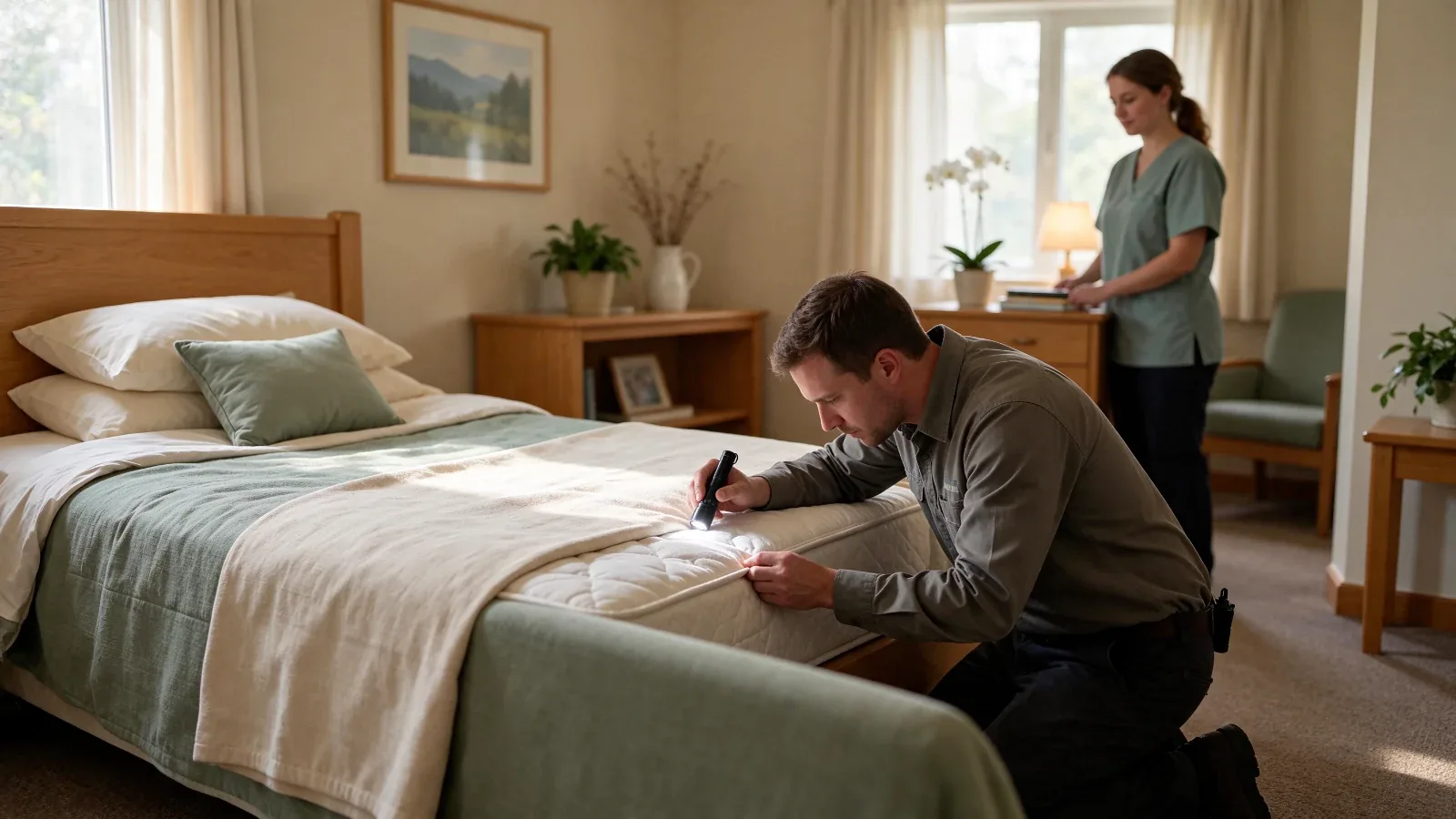
Bed Bug Treatment for Nursing Homes requires a careful approach that protects elderly residents, caregivers, and healthcare staff while addressing hidden infestations. Nursing homes, assisted living centres, and elderly care facilities in Bangalore may encounter bed bugs through personal belongings, visitors, furniture, luggage, or items transferred between locations.
Bed bugs can cause itching, discomfort, disturbed sleep, and anxiety, making their presence particularly concerning in residential care environments. Kiran Pest Control explains how nursing homes can identify infestations, arrange appropriate treatment, protect vulnerable residents, and establish practical prevention procedures.
Why Bed Bug Treatment Is Important in Nursing Homes
Nursing homes differ from ordinary residential properties because residents may have limited mobility, sensitive skin, chronic health conditions, or difficulty communicating discomfort. Pest management must therefore consider individual care needs alongside effective infestation control.
Protecting Elderly Residents
Bed bug bites may cause itching, skin irritation, and sleep disturbance. Some residents may scratch affected areas, potentially increasing the risk of secondary skin infections.
However, not everyone develops visible reactions to bed bug bites. Caregivers should report suspicious insects or physical evidence rather than relying only on skin symptoms.
Maintaining Resident Comfort and Dignity
Discovering bed bugs can create embarrassment or concern among residents and their families. Staff should respond discreetly and explain that bed bugs can enter clean, well-maintained facilities through transported belongings.
Residents should never be blamed or stigmatised because of suspected bed bug activity. A calm, organised response supports trust and cooperation during inspection and treatment.
Reducing Movement Between Rooms
Bed bugs may travel with bedding, clothing, upholstered furniture, and personal belongings. Shared spaces and the movement of equipment can create opportunities for insects to reach other areas.
Careful containment and inspection help reduce unnecessary transfer of potentially infested materials throughout the facility.
Common Signs and Hiding Places of Bed Bugs in Nursing Homes
Early identification helps nursing home managers arrange inspection before suspected activity becomes more widespread. Bed bugs often remain concealed in protected spaces close to sleeping or resting areas.
Warning Signs of Bed Bug Activity
- Live reddish-brown insects around beds or upholstered furniture.
- Small dark faecal spots on mattress seams and bed frames.
- Pale, translucent shed skins inside furniture joints.
- Tiny whitish eggs attached to concealed surfaces.
- Unexplained stains associated with other bed bug evidence.
- Reports of insects observed on bedding or personal belongings.
Skin reactions alone cannot confirm bed bugs because other insects and medical conditions can produce similar symptoms. Physical identification should guide treatment decisions.
Resident Beds and Mattresses
Inspect mattress seams, piping, labels, bed frame joints, and headboard connections. Wooden furniture and adjustable beds may contain narrow gaps where insects remain concealed.
Medical mattresses and specialised beds require careful inspection without damaging protective covers or electrical components.
Recliners and Wheelchairs
Upholstered recliners, cushioned wheelchairs, and frequently used seating may provide protected spaces for bed bugs. Inspect accessible fabric seams, cushion edges, and furniture joints when activity is suspected.
Any inspection or treatment involving mobility equipment should be coordinated with caregivers to avoid disrupting essential resident support.
Shared Lounges and Visitor Areas
Common rooms may contain sofas, padded chairs, curtains, and other furnishings that offer hiding places. Bed bugs can be introduced through belongings even when housekeeping standards are maintained.
Inspection priorities should reflect confirmed evidence and relevant movement patterns rather than assuming that every shared area is infested.
Professional Bed Bug Treatment Methods for Nursing Homes
Treatment in elderly care facilities must balance pest control effectiveness with resident safety, furniture compatibility, and healthcare requirements. A qualified pest management provider should coordinate proposed methods with facility management and responsible healthcare personnel.
Detailed Inspection and Identification
Professional technicians examine affected beds, furniture, and nearby hiding places to confirm bed bug activity. They may identify live insects, eggs, shed skins, and faecal deposits to understand the infestation.
Inspection findings help determine which areas require treatment and whether additional rooms should be monitored.
Integrated Pest Management
Integrated Pest Management combines pest identification, containment, physical removal, targeted treatment, and follow-up monitoring. This approach helps reduce unnecessary pesticide use while addressing the sources of infestation.
For nursing homes, treatment planning should also consider resident mobility, medical equipment, and room availability.
Targeted Chemical Treatment
Where appropriate, trained professionals may apply insecticides authorised for the intended location and use. Product labels, ventilation requirements, occupant exclusion measures, and re-entry instructions must be followed.
Insecticides should never be applied directly to residents, occupied bedding, medical supplies, or sensitive equipment. Any chemical application must be reviewed for suitability within the care environment.
Professional Heat and Steam Treatment
Controlled heat can kill bed bugs and eggs when sufficient temperatures reach the insects for the necessary exposure. Steam may help treat certain accessible furniture seams and other compatible surfaces.
However, heat and moisture may damage mattress covers, adhesives, electrical components, and medical equipment. Professional assessment is necessary before selecting these methods.
Follow-Up Monitoring
Some insects or viable eggs may remain after an initial treatment, depending on the method used and accessibility of hiding places. Follow-up inspection helps determine whether further treatment is required.
Learn more about professional bed bug control services in Bangalore for residential and commercial properties.
Suspected bed bugs in your nursing home? Arrange a professional inspection and discuss treatment options that consider resident safety and facility requirements.
Get a Free Quote Call NowHow to Prepare a Nursing Home for Bed Bug Treatment
Proper preparation helps technicians inspect affected areas while reducing disruption to residents. Nursing home management should coordinate preparation with caregivers, housekeeping teams, and the pest control provider.
Plan Around Resident Care Needs
Identify residents who require assistance with mobility, medical equipment, or daily care. Any temporary room changes should be planned by responsible care staff and should not compromise essential treatment or supervision.
Residents should return to treated areas only after applicable product instructions and facility safety requirements have been satisfied.
Handle Bedding and Clothing Carefully
Potentially infested bedding and clothing should be contained before transport. Laundry teams should follow suitable procedures that account for fabric compatibility and the facility's hygiene policies.
Avoid shaking suspected infested linen or carrying it openly through shared corridors. Careful handling helps reduce the chance of insects spreading.
Prepare Furniture for Inspection
Provide access to bed frames, mattress edges, bedside cabinets, and relevant upholstered furniture. Do not dismantle specialised medical beds or disconnect equipment without authorisation.
Technicians should be informed about fragile furniture, medical devices, and surfaces that require special handling.
Communicate With Families and Staff
Explain the inspection and treatment process in clear, reassuring language. Provide relevant information about room access, belongings, and planned follow-up procedures while respecting resident privacy.
Accurate communication can prevent unnecessary concern and help staff follow consistent instructions.
Preventing Bed Bug Infestations in Elderly Care Facilities
Prevention depends on early reporting, appropriate housekeeping, careful handling of belongings, and routine inspection of relevant areas. Bed bugs can be introduced into well-maintained facilities, so prevention should focus on practical risk reduction rather than cleanliness alone.
Train Nursing and Housekeeping Staff
Employees should recognise live bed bugs, dark faecal spots, shed skins, and suspicious eggs. Staff should know how to report findings and avoid moving potentially infested items unnecessarily.
Only appropriately trained personnel should carry out pest control treatment.
Inspect Incoming Furniture
Second-hand beds, mattresses, upholstered chairs, and other furniture should be examined before entering resident areas when infestation risk is suspected. Furniture with visible pest evidence should be assessed before use.
Monitor Shared Equipment
Wheelchairs, recliners, and other frequently transferred items may require inspection when linked to suspected activity. Monitoring should focus on relevant evidence and avoid interfering with resident mobility or care.
Maintain Clear Reporting Records
Document suspected sightings, inspection findings, treatment activities, and follow-up results. Records help facility managers identify recurring problems and coordinate future responses.
Routine monitoring should be adjusted to the facility's layout, occupancy, and previous infestation history.
Creating a Bed Bug Management Plan for Nursing Homes
A written management plan helps nursing homes respond consistently to suspected or confirmed bed bug activity. It should involve facility management, caregivers, housekeeping personnel, and qualified pest control professionals.
Recommended Management Checklist
- Report suspicious evidence: Record sightings, stains, shed skins, or suspected insects.
- Confirm identification: Arrange professional examination of the suspected pest.
- Assess affected locations: Inspect relevant beds, furniture, and nearby areas.
- Contain belongings: Prevent unnecessary movement of potentially infested materials.
- Protect residents: Coordinate treatment with individual care needs and facility safety procedures.
- Implement suitable treatment: Use methods appropriate for the infestation and care environment.
- Monitor progress: Conduct follow-up inspections and document findings.
- Review prevention procedures: Update staff training and handling practices where necessary.
Facilities should avoid automatically discarding furniture or relocating residents without an assessment. Unnecessary movement can spread bed bugs and create avoidable disruption.
A coordinated approach helps nursing homes maintain resident comfort while addressing infestation risks responsibly.
Need a bed bug management plan for your elderly care facility? Contact Kiran Pest Control to discuss professional inspection, treatment coordination, and ongoing monitoring.
Get a Free Quote Call NowFrequently Asked Questions
Are bed bugs dangerous for elderly nursing home residents?
Bed bugs are not established as significant transmitters of infectious diseases, but their bites may cause itching, allergic reactions, sleep disturbance, and secondary skin infections associated with scratching. Residents with particular health concerns should be assessed by appropriate healthcare personnel.
Can nursing homes use chemical bed bug treatments?
Yes, where suitable and permitted, but treatment must consider resident vulnerability, product labels, ventilation, exclusion measures, and re-entry requirements. Applications should be performed by appropriately trained professionals in coordination with facility management.
Should residents be moved during bed bug treatment?
Temporary relocation may be necessary depending on the treatment method, product instructions, and resident care requirements. Decisions should be coordinated with responsible healthcare staff to maintain safety and continuity of care.
Can bed bugs spread through wheelchairs and recliners?
Bed bugs may be transported on upholstered seating, wheelchairs, and personal belongings when insects are present. Appropriate inspection and careful handling can help reduce movement between affected and unaffected areas.
How can nursing homes prevent recurring bed bug problems?
Staff training, prompt reporting, careful handling of belongings, appropriate furniture inspection, and follow-up monitoring can help reduce recurring infestations. A documented pest management programme supports consistent responses and early detection.
Conclusion
Effective Bed Bug Treatment for Nursing Homes requires more than eliminating visible insects. Protecting elderly residents involves accurate pest identification, carefully selected treatment methods, safe handling of belongings, coordinated communication, and continued monitoring. A structured approach helps Bangalore nursing homes manage infestations while maintaining resident dignity and essential care services.
Kiran Pest Control (Kiran Enterprises) is a licensed pest control company serving Bangalore since 2006. For professional bed bug treatment in Bangalore, request a free quote or contact our team at +91 98452 73699. Explore more pest control articles or visit the Kiran Pest Control homepage for additional information.
Need help with a pest problem?
Contact Kiran Pest Control to discuss the issue and arrange an inspection.
Contact our teamNeed Pest Control in Bangalore?
Get a same-day inspection from our certified technicians.
Contact Our Team Chat on WhatsAppOr call +91 98452 73699