
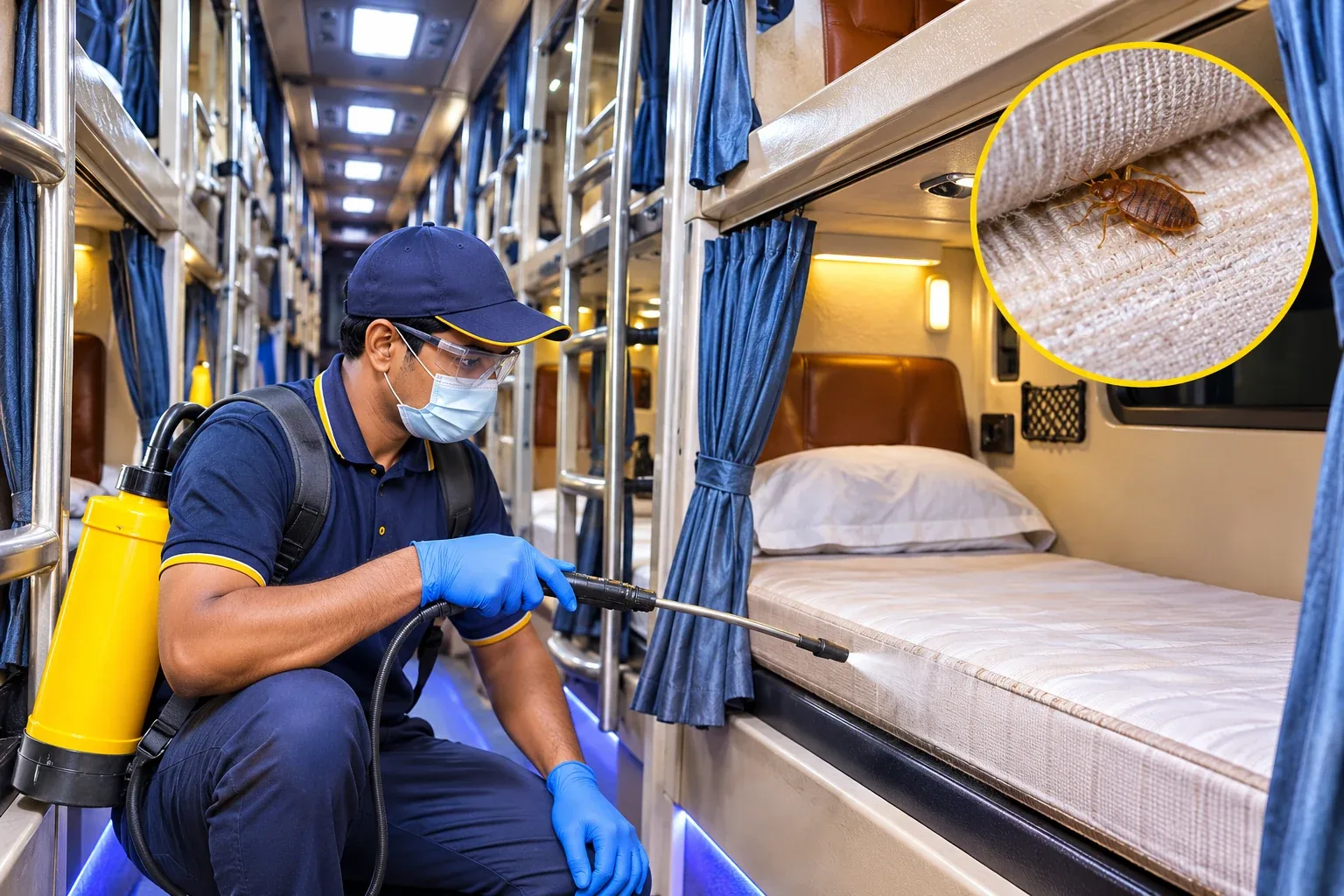
If you are searching for bed bugs services in my bus, you may be dealing with a pest problem that affects passenger comfort and vehicle hygiene. Bed bugs can hide in upholstered seats, fabric seams, headrests, curtains and narrow gaps inside passenger vehicles.
Buses carry different passengers throughout the day, and luggage, clothing and personal belongings can unintentionally transport bed bugs from one location to another. Understanding how these pests enter buses, where they hide and how professional treatment works can help bus operators manage the problem responsibly.
Why Bed Bugs in Buses Are a Concern
Bed bugs are small insects that feed on blood and hide in sheltered places close to where people rest or sit. They do not fly or jump, but they can move between locations by travelling on luggage, clothing and other belongings.
Passenger Comfort
Bed bug bites may cause itching, redness and skin irritation in some people. Passengers who notice suspected bites or insects on their seats may feel uncomfortable and lose confidence in the cleanliness of the vehicle.
Vehicle Hygiene and Reputation
Bed bug complaints can create difficulties for bus owners, travel operators and transport companies. A suspected infestation should be investigated promptly rather than ignored, particularly when the vehicle is used for regular passenger journeys.
Risk of Transfer Between Locations
Bed bugs can travel with passengers' bags, clothing and other belongings. If an affected bus is not inspected and treated appropriately, insects may be carried to homes, hotels, workplaces or other vehicles.
Common Causes of Bed Bugs in Buses
Bed bugs do not appear inside buses without a source. They are usually introduced from an infested environment or through items that carry the insects. The following situations can contribute to their presence.
Passenger Luggage and Personal Belongings
Passengers may unknowingly carry bed bugs in suitcases, backpacks, handbags and clothing. When these belongings are placed on or near upholstered seats, insects may move into nearby fabric gaps and sheltered spaces.
Previously Infested Seats
Used or second-hand bus seats and upholstery may contain bed bugs if they have come from an infested location. Replacing damaged seats without inspecting them can introduce pests into a vehicle.
Shared Vehicles and Frequent Passenger Turnover
Buses used by different groups of passengers may encounter belongings from many locations. Although passenger turnover does not automatically mean an infestation, it creates opportunities for bed bugs to be transported into the vehicle.
Insufficient Inspection and Cleaning
Routine surface cleaning may not reach deep fabric seams, seat joints, folds and concealed gaps. Bed bugs can remain hidden in these locations, so visual inspection of the upholstery and surrounding areas is important.
Movement Between Vehicles and Storage Areas
Insects may also be transferred through infested luggage, removable seat covers, stored fabrics or equipment moved between vehicles. Bus depots and storage areas should be included when investigating a recurring problem.
Signs of Bed Bugs Inside a Bus
Early identification helps bus operators arrange a suitable inspection. Bed bugs are small and often difficult to notice, so it is important to examine likely hiding places rather than relying only on passenger complaints.
Live Bed Bugs on Upholstery
Look for small, flat, reddish-brown insects around seat seams, fabric folds, headrests and stitching. They may move into narrow gaps when disturbed.
Dark Spots on Seats
Small dark marks on upholstery or along fabric seams may be signs of bed bug activity. These marks should be inspected carefully because dirt and other stains can look similar.
Shed Skins and Eggs
Bed bugs shed their outer skins as they develop. Their shed skins and tiny pale eggs may be found in sheltered locations such as seat joints, fabric folds and narrow crevices.
Passenger Complaints
Repeated complaints about suspected bites or insects around particular seats should be taken seriously. However, skin reactions alone cannot confirm bed bugs, so a physical inspection is needed.
How Professional Bed Bug Treatment Works in Buses
Professional bed bug control begins with identifying the affected areas and understanding how the vehicle is used. A trained technician can inspect the upholstery, seat structures and other potential hiding places before recommending an appropriate treatment plan.
Detailed Vehicle Inspection
The technician examines seat cushions, stitching, backrests, headrests, armrests, curtains and gaps around the seating structure. Particular attention is given to areas where insects, shed skins or other signs of activity have been reported.
The inspection may also include luggage storage spaces, removable fabric components and other areas where belongings are kept. The findings help determine which parts of the bus require attention.
Targeted Treatment Selection
The appropriate treatment depends on the vehicle's construction, upholstery materials and inspection findings. A professional may recommend suitable methods for treating affected fabric seams, concealed gaps and other identified harbourage areas.
Products must be suitable for the intended application and used according to their label instructions. Treatment should not contaminate passenger belongings, food, drinking water or surfaces that passengers regularly touch.
Responsible Application and Safety
Bed bug treatment should be planned when passengers are not inside the vehicle. The technician should follow product instructions about application, ventilation, drying and re-entry before the bus returns to passenger service.
Bus operators should communicate with the treatment team about seat materials, vehicle schedules and any special requirements. This helps the service provider plan the work without compromising passenger safety.
Follow-Up Inspection
After treatment, the technician may recommend monitoring and further inspection based on the findings. Follow-up attention is useful for checking whether bed bug activity remains and whether additional treatment is required.
Noticing bed bugs on your bus seats? Arrange a professional inspection and discuss a suitable bed bug treatment plan for your vehicle.
Get a Free Quote Call NowHow Bus Operators Can Prevent Bed Bugs
Prevention requires regular inspection, appropriate cleaning and prompt action when signs of bed bugs are noticed. Bus operators can make these practices part of their routine vehicle maintenance process.
Inspect Upholstered Seats
Check fabric seams, folds, stitching, headrests and seat joints during vehicle inspections. Pay attention to locations where passengers have reported suspected bed bug activity.
Clean Seats and Interior Areas
Use suitable cleaning methods for the upholstery and interior materials. Vacuuming accessible seat gaps and removing accumulated dust and debris can support inspection and maintenance, but ordinary cleaning alone may not eliminate an established bed bug infestation.
Check Luggage Storage Areas
Inspect overhead racks and luggage storage spaces when investigating a suspected problem. These areas may come into contact with bags and belongings that could carry bed bugs.
Respond to Complaints Promptly
Record the affected vehicle and seating area when a passenger reports suspected bed bugs. Arrange an inspection instead of assuming that every bite or skin reaction is caused by bed bugs.
Arrange Professional Pest Management
If bed bugs are identified, seek professional advice about the suitable treatment method. A planned approach helps address affected areas and supports ongoing vehicle hygiene.
Choosing a Bed Bug Control Service for Your Bus
Not every pest control treatment designed for bedrooms or homes is suitable for a passenger vehicle. Bus interiors contain different upholstery materials, enclosed spaces and surfaces that passengers regularly touch. The service provider should understand these requirements before starting treatment.
Experience with Inspection and Treatment
Ask whether the technician can inspect upholstered seating, fabric joints and concealed areas. A provider should explain the treatment approach based on the actual findings rather than recommending an identical procedure for every vehicle.
Clear Safety Guidance
Discuss product suitability, vehicle preparation, ventilation and the conditions that must be met before passengers can use the bus again. Clear instructions are especially important for vehicles that operate on fixed schedules.
Transparent Service Communication
A professional provider should explain the affected areas, proposed treatment and any recommended follow-up. This allows bus owners and transport managers to plan maintenance and vehicle availability.
Kiran Enterprises Pest Control Services provides pest management solutions for residential and commercial customers in Bangalore. To learn more, visit our bed bug control service page or explore our company website.
Why Contact Kiran Enterprises Pest Control Services?
Kiran Enterprises Pest Control Services has been serving customers in Bangalore since 2006. The company focuses on practical pest management solutions for different types of residential and commercial environments.
For suspected bed bug activity in buses, a professional inspection can help identify affected areas and determine a suitable treatment approach. The treatment plan should consider upholstery, vehicle use, application safety and the operator's maintenance requirements.
Bus owners, travel operators and transport managers can contact the team to discuss their requirements. You can also explore other pest management information in our pest control blog.
Need professional bed bug control for your bus? Contact Kiran Enterprises to discuss your vehicle inspection and treatment requirements.
Get a Free Quote Call NowFrequently Asked Questions
How do bed bugs enter a bus?
Bed bugs can enter through passenger luggage, clothing, bags, previously infested seats and other items transported into the vehicle.
Where do bed bugs hide inside buses?
They may hide in seat seams, upholstery folds, headrests, armrests, stitching, curtains, luggage storage spaces and narrow gaps around seats.
Can regular bus cleaning remove bed bugs?
Regular cleaning supports hygiene and helps with inspection, but it may not remove bed bugs hidden deep inside upholstery and concealed gaps. Professional inspection and suitable treatment may be necessary.
Can passengers travel in a bus during bed bug treatment?
No. Passengers should not remain inside the vehicle during pesticide treatment. The bus should return to service only after the required application, ventilation and re-entry instructions have been followed.
Does Kiran Enterprises provide bed bug control services in Bangalore?
Kiran Enterprises Pest Control Services provides pest management solutions in Bangalore. Call +91 98452 73699 or contact the team through WhatsApp to discuss your requirements.
Conclusion
Bed bugs in buses can affect passenger comfort and create challenges for transport operators. Luggage, clothing, previously infested upholstery and insufficient inspection can contribute to their introduction and spread. Regular checks and prompt professional attention are important parts of managing the problem.
If you are looking for bed bugs services in my bus, contact Kiran Enterprises Pest Control Services to discuss a suitable inspection and treatment approach. Call +91 98452 73699 or message the team through WhatsApp.
Need help with a pest problem?
Contact Kiran Pest Control to discuss the issue and arrange an inspection.
Contact our teamNeed Pest Control in Bangalore?
Get a same-day inspection from our certified technicians.
Contact Our Team Chat on WhatsAppOr call +91 98452 73699