If you keep calling a mosquito fogging team every few weeks and still get bitten, the problem isn’t just the insects. It’s the treatment plan. Fogging, residual spraying, coils, repellent creams — it’s hard to know what actually works in a real Bengaluru or Mysuru neighbourhood.
This guide breaks down fogging vs residual spraying in plain language, with local conditions in mind: dense layouts, water storage drums, balconies packed with plants, and apartments right next to vacant plots. By the end, you’ll know which mosquito treatment to pick, how often to use it, and where people usually waste money.
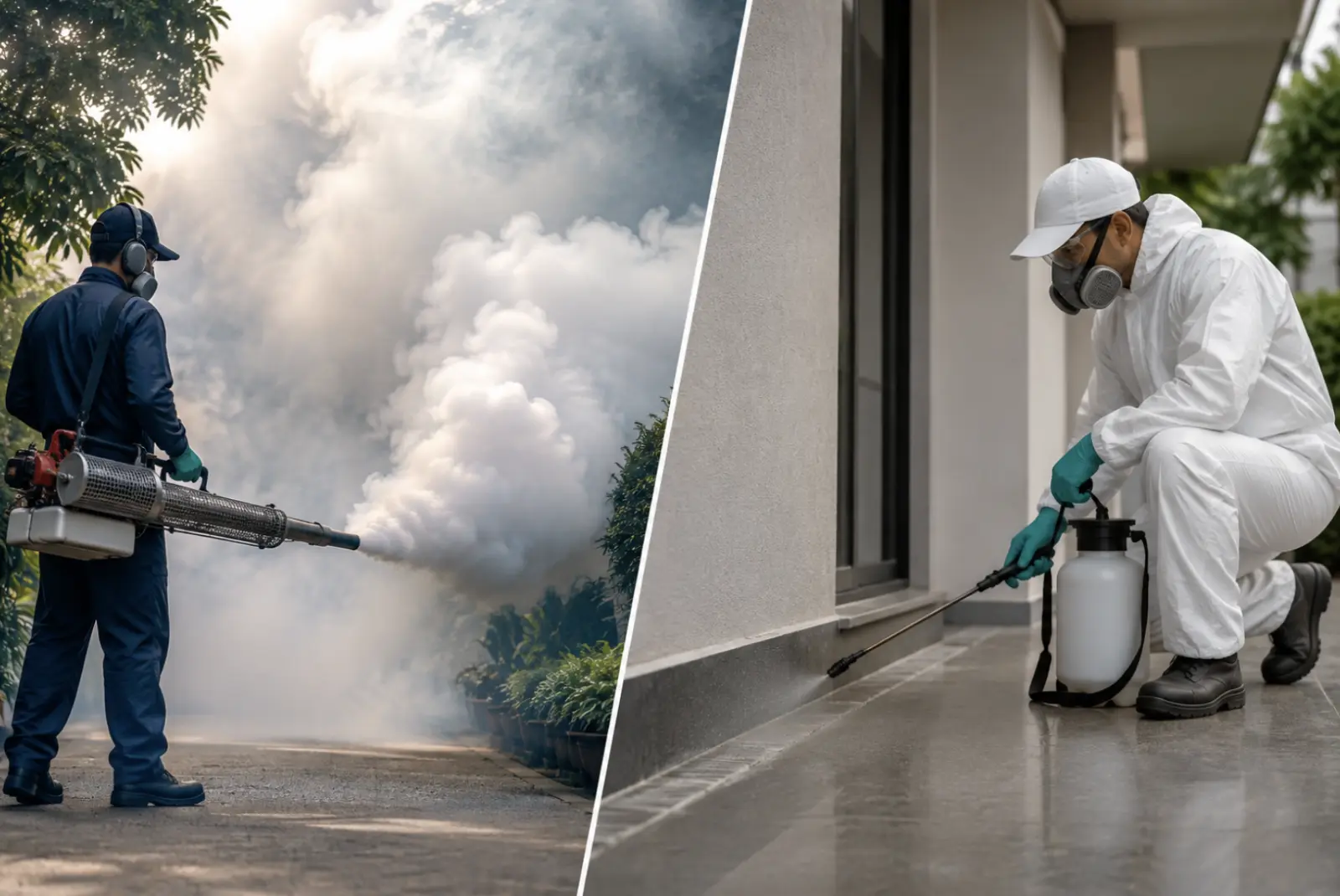
Mist machines look impressive, but you need to know what mosquito fogging can and can’t do. Fogging sends a fine aerosol or thermal mist into the air to knock down adult mosquitoes that are flying at that moment. It’s fast, visible, and you feel the difference that evening.
The catch: it has almost no long-term effect. Once the mist settles or drifts away, new adults emerging from breeding spots aren’t affected. In busy parts of Bangalore and Mysore, that can mean fresh bites within 2–3 days if nothing else changes.
Residual mosquito spraying targets the surfaces where mosquitoes rest, not just the air they fly through. Technicians apply a controlled insecticide film to walls, dark corners, under furniture, near drains, and around entry points. When mosquitoes land there over the next weeks, they pick up the chemical and die.
Done properly, this can give protection for 45–90 days depending on the product, surface type, and how often you wash or repaint. It won’t stop every bite, but it cuts the indoor mosquito load by a noticeable margin, especially late evening and at night.
For most homes and small offices, the right mosquito treatment is about matching the method to the problem, not choosing whichever sounds stronger. Each approach has clear pros and cons.
Fogging is best for a quick knockdown in large open or semi-open areas: layouts, parks, school grounds, and community spaces after heavy rain. It’s less useful inside sealed apartments, as the mist doesn’t penetrate behind furniture or into closed rooms.
Residual spraying works better indoors and in defined compounds where you can treat walls, stairwells, parking areas, and utility spaces. It’s more precise and quieter, but it does require residents to prepare rooms, cover utensils, and step out during application and drying.
A one-off fogging in a small community or bungalow layout might look cheap per visit, but repeat it every 10–15 days through the monsoon and the yearly spend climbs quickly. In contrast, a planned residual mosquito spraying schedule often means one visit at the start of the season, one mid-way, and a touch-up only if needed.
Most people under-budget for prep time. Plan for at least 30–60 minutes to move exposed food items, cover aquariums, and keep pets in a safe room during any kind of spray work.
Fogging fails when there’s strong wind, too many closed windows, or heavy breeding inside overhead tanks and sumps. You might see fewer adults for a day, but the next batch is already waiting. In those cases, other mosquito pest control steps are usually more effective.
Residual spraying fails when technicians rush, miss key resting spots, or when residents immediately wash treated walls with soap and water. Skipping balconies and utility areas is another common mistake that lets mosquitoes re-enter easily.
Several local situations call for a focused fogging service instead of, or in addition to, spraying. After flooding or very heavy rain, for example, stagnant water in vacant plots and stormwater drains can push swarms into nearby streets and compounds.
It also makes sense to consider targeted fogging before outdoor evening events, apartment association meetings in open terraces, or school functions held near dense vegetation. Timed correctly, this sort of mosquito control method can make the area usable for a few hours with far fewer bites.
No chemical method compensates for ongoing breeding inside your own premises. If the building has broken pipes, overhead tanks without lids, or abandoned flowerpots collecting water, you’ll hit the limit of what any professional mosquito control team can do.
In these situations, both fogging and residual work better only after a proper clean-up: clearing gutters, fixing drainage slopes, and drying out saucers under plant pots.
An experienced team doesn’t walk in and start the motor. They’ll first map your building: basements, sumps, terraces, nearby garbage zones, and any low-lying corners. Good mosquito extermination starts with identifying breeding and resting zones, not just spraying where it’s convenient.
For many complexes under 50 units, the most effective pattern is a pre-monsoon residual spray indoors and in common areas, backed by fogging in outdoor spaces only when mosquito levels spike sharply after rain.
No service can help if the same breeding spots keep returning every week. Consistent mosquito prevention at home comes down to four habits: checking water storage, managing plants, keeping drains clear, and using protection during peak biting times.
Empty and scrub buckets, AC trays, and pet bowls at least twice a week.
Use sand in potted plant plates instead of standing water.
Clean bathroom and balcony drains that tend to clog with hair and leaves.
Use bed nets for infants and elderly family members who sleep early.
Combine these with periodic pest control services when mosquito levels rise, and you’ll usually need fewer chemical treatments overall.
Don’t book mosquito spraying on price alone. Ask what products they use, what safety precautions they follow, and how long you need to stay out of treated rooms. A reliable provider will explain in simple terms and give you prep instructions in advance.
You should also get clarity on warranty or follow-up visits, especially during peak monsoon. Some pest control services offer short free touch-ups if the mosquito count is still high after a few days.
Here’s a simple rule of thumb for homes in Bangalore and Mysore: if your main complaint is mosquitoes entering from nearby drains, lakes, or vacant plots, start with outdoor-focused fogging combined with basic cleanup. If the worst bites happen inside bedrooms and living rooms at night, prioritise residual spraying indoors.
Many apartment associations get the best results by combining both — scheduled residual work two or three times a year, with targeted fogging only after heavy rain or before outdoor functions, instead of a random mix of emergency calls.
Choosing between fogging and spraying isn’t about which sounds stronger, it’s about how long you want relief to last and where the breeding actually sits. In most homes, residual treatments backed by simple prevention routines beat repeated mosquito fogging visits that only calm things for a day.
For communities across Bangalore and Mysore, a planned mix of surface spraying, occasional fogging, and routine housekeeping gives far better control than any one method used in isolation. If you’re tired of short-lived fixes, talk to a trusted local provider such as Kiran Enterprises and ask them to build a seasonal mosquito control plan tailored to your building.
Get a same-day inspection from our certified technicians.
Chat on WhatsAppOr call +91 98452 73699