
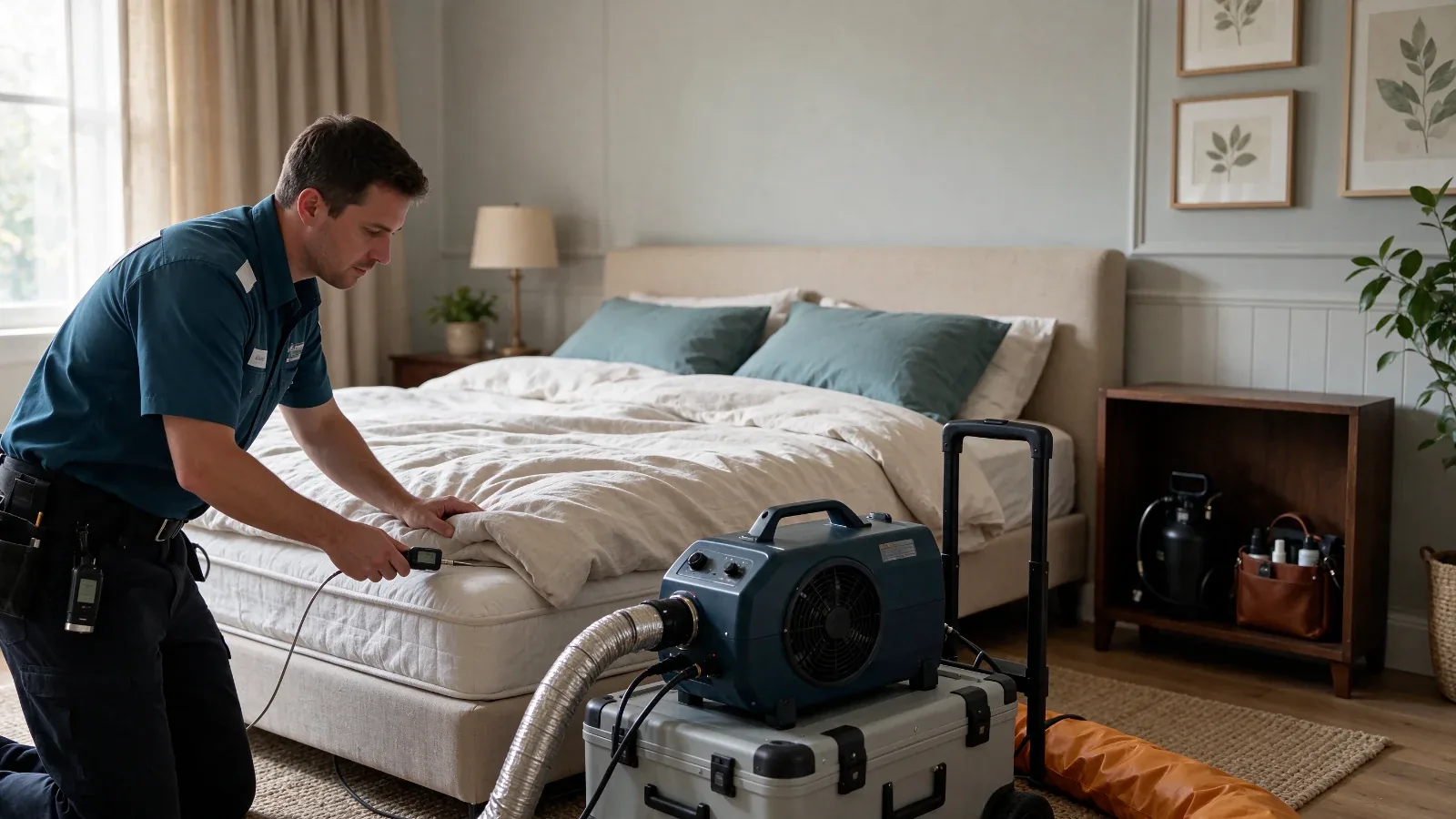
Heat Treatment vs Chemical Bed Bug Treatment is an important comparison for Bangalore homeowners, tenants, and property managers dealing with bed bug infestations. Both approaches can help manage bed bugs, but they work differently and have distinct advantages, limitations, and safety requirements. Understanding these differences can help you make an informed decision before arranging professional pest control.
Bed bugs hide in mattress seams, bed frames, furniture joints, and narrow cracks, making them difficult to eliminate through ordinary cleaning. Kiran Pest Control (Kiran Enterprises) is a licensed pest control company serving Bangalore since 2006. This guide explains how heat and chemical methods work, their practical differences, and why professional inspection is important before choosing a treatment.
Understanding Heat and Chemical Bed Bug Treatment
Professional bed bug management may involve heat-based methods, insecticide applications, or a combination of suitable techniques. The appropriate approach depends on the infestation, property conditions, available equipment, and safety requirements.
What Is Heat Treatment?
Heat treatment uses specialised equipment to raise temperatures in a controlled environment to levels capable of killing bed bugs. Effective treatment requires appropriate temperatures to reach insects and eggs within the treated areas.
Professional monitoring is essential because hidden locations may heat differently from exposed surfaces.
What Is Chemical Treatment?
Chemical treatment uses suitable insecticides applied to locations permitted by the product label. Depending on the formulation, these products may act through direct exposure or contact with treated surfaces.
Correct product selection and targeted application are important for both effectiveness and safety.
Why Professional Assessment Matters
Not every infestation requires the same treatment method. A professional inspection helps identify bed bug activity, assess affected furniture, and determine which approaches may be suitable.
Skin reactions alone cannot reliably confirm a bed bug infestation.
How Professional Heat Treatment Works
Heat treatment aims to expose bed bugs to lethal temperatures throughout the treated environment. The process requires suitable equipment, careful preparation, and temperature monitoring.
Inspection and Preparation
The technician identifies affected areas and assesses furniture, belongings, and materials that may be sensitive to heat. Customers may need to remove or protect items that cannot safely withstand treatment conditions.
Preparation instructions depend on the equipment and treatment plan.
Controlled Heating
Professional heating equipment raises temperatures within the designated treatment area. Air circulation and suitable equipment placement help distribute heat.
Simply warming a room is not equivalent to professional bed bug heat treatment.
Temperature Monitoring
Technicians monitor relevant locations to determine whether suitable temperatures have been achieved. Protected furniture spaces and other concealed areas require particular attention.
Inadequate heat penetration may allow insects to survive.
Advantages and Limitations
Properly conducted heat treatment can affect susceptible bed bugs and eggs without relying on insecticide contact. However, equipment availability, heat-sensitive belongings, and uneven temperature distribution can limit suitability.
Heat treatment also does not provide lasting protection against future introductions.
How Professional Chemical Bed Bug Treatment Works
Chemical treatment focuses on applying suitable insecticides to relevant hiding places. Products and application methods must follow applicable regulations and label instructions.
Inspection of Hiding Places
Technicians examine mattress seams, bed frames, headboards, upholstered furniture, and accessible cracks. Physical evidence helps determine which areas may require treatment.
Inspection also helps avoid unnecessary applications.
Targeted Insecticide Application
Where appropriate, trained technicians apply labelled products to permitted locations. Depending on the formulation, insecticides may provide contact activity or residual effects.
Products must not be applied to skin, bedding, or other surfaces where their labels prohibit use.
Residual Activity
Some insecticide formulations remain active on treated surfaces under suitable conditions. This may affect susceptible bed bugs that subsequently contact those locations.
Residual activity varies by product and does not guarantee complete elimination.
Advantages and Limitations
Targeted chemical treatment can address accessible hiding places without heating an entire room. However, insecticide resistance, concealed eggs, and inaccessible harbourages may reduce effectiveness.
Monitoring and additional treatment may be necessary depending on the infestation.
Unsure whether heat or chemical bed bug treatment is suitable? Contact Kiran Pest Control to discuss an inspection and appropriate pest management options for your property.
Get a Free Quote Call NowHeat Treatment vs Chemical Bed Bug Treatment: Key Differences
Both methods have potential benefits, but neither is automatically suitable for every infestation. The following comparison highlights practical considerations for homeowners and businesses.
| Comparison Factor | Heat Treatment | Chemical Treatment |
|---|---|---|
| Primary Method | Controlled exposure to lethal temperatures | Application of suitable insecticides |
| Effect on Eggs | Can kill eggs when sufficient heat reaches them | Varies depending on the product |
| Residual Activity | No lasting insecticidal residue | Possible with suitable residual products |
| Equipment | Specialised heating and monitoring equipment | Appropriate pesticide application equipment |
| Main Limitations | Heat-sensitive items and uneven heat penetration | Resistance and inaccessible hiding places |
| Safety Considerations | Heat exposure and potential material damage | Pesticide exposure and label restrictions |
| Follow-Up | Monitoring may still be necessary | Monitoring and further treatment may be necessary |
Which Method Works Faster?
Properly delivered heat can kill exposed bed bugs during the treatment process. Chemical treatment results depend on the product, exposure, insect susceptibility, and infestation conditions.
Neither approach should be judged solely by how quickly visible insects disappear.
Which Method Is Safer?
Both methods have safety considerations. Heat treatment requires protection of heat-sensitive belongings and careful temperature control, while chemical treatment requires correct pesticide handling and compliance with product instructions.
Professional planning is important for either approach.
Which Treatment Costs Less?
Costs depend on the property, infestation, equipment, treatment method, and service scope. Specialised heating equipment may affect heat treatment pricing, while chemical treatment costs depend on the proposed applications and follow-up requirements.
Request a property-specific quotation rather than relying on general price comparisons.
Can Heat and Chemical Treatments Be Combined?
Integrated pest management may use complementary methods to address different hiding places and infestation conditions. A combined approach should be based on professional assessment rather than applying every available method automatically.
Using Complementary Control Methods
Suitable heat-based measures may be combined with physical removal, monitoring, or targeted insecticide applications where appropriate. Each method should have a clear purpose within the treatment plan.
Product restrictions and equipment requirements must be respected.
Addressing Hidden Bed Bugs
Bed bugs may remain inside furniture joints, narrow cracks, and other protected spaces. Combining suitable techniques may help address locations that are difficult to manage using a single method.
However, no combination guarantees success without adequate inspection and correct application.
Importance of Follow-Up Monitoring
Monitoring helps determine whether bed bug activity continues after treatment. The need for further visits depends on the infestation and methods used.
Customers should ask about the proposed follow-up arrangements.
Choosing the Right Bed Bug Treatment for Your Bangalore Property
The most suitable treatment depends on the property, infestation conditions, safety requirements, and available professional methods. Homeowners and businesses should understand the proposed approach before booking.
Consider the Property Type
A residential apartment, independent house, hostel, or hotel may present different access and preparation challenges. Furniture arrangements and shared spaces can influence inspection and treatment planning.
Property managers may need to coordinate preparation with occupants.
Ask About Preparation Requirements
Heat treatment may require special handling of heat-sensitive belongings. Chemical treatment may require access to furniture, careful handling of exposed fabrics, and compliance with re-entry instructions.
Follow the provider's guidance for the selected method.
Avoid Unsafe DIY Alternatives
Do not attempt to heat an entire room using improvised heaters or apply unlabelled chemicals to mattresses. These practices can create serious fire, electrical, or chemical exposure hazards.
Professional equipment and appropriate safety procedures are important.
Choose an Inspection-Based Service
Professional inspection helps confirm bed bugs and identify affected areas. It also supports appropriate treatment selection rather than unnecessary pesticide use.
Learn more about bed bug control services in Bangalore and available pest management options.
Contact Kiran Pest Control
Kiran Pest Control (Kiran Enterprises) is a licensed pest control company serving Bangalore since 2006. We assist residential and commercial customers with pest management concerns.
To discuss your property, contact our team, request a quote, or explore more advice on our pest control blog.
Need help choosing a suitable bed bug treatment method? Request a quote from Kiran Pest Control and discuss inspection findings, available treatment options, and safety precautions.
Get a Free Quote Call NowFrequently Asked Questions
Is heat treatment better than chemical bed bug treatment?
Neither method is automatically better for every infestation. Heat treatment can kill bed bugs and eggs when sufficient temperatures reach them, while suitable chemical treatments may provide contact or residual activity. Professional inspection helps determine the appropriate approach.
Can heat treatment eliminate bed bug eggs?
Yes, when eggs are exposed to suitable lethal temperatures for sufficient time. However, eggs hidden in areas that do not reach the required conditions may survive.
Does chemical treatment provide longer protection?
Some approved residual insecticides remain active on treated surfaces for a period determined by the product and environmental conditions. This does not prevent every future infestation or guarantee complete elimination.
Is heat treatment completely chemical-free?
Heat-only treatment does not require insecticide application, but some professional management plans may combine heat with other control methods. Ask the provider which methods are included in the proposed service.
Can bed bugs return after either treatment?
Yes. Bed bugs may survive in untreated hiding places or be reintroduced through luggage, furniture, and other belongings. Monitoring and practical prevention measures remain important after either treatment.
Conclusion
Understanding Heat Treatment vs Chemical Bed Bug Treatment helps homeowners and businesses compare the benefits and limitations of different pest management methods. Heat treatment relies on controlled temperatures, while chemical treatment uses suitable insecticides applied to permitted locations. The appropriate choice depends on inspection findings, property conditions, safety requirements, and available treatment options.
Kiran Pest Control (Kiran Enterprises) is a licensed pest control company serving Bangalore since 2006. If you suspect bed bugs in your home, apartment, hostel, hotel, or rental property, call +91 98452 73699, contact our team through WhatsApp, or request a free quote to discuss suitable professional bed bug control options.
Need help with a pest problem?
Contact Kiran Pest Control to discuss the issue and arrange an inspection.
Contact our teamNeed Pest Control in Bangalore?
Get a same-day inspection from our certified technicians.
Contact Our Team Chat on WhatsAppOr call +91 98452 73699