If you’ve ever found a single bed bug and then spotted another one across the hall a week later, you already know how unsettling that creeping spread can feel. Understanding exactly how bed bugs spread is the first real step toward stopping them before they take over your home or building.
In this guide, we’ll walk through how bed bugs move from one room to another, what actually drives that movement, and what you can do right now to slow and stop the spread of bed bugs before a small problem turns into a building-wide headache.
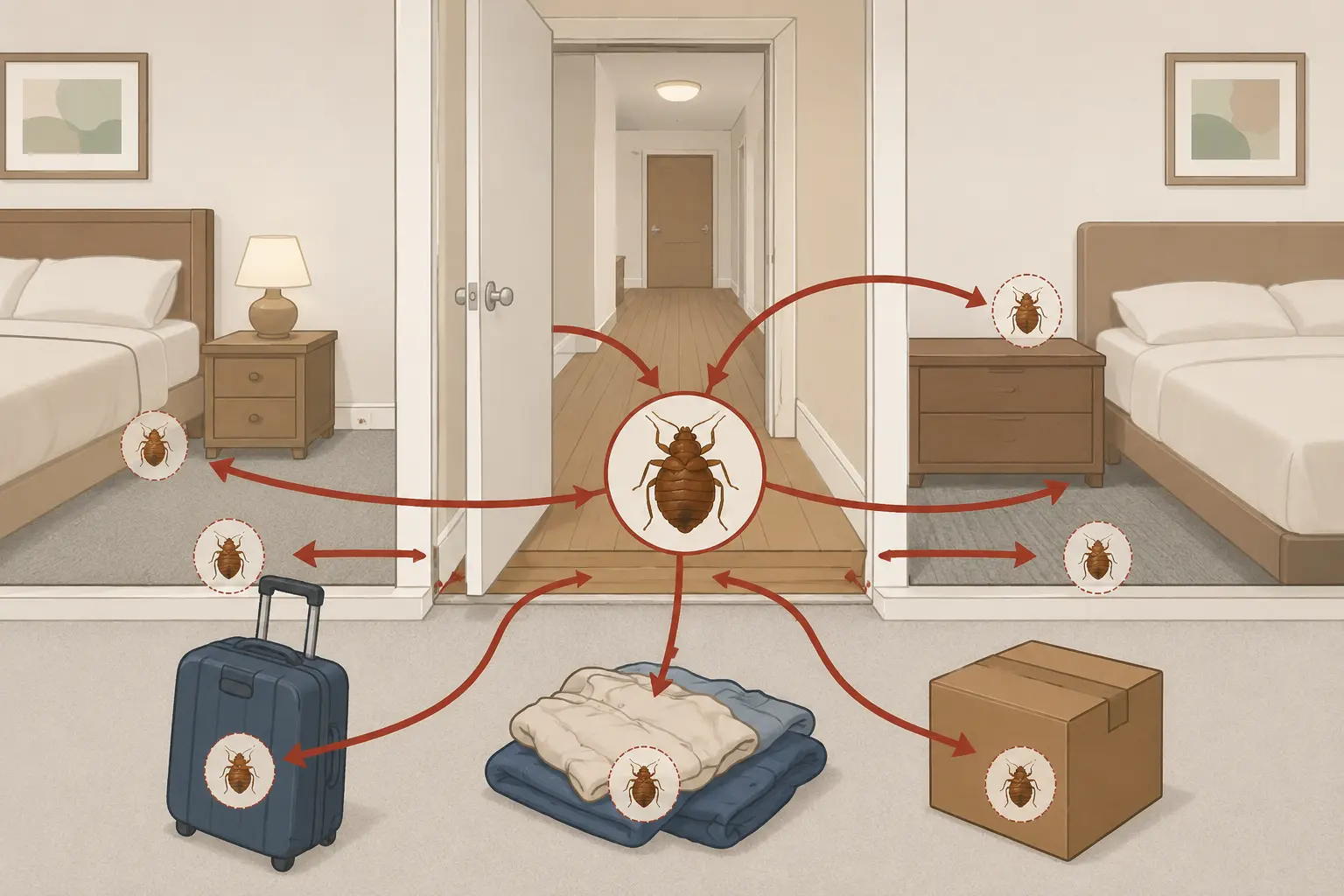
Bed bugs don’t fly and they don’t jump, but they are patient, determined crawlers. The main way how bed bugs spread between rooms is by following seams, cracks, and gaps along walls, floors, and ceilings in search of a blood meal.
They often travel along baseboards, under door thresholds, through gaps around pipes, and inside wall voids. In multi-room homes, this slow but steady movement explains why a light bed bug infestation in a bedroom can eventually show up in a living room or home office if nothing is done.
Bed bugs are hitchhikers at heart. A big part of how bed bugs travel is by climbing onto items that people move between rooms, such as backpacks, clothing, and soft blankets. Once those items land in a new room, the insects simply crawl off and hide.
This is why clutter makes control harder. Each extra pile of clothes, stack of papers, or spare chair becomes a new set of hiding spots and highways for the spread of bed bugs across a home.
Many new home infestations start with travel, and bed bugs in luggage are a classic example. A few hidden insects in suitcase seams or zipper folds can reach a bedroom, then start exploring the rest of the space.
At home, leaving suitcases open on the floor or bed for days creates an easy bridge between sleeping areas and other rooms, letting pests ride along on clothes and personal items that get moved around.
People are often surprised by how often pests hide on everyday furnishings, and bed bugs on furniture can be a quiet source of spread if that furniture is moved between rooms.
Moving a sofa from a spare room into the main living room, or bringing in a secondhand mattress without inspection, can place active insects and eggs right where people rest, giving them every reason to stay and feed.
In multi-unit properties, the spread of bed bugs is rarely limited to one family or one door. Once established in a unit, bed bugs in apartments often move through small building features that most people never notice.
Shared walls, gaps around plumbing lines, electrical conduits, and even tiny cracks at the edges of baseboards all act like hidden tunnels. Over time, this quiet bed bug transmission allows insects to move into neighboring units above, below, and beside the original source.
Technicians regularly see pests travel both side to side and floor to floor through stacked wall cavities, a pattern often called bed bug migration inside a structure. This means a heavy problem on the third floor can eventually show up on the fourth or second floors without any direct contact between residents.
Because of this, it’s important for building managers to look beyond a single complaint and consider how far the insects may have moved, rather than assuming the problem is limited to one room.
Bed bugs prefer to stay as close as possible to where people sleep or sit for long periods, so why do they ever leave a room at all? The most common reason is that activity in a heavily treated or disturbed area pushes them to explore new hiding places and feeding sites.
When people start moving beds, pulling furniture away from walls, or spraying over-the-counter products, it can scatter insects into new areas, which leads many homeowners to feel like the spread of bed bugs got worse after they tried to handle it alone.
Small daily choices can unintentionally support pest movement. For example, regularly carrying bedding, pillows, or soft toys from room to room can help a bed bug infestation reach new sleeping spots where the insects can feed comfortably.
Guests who sleep on sofas, air mattresses, or rugs in other rooms can also extend the feeding zones, giving hidden insects more incentive to explore hallways and adjacent spaces.
Once you understand how bed bugs spread, the next move is to contain them while a proper treatment plan is put in place. The goal isn’t just to kill what you can see, but to cut off their ability to move freely between rooms.
Even simple, consistent steps can make a real difference and keep a small area problem from turning into a whole-home pest infestation spread that’s more expensive and stressful to correct.
Start by focusing on rooms with the most activity, often bedrooms and living rooms, and reduce clutter so inspection is easier. Launder bedding, pajamas, and curtains on high heat, and bag clean items in sealed plastic before returning them.
Next, use mattress and box spring encasements to trap insects already on the bed and limit how bed bug control products need to be applied in sleeping areas.
Be cautious about moving belongings out of an infested room before they’ve been inspected or treated. If possible, avoid dragging items across hallways or stacking them in new areas, as that can speed up bed bug migration into spaces that were clear before.
Instead, bag items securely in heavy-duty plastic, label them, and keep them in the same room until they can be washed on high heat or treated according to professional guidance.
A single overlooked crack, an uninspected suitcase, or a rushed furniture move can all contribute to how bed bugs spread between rooms and even between homes. The good news is that once you recognize the main pathways, you can close them off and support effective treatment.
If you’ve noticed early signs of activity or suspect bed bugs are moving from one room to another, it’s wise to bring in an experienced pest professional like Kiran Enterprises to assess the situation, build a targeted plan, and give you clear steps to protect your space before the problem grows.
Get a same-day inspection from our certified technicians.
Chat on WhatsAppOr call +91 98452 73699