
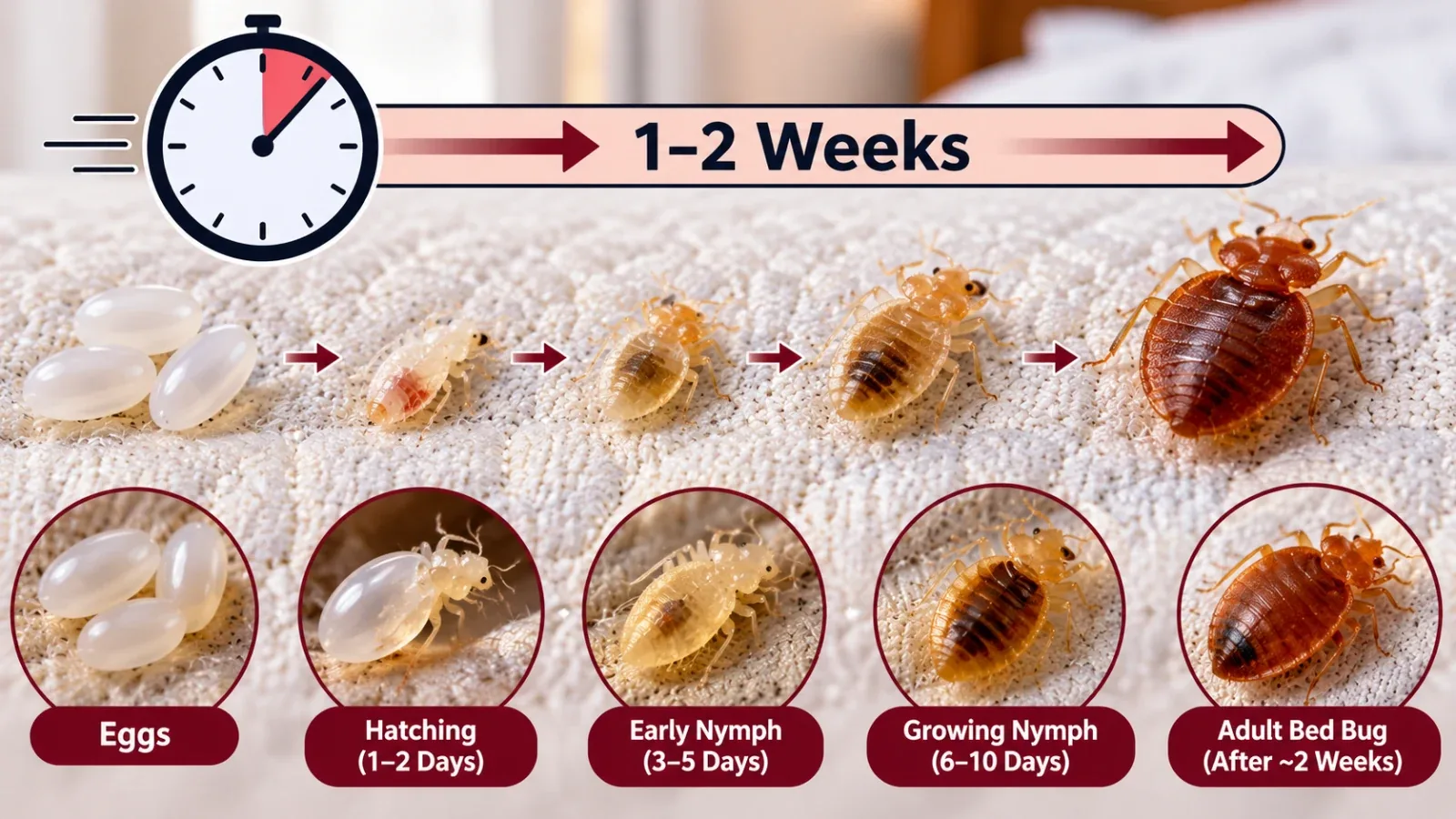
How Long Do Bed Bug Eggs Take to Hatch? This is an important question for Bangalore homeowners who have discovered suspected eggs around mattresses, bed frames, or upholstered furniture. Bed bug eggs can hatch relatively quickly under favourable conditions, but the exact timing varies with environmental factors.
Understanding the hatching process helps explain why bed bug activity may continue after visible insects have been removed. Effective management requires attention to concealed eggs, newly emerged insects, and the surrounding hiding places where bed bugs develop.
Understanding the Bed Bug Egg Hatching Process
Bed bugs reproduce by laying eggs in protected locations close to where people sleep or rest. Their development depends on environmental conditions, and eggs do not necessarily hatch at the same time.
How Long Does Hatching Usually Take?
Under favourable indoor conditions, bed bug eggs commonly hatch within roughly a week, although development can take longer. Temperature and other environmental conditions influence the timing, so homeowners should not rely on a fixed hatching date.
What Happens Inside the Egg?
A developing bed bug embryo grows inside the protective eggshell. When development is complete, a young bed bug emerges through an opening in the shell.
What Happens After Hatching?
Newly hatched bed bugs, called nymphs, are small and pale. They require blood meals to progress through their development and may remain concealed near established hiding places.
Do All Eggs Hatch Together?
No. Eggs deposited at different times or exposed to different conditions may hatch at different stages. This is why new activity can appear even after visible adult insects have been removed.
Why Hatching Matters During Treatment
Some control methods may not reliably affect every concealed egg. Follow-up monitoring helps identify emerging insects and determine whether additional treatment is necessary.
Factors That Affect How Quickly Bed Bug Eggs Hatch
Bed bug egg development is influenced by the surrounding environment. Indoor conditions can vary between homes, hotels, hostels, and other buildings in Bangalore.
Room Temperature
Temperature is an important influence on egg development. Warmer conditions within the insect's suitable developmental range generally support faster development, while cooler conditions can delay hatching.
Environmental Humidity
Humidity can affect egg survival and development, particularly under extreme conditions. However, ordinary household humidity changes are not a reliable way to eliminate bed bug eggs.
Location of the Eggs
Eggs may be deposited in protected mattress seams, bed frame joints, and furniture crevices. These locations can provide relatively sheltered conditions during development.
Differences Between Indoor Spaces
Bedrooms with air conditioning, naturally ventilated rooms, and enclosed furniture spaces may have different temperature conditions. These differences can influence development without providing a predictable hatching schedule.
Egg Viability
Not every egg necessarily develops into a living insect. Damage, environmental stress, and effective treatment can prevent successful hatching.
Where Bed Bug Eggs Hide Before Hatching
Female bed bugs generally attach eggs to protected surfaces near resting areas. Finding these locations can be difficult because the eggs are tiny and pale.
Mattress Seams
Stitched mattress edges and fabric piping provide narrow spaces where eggs may be attached. Examine accessible seams using adequate lighting.
Bed Frame Joints
Wooden connections, screw recesses, and narrow gaps around bed frames can shelter eggs. Inspecting only the mattress may miss activity elsewhere.
Headboards
Protected spaces behind or within headboards may contain bed bugs and eggs. Check accessible joints without damaging the furniture.
Upholstered Furniture
Fabric seams, cushion piping, and protected frame joints may provide suitable hiding places. Sofas and upholstered chairs should be considered when activity is suspected beyond the bed.
Nearby Furniture and Wall Gaps
Bed bugs may hide in bedside furniture and accessible cracks close to sleeping areas. Eggs can remain concealed where ordinary cleaning does not reach.
What Do Bed Bug Eggs Look Like?
Bed bug eggs are tiny, elongated, and generally pearly-white or translucent. Their appearance may resemble small household particles, so professional identification can be useful.
Found suspected bed bug eggs around your mattress? Contact Kiran Pest Control for professional inspection guidance and suitable treatment options for your Bangalore home.
Get a Free Quote Call NowWhy Bed Bugs May Reappear After Initial Cleaning
Homeowners sometimes notice small bed bugs after vacuuming or cleaning an affected bedroom. This does not automatically prove treatment failure, but it can indicate continuing activity that needs assessment.
Concealed Eggs May Remain
Eggs attached inside protected seams and furniture joints may escape ordinary cleaning. Newly emerged insects can become visible after previously concealed eggs hatch.
Vacuuming Has Limitations
Vacuuming may remove accessible insects and eggs, but it cannot reliably reach every narrow gap. Collected material must also be contained and disposed of carefully.
Some Treatments Have Limited Egg Activity
Control methods differ in their effectiveness against eggs and mobile bed bugs. Treatment planning should consider the product, application method, and confirmed infestation conditions.
Bed Bugs May Hide Outside the Mattress
Bed frames, headboards, sofas, and nearby furniture can contain concealed insects. Cleaning the mattress alone may leave other hiding places untreated.
Newly Hatched Nymphs Are Difficult to See
Young bed bugs are small and often pale before feeding. Their appearance can make early activity difficult to recognise without careful inspection.
Follow-Up Assessment Is Important
Monitoring after treatment helps determine whether live insects remain or new activity has developed. Additional treatment should depend on the inspection findings and treatment plan.
How to Manage Suspected Bed Bug Eggs Safely
Safe handling can reduce unnecessary movement of potentially affected items. Avoid relying on unverified home remedies or applying unsuitable chemicals to sleeping surfaces.
Inspect Without Spreading Insects
Use a flashlight to examine accessible mattress seams and furniture joints. Avoid shaking bedding or carrying suspected infested items between rooms.
Contain Exposed Bedding
Place potentially affected bedsheets and pillow covers in suitable sealed bags until they can be processed. Keep them separate from clean laundry.
Use Appropriate Laundry Methods
Wash compatible fabrics according to their care instructions. Suitable heat drying can help kill bed bugs and eggs when effective conditions are reached throughout the items.
Vacuum Carefully
Vacuum accessible mattress seams and nearby furniture using appropriate attachments. Securely contain and dispose of vacuum contents to reduce the risk of releasing captured insects.
Avoid Unsafe Chemicals
Never apply petrol, kerosene, alcohol, or unapproved insecticides to mattresses. These substances may create fire hazards, damage materials, or expose household members to harmful chemicals.
Seek Professional Identification
Small pale objects are not always bed bug eggs. Professional inspection can help confirm the pest and determine whether treatment is necessary.
Professional Bed Bug Treatment and Follow-Up in Bangalore
Professional pest management can help address confirmed bed bug infestations involving eggs, nymphs, and adults. Appropriate treatment requires careful inspection and attention to concealed hiding places.
Detailed Property Inspection
A trained technician examines mattress seams, bed frames, headboards, and other suspected hiding places. Findings help determine the extent of activity and suitable control options.
Treatment Planning
Depending on the situation, professional treatment may involve carefully selected physical or chemical control methods. Products must be appropriate for their intended surfaces and used according to label instructions.
Attention to Egg Hatching
Because eggs may hatch after an initial intervention, treatment plans should account for continued development and possible emergence. Monitoring helps identify whether further control measures are required.
Practical Prevention Guidance
Homeowners may receive advice on bedding care, furniture inspection, luggage handling, and avoiding unnecessary movement of affected items. These precautions can support ongoing pest management.
Why Choose Kiran Pest Control?
Kiran Pest Control (Kiran Enterprises) is a licensed pest control company serving Bangalore since 2006. We provide pest management services for residential and commercial properties, focusing on professional inspection, appropriate treatment methods, and practical prevention guidance.
Homeowners, tenants, hotels, and property managers can contact our team to discuss suspected bed bug activity and suitable control options. Learn more about our bed bug control services in Bangalore or visit our contact page.
Still noticing bed bugs after cleaning or treatment? Request professional inspection assistance from Kiran Pest Control and discuss suitable follow-up measures for your property.
Get a Free Quote Call NowFrequently Asked Questions
How long do bed bug eggs usually take to hatch?
Under favourable indoor conditions, bed bug eggs commonly hatch within roughly a week, although cooler conditions may delay development. The timing varies, so a fixed hatching date should not be assumed.
Can bed bug eggs hatch after professional treatment?
Yes, eggs that survive an initial treatment may hatch later. Follow-up monitoring helps determine whether newly emerged insects require additional control measures.
Can bed bug eggs survive ordinary washing?
Some eggs may survive washing conditions that do not provide effective lethal exposure. Suitable heat drying can help kill bed bugs and eggs in compatible fabrics when appropriate conditions are achieved.
Can bed bug eggs be seen on a mattress?
Yes, but they are extremely small and may be difficult to recognise. A flashlight and magnifying glass can help examine suspected eggs along mattress seams and protected folds.
How can I arrange professional bed bug treatment in Bangalore?
You can contact Kiran Pest Control at +91 98452 73699 or request a quotation through our website. Our team can discuss suspected activity, professional inspection, and suitable treatment options for your property.
Conclusion
Understanding How Long Do Bed Bug Eggs Take to Hatch? helps Bangalore homeowners recognise why bed bug activity may continue after initial cleaning or treatment. Egg development varies with environmental conditions, and concealed eggs may produce newly emerged insects after visible adults have been removed.
If you suspect bed bug eggs or continuing activity in your home, contact Kiran Pest Control at +91 98452 73699 or request a free quote. Explore our pest control blog for more guidance on bed bug identification, egg development, and professional pest management.
Need help with a pest problem?
Contact Kiran Pest Control to discuss the issue and arrange an inspection.
Contact our teamNeed Pest Control in Bangalore?
Get a same-day inspection from our certified technicians.
Contact Our Team Chat on WhatsAppOr call +91 98452 73699