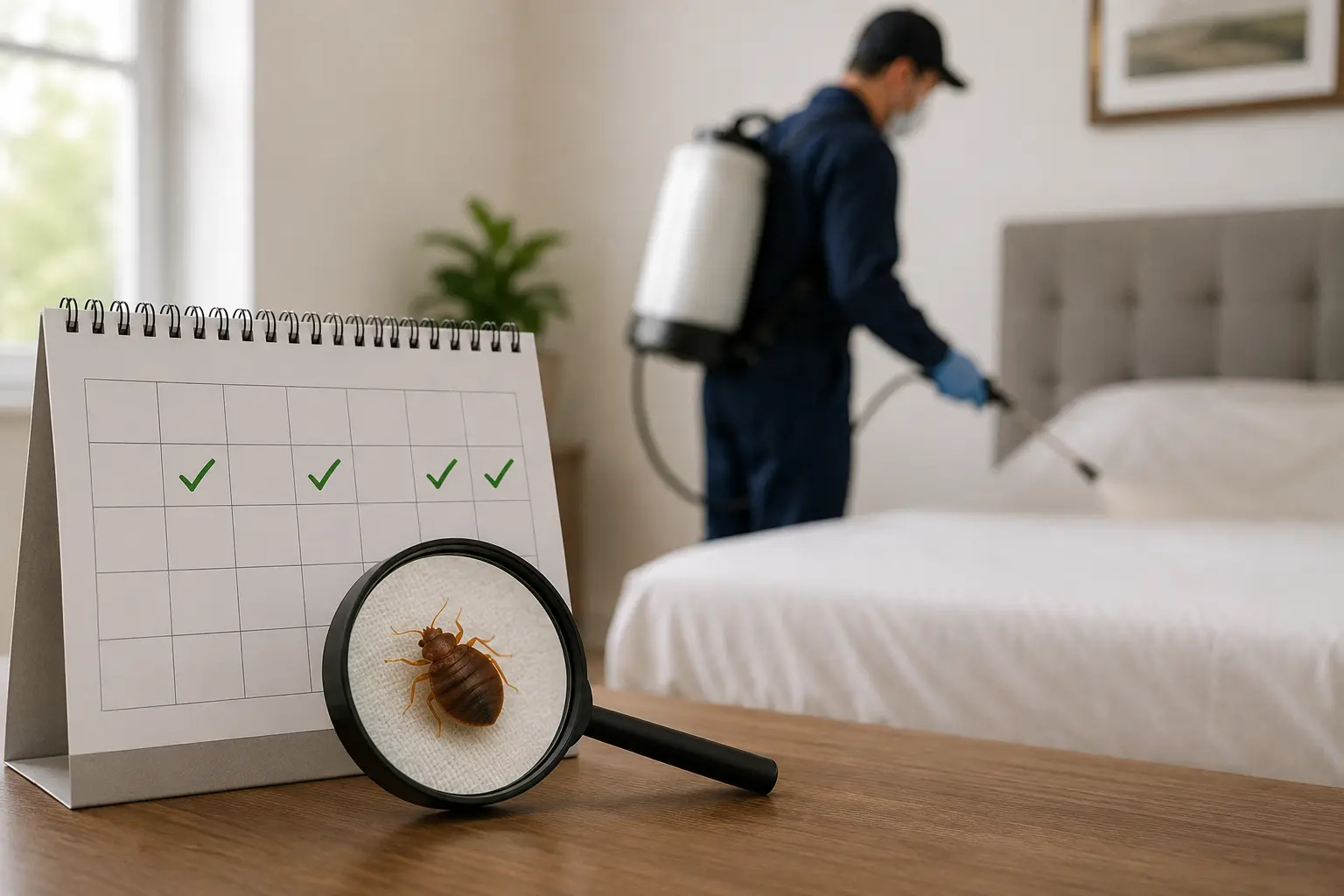
Worried that one visit from a technician isn’t enough to get rid of bed bugs? You’re not wrong to question it. To fully solve an infestation, you need a clear plan for how often to repeat bed bug treatment so the bugs don’t quietly bounce back a few weeks later.
Bed bugs are stubborn, hide in places you’d never expect, and don’t all die at the same time. That’s why a one-and-done spray almost never leads to complete relief. A smart, structured approach to repeat bed bug treatment is what turns a stressful situation into a problem that’s finally behind you.
Most people imagine a strong chemical treatment wiping out every bed bug in a single visit. In real homes and apartments, it rarely works that way. Bed bugs hide deep in cracks, inside furniture, behind switch plates, and even in loose wallpaper, so any treatment can miss a few survivors.
Eggs are the bigger issue. Many products don’t kill every egg that’s tucked away in tight seams or deep gaps, which means new bugs can hatch 7–14 days later. If there’s no planned second bed bug treatment, those new hatchlings start biting again and rebuilding the population.
Bed bugs go from egg to adult through several stages, and they usually need a blood meal between each one. Because of this, timing really matters. A well-designed bed bug follow-up treatment is usually scheduled to catch newly hatched nymphs before they’re mature and laying more eggs.
Temperature and clutter play a role too. Warmer rooms can speed up development, and heavy clutter gives them more hiding spots. That’s why a tidy sleeping area and careful prep often make a huge difference in how quickly an infestation clears.
Most professionals don’t guess; they work with a structured bed bug treatment schedule that’s been tested over hundreds of jobs. It’s not just about spraying again at random, but matching the return visit to how bed bugs grow and move.
For a standard chemical approach in a mild to moderate infestation, a common pattern looks something like this, though exact dates can vary by company and product:
Visit 1: Initial inspection, preparation guidance, and primary treatment.
Visit 2: Follow-up inspection and treatment, usually 10–14 days after the first.
Visit 3 (if needed): Final inspection and any spot treatment, often 3–4 weeks after the second visit.
Heat treatments tend to kill all life stages in a single session when done correctly, but they still generally include a follow-up pest control inspection to confirm no new activity. Skipping that last check can leave you wondering for weeks whether the bugs are really gone.
The size of the home, how long the problem has been going on, and how many rooms are affected will all influence pest treatment frequency. A small, early infestation in one bedroom might clear faster than a long-standing issue spread across multiple units.
Resident behavior matters, too. If people are moving furniture between rooms, bringing in used items, or ignoring prep instructions, the bed bug extermination process can drag out, and extra visits may be needed to finally get ahead of the infestation.
In real-world pest control work, mild infestations usually take two visits, while heavier ones often need three or more. The goal isn’t to hit some magic number; it’s to keep going until you have confidence that activity has stopped completely.
Technicians often track where bed bugs were first found, how many live bugs and eggs they saw, and how many rooms were active. That information shapes the bed bug control plan for your home, instead of using a one-size-fits-all pattern.
Even after professional service, it’s smart to stay on the lookout for warning signs that repeat pest control might be needed to finish the job. Don’t ignore small clues that something’s still moving around at night.
Watch for fresh bites in lines or clusters, new dark spots on sheets or mattress seams, or live bugs on the bed frame or headboard. One or two suspicious marks aren’t always proof, but a pattern over several nights suggests they’re not gone yet.
A proper second visit isn’t just a quick spray-and-go. A thorough technician will walk through the rooms again, re-check key hiding zones, and ask what you’ve seen since the last appointment, so any remaining activity can be targeted precisely.
An effective bed bug follow-up treatment often includes careful treatment of bed frames, baseboards, nearby furniture, and any cracks identified in the first visit, with special attention to spots that showed heavy activity or fresh signs.
Every company works a bit differently, but a solid bed bug extermination process usually follows a clear structure that’s easy for residents to understand and prepare for.
That structure often includes inspection, written recommendations, treatment of sleeping and resting areas, monitoring, and repeat visits until all signs of bed bug infestation removal are confirmed.
The time between appointments isn’t just waiting; it’s part of the treatment. Simple habits can make each repeat bed bug treatment more effective and shorten the whole process.
Consistent vacuuming around beds, sofas, and baseboards, along with sealing cracks and gaps, helps reduce hiding spots so treatments reach more bugs with each visit.
Using mattress and box spring encasements, bagging and washing bedding on a hot cycle, and keeping clothes off the floor all make it harder for bugs to spread. These steps also make inspections easier and quicker.
If your provider gives you a written bed bug treatment schedule or prep checklist, keep it handy and follow it closely. Marking dates on a calendar and writing down what you notice each week can be surprisingly helpful for your technician.
It’s normal to stay on edge even after the last appointment. People often wake up expecting to see fresh bites, which makes it hard to relax, even when the infestation is actually over.
Most professionals consider complete bed bug removal achieved when there are no bites, no live bugs, and no fresh droppings or shed skins for several weeks after the final visit, especially in and around sleeping areas.
For extra peace of mind, some homes use bed bug interceptors under bed and sofa legs, which can catch any stragglers trying to climb up. Those simple devices help confirm that the follow-up pest control plan really did its job.
Clearing bed bugs is rarely about a single visit; it’s about smart timing, careful inspections, and a clear plan to repeat bed bug treatment until there are no fresh signs at all. Paying attention to what you see between visits and sharing that with your technician speeds everything up.
If you’re unsure how many visits you’ll need, or you’re still seeing activity after service, it’s worth speaking with a licensed local team like Kiran Enterprises to review your history, refine the bed bug control plan, and schedule any extra support you might need.
Get a same-day inspection from our certified technicians.
Chat on WhatsAppOr call +91 98452 73699