
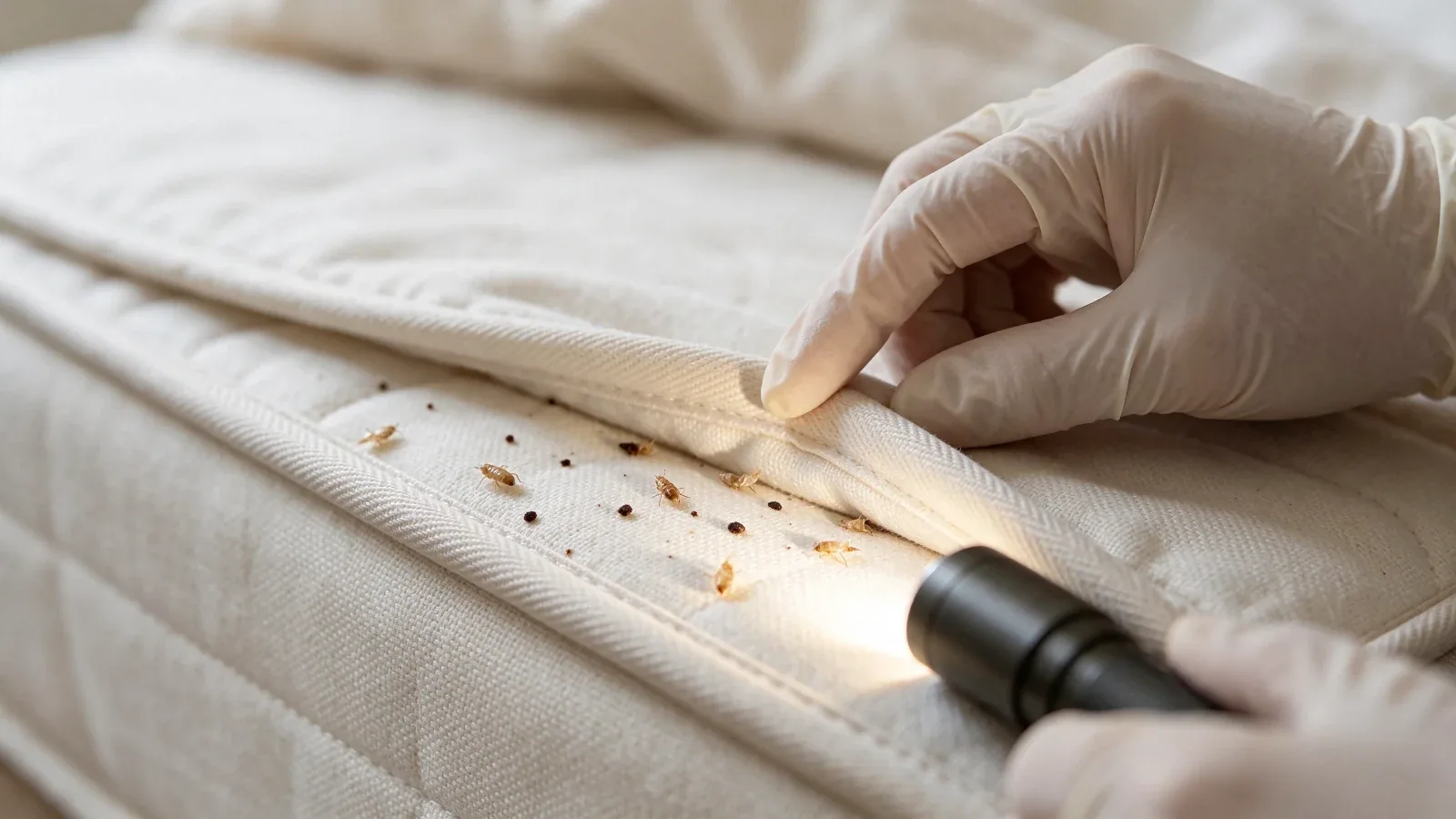
Understanding How to Identify Bed Bug Droppings and Shed Skins can help Bangalore homeowners detect hidden bed bug activity before an infestation spreads throughout the property. These physical signs often remain visible even when live bed bugs are concealed inside mattress seams, wooden furniture joints, and other narrow hiding places.
Bed bugs are skilled at hiding, making direct sightings difficult during routine cleaning. This guide from Kiran Pest Control explains what their droppings and shed skins look like, where to find them, how to distinguish them from other household debris, and when professional inspection may be necessary.
What Are Bed Bug Droppings and Shed Skins?
Bed bugs leave physical evidence as they feed, develop, and move between hiding places. Their droppings and shed skins are useful inspection clues because these materials may remain after the insects move deeper into concealed spaces.
Understanding Bed Bug Droppings
Bed bug droppings, also called faecal spots, consist of digested blood waste. They commonly appear as small dark brown or black marks on mattresses, wooden furniture, upholstery, and nearby surfaces.
On absorbent materials, the spots may soak into the fabric and resemble tiny ink stains. On non-absorbent surfaces, they may appear as dark deposits or dried marks.
Understanding Bed Bug Shed Skins
Young bed bugs, known as nymphs, shed their outer covering as they grow. These discarded coverings are called exuviae or shed skins.
Bed bug shed skins are usually pale yellowish, translucent, and shaped like the insect that left them behind. Unlike ordinary dust or fabric fibres, they may show a recognisable insect body outline.
Why These Signs Matter
Finding droppings or shed skins can indicate that bed bugs have occupied an area. However, these materials may remain after an infestation has been controlled, so their presence alone does not always prove that live bed bugs are currently present.
Accurate identification requires considering additional evidence, including live insects, eggs, recent sightings, and changes observed during follow-up inspections.
How to Identify Bed Bug Droppings
Bed bug droppings are among the most recognisable signs of infestation. Their appearance varies depending on the surface where they are deposited and whether the material absorbs moisture.
Dark Spots on Mattresses and Bedsheets
On mattresses and bedding, bed bug droppings may appear as small black or dark brown dots. They are often found along mattress piping, seams, labels, and fabric folds where bed bugs hide.
These marks may resemble tiny ink stains because the liquid waste can penetrate absorbent fabric. They should not be confused with ordinary dirt or fresh blood stains.
Stains on Wooden Bed Frames
Wooden beds provide numerous hiding places for bed bugs, particularly around headboards, joints, and screw holes. Dark faecal marks may accumulate close to these protected areas.
Inspect corners, connecting panels, and narrow gaps using a flashlight. Clusters of dark spots near other bed bug evidence deserve closer examination.
Marks on Walls and Furniture
Bed bug droppings may also appear near skirting boards, wall cracks, upholstered furniture, and the backs of headboards. In established infestations, evidence may extend beyond the bed itself.
Dark marks on walls can have several causes, including moisture, mould, and other insects. Avoid identifying bed bugs based on stains alone.
How Droppings Differ from Ordinary Dirt
Loose household dust can usually be removed without leaving a persistent stain. Bed bug faecal marks on absorbent materials may remain embedded in the surface.
However, rubbing or wetting suspicious marks is not a reliable identification test. Photograph the evidence and inspect nearby hiding places for additional signs.
How to Recognise Bed Bug Shed Skins
Shed skins can provide valuable clues about bed bug development and hiding locations. They are often found in protected spaces where young bed bugs remain concealed between feeding periods.
Colour and Appearance
Bed bug shed skins generally appear pale yellow, light brown, or nearly transparent. They retain the flattened, oval body outline of a bed bug and may show legs and other insect features.
Because the coverings are lightweight and delicate, they can be mistaken for small pieces of dry skin, dust, or insect debris.
Where Shed Skins Accumulate
- Mattress seams, piping, and labels.
- Wooden headboard cracks and joints.
- Bed frame corners and screw holes.
- Sofa stitching and cushion folds.
- Drawer runners and bedside furniture.
- Protected gaps around skirting boards.
These locations are worth checking because bed bugs tend to remain close to their preferred hiding places. Shed skins may accumulate where insects have repeatedly sheltered.
How Shed Skins Differ from Live Bed Bugs
Live bed bugs have a complete body and can move, while shed skins are empty outer coverings. Shed skins are usually lighter in colour and may appear fragile or hollow.
A magnifying glass can help reveal the insect-like structure. If identification remains uncertain, a pest control technician can examine the material.
Do Shed Skins Confirm an Active Infestation?
Shed skins confirm that an insect has undergone development, but the material may remain long after it was discarded. Finding bed bug shed skins strongly suggests previous bed bug activity when identification is correct.
To determine whether the infestation is still active, inspect for live insects, eggs, and other recent evidence.
Found dark spots or shed skins near your bed? Arrange a professional inspection to identify the pest and discuss suitable treatment options.
Get a Free Quote Call NowHow to Inspect Your Home for Bed Bug Evidence
A systematic inspection helps identify suspicious evidence without unnecessarily disturbing furniture. Bangalore homeowners should focus on sleeping areas and nearby furniture before expanding the search.
Prepare Suitable Inspection Tools
Use a bright flashlight, magnifying glass, disposable gloves, and mobile phone camera. A sealable container can be useful for preserving a suspected insect or shed skin for identification.
Follow a Practical Inspection Process
- Inspect mattress seams: Examine stitching, piping, labels, and folds for dark spots or pale insect coverings.
- Check wooden bed frames: Look inside accessible joints, headboard gaps, screw holes, and supporting rails.
- Examine upholstered furniture: Inspect sofa seams, cushion edges, and the undersides of chairs.
- Check nearby furniture: Look around bedside tables, drawers, and furniture corners.
- Inspect surrounding surfaces: Examine skirting boards, wall cracks, and other protected gaps near sleeping areas.
- Document suspicious evidence: Photograph marks, shed skins, or insects before cleaning the affected surfaces.
Avoid moving potentially infested furniture into unaffected rooms. Bed bugs may travel with belongings and establish new hiding places elsewhere in the property.
What If You Cannot Find Live Bed Bugs?
Bed bugs may remain concealed during daylight, making them difficult to observe. Droppings and shed skins can guide further inspection, but neither should be treated as conclusive proof of current activity.
Professional inspection may be useful when suspicious evidence persists or occupants report repeated sightings. Learn more about bed bug control services in Bangalore.
Bed Bug Evidence vs Other Household Pest Signs
Several household pests leave droppings, skins, or debris that can resemble bed bug evidence. Identifying the correct pest is important because treatment methods differ.
| Evidence | Typical Appearance | Common Locations |
|---|---|---|
| Bed Bug Droppings | Dark brown or black faecal spots, sometimes absorbed into fabric | Mattress seams, bed frames, upholstery |
| Bed Bug Shed Skins | Pale, translucent, flattened insect-shaped coverings | Headboard joints, mattress seams, furniture cracks |
| Cockroach Droppings | Dark specks or ridged pellets, depending on species | Kitchens, cabinets, appliances, sheltered corners |
| Rodent Droppings | Solid, dark pellets with a shape that varies by species | Storage spaces, cupboards, movement routes |
| Wood Borer Debris | Fine powder or granular material associated with wood damage | Wooden furniture, exit holes, affected timber |
If suspicious marks are found mainly around kitchens or appliances, other pests may be responsible. Our cockroach control services can help address confirmed cockroach activity.
Similarly, pellet-like droppings in storage spaces may require rodent control rather than bed bug treatment. Correct identification helps avoid unnecessary chemical applications.
What to Do After Finding Bed Bug Droppings or Shed Skins
Finding suspicious evidence can be concerning, but immediate use of household insecticides is not always the best response. Confirming the pest and understanding the affected areas should come before treatment.
Document and Preserve Evidence
Take clear photographs of suspicious marks and shed skins before cleaning. If possible, preserve an identifiable specimen in a sealed container for professional examination.
Record where the evidence was found and whether live insects have been observed. This information can help technicians focus their inspection.
Clean Accessible Areas Carefully
Vacuuming may remove loose debris, shed skins, and some accessible bed bugs. Use a suitable crevice attachment around mattress edges and furniture joints.
Seal and dispose of collected vacuum material appropriately. Cleaning alone does not reliably eliminate bed bugs or eggs hidden inside inaccessible spaces.
Avoid Unapproved DIY Chemicals
Do not apply random insecticides, disinfectants, kerosene, or other unsuitable substances to mattresses and furniture. Incorrect chemical use can create health risks and may not reach concealed bed bugs.
Professional technicians select treatment methods based on infestation findings, product labels, and the characteristics of the property.
Arrange Professional Treatment When Necessary
When live bed bugs or other convincing evidence confirms an infestation, professional treatment may be appropriate. Depending on the situation, control measures may involve targeted insecticides, suitable heat-based methods, physical removal, and follow-up monitoring.
Hotels, hostels, serviced apartments, and rental properties in Bangalore should also document findings and arrange inspections of relevant areas to reduce the risk of spreading bed bugs between rooms.
Concerned about possible bed bug activity in your property? Contact Kiran Pest Control for professional identification and guidance on an appropriate treatment plan.
Get a Free Quote Call NowFrequently Asked Questions
What do bed bug droppings look like on a mattress?
Bed bug droppings usually appear as small dark brown or black spots, often resembling tiny ink stains on absorbent mattress fabric. They are commonly found along seams, piping, labels, and other protected areas, although similar marks can have different causes.
What colour are bed bug shed skins?
Bed bug shed skins are generally pale yellowish, light brown, or translucent. They retain the flattened body shape of the insect and may show visible legs and other features when examined closely.
Do bed bug droppings mean an infestation is active?
Bed bug droppings indicate that bed bugs may have occupied the area, but old stains can remain after an infestation has ended. Live insects, eggs, and other recent evidence are important for determining whether activity continues.
Can bed bug shed skins be mistaken for dust?
Yes. Shed skins can resemble pale household debris because they are lightweight and delicate. However, closer inspection may reveal an identifiable insect body outline, which helps distinguish them from ordinary dust or fabric fibres.
Should I replace my mattress after finding bed bug droppings?
Mattress replacement is not always necessary. A professional inspection can help determine whether the mattress can be treated or protected with an appropriate encasement, and discarding infested furniture without suitable precautions may spread bed bugs.
Conclusion
Learning How to Identify Bed Bug Droppings and Shed Skins helps Bangalore homeowners and businesses recognise potential infestation signs that may otherwise go unnoticed. Dark faecal spots, translucent shed skins, and related evidence around mattresses, wooden bed frames, and upholstered furniture are useful inspection clues, but accurate identification is essential before treatment.
Kiran Pest Control (Kiran Enterprises) is a licensed pest control company serving Bangalore since 2006. For professional bed bug treatment in Bangalore, request a free quote or contact our team at +91 98452 73699. Explore more pest control articles or visit the Kiran Pest Control homepage for additional information.
Need help with a pest problem?
Contact Kiran Pest Control to discuss the issue and arrange an inspection.
Contact our teamNeed Pest Control in Bangalore?
Get a same-day inspection from our certified technicians.
Contact Our Team Chat on WhatsAppOr call +91 98452 73699