
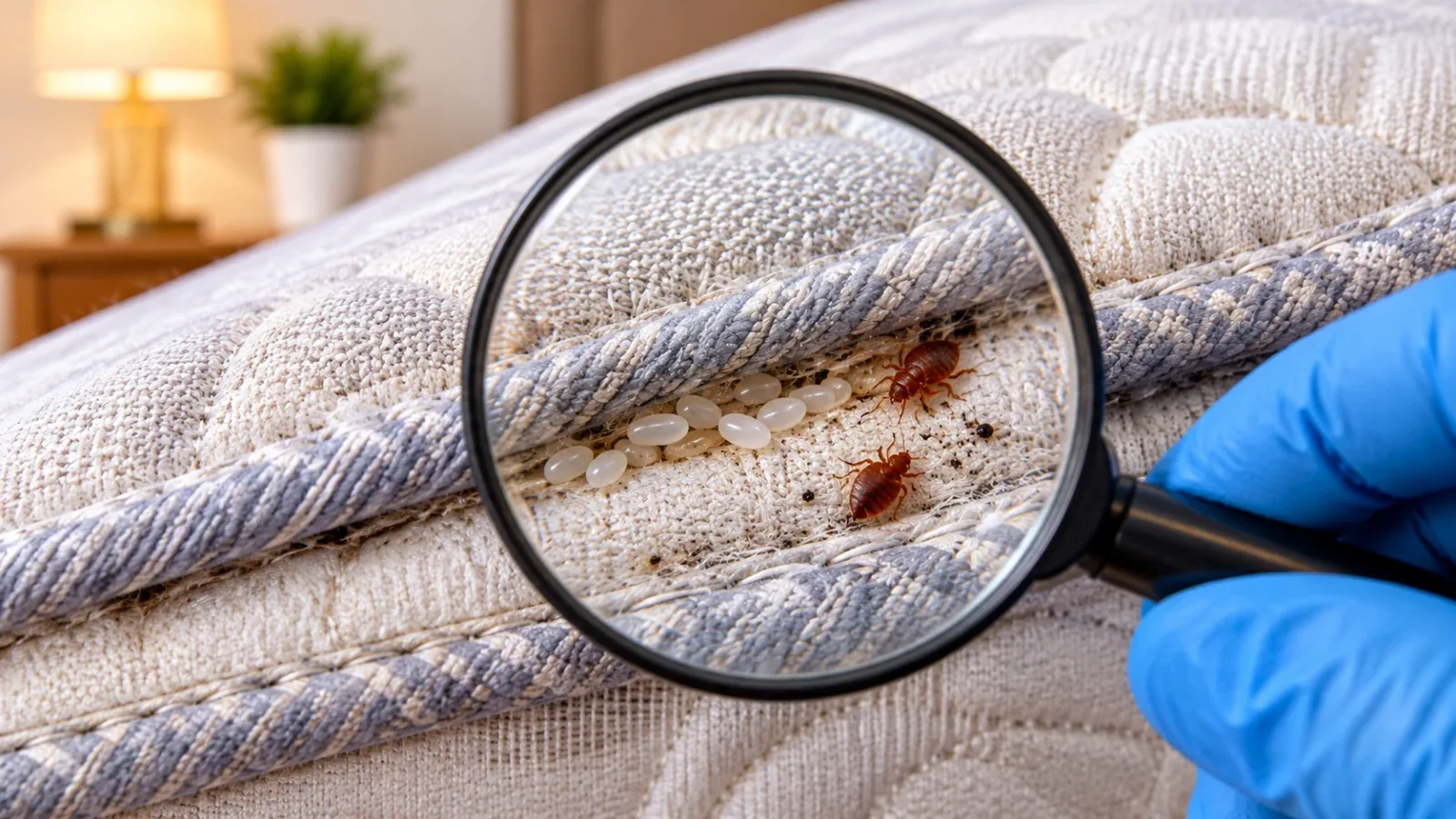
Learning How to Identify Bed Bug Eggs on Mattresses can help Bangalore homeowners recognise possible signs of an infestation before overlooking concealed activity. Bed bug eggs are tiny, pale, and often attached to protected surfaces such as mattress seams, fabric piping, and nearby bed frame joints.
Because eggs can resemble dust, fabric particles, or other household debris, accurate identification requires careful observation. Understanding their appearance, common hiding places, and safe inspection methods can help homeowners decide when professional pest control assistance is necessary.
What Do Bed Bug Eggs Look Like?
Bed bug eggs are much smaller than adult bed bugs and can be difficult to notice without close inspection. Their colour, shape, and attachment to surfaces provide useful identification clues.
Colour of Bed Bug Eggs
Fresh bed bug eggs are generally pearly-white or translucent. Their pale appearance can make them difficult to distinguish against light-coloured mattress fabric.
Shape and Appearance
Bed bug eggs are elongated and oval, with a smooth outer surface. They may resemble tiny grains of rice, although they are considerably smaller.
Small Size
Bed bug eggs are approximately the size of a pinhead and may be difficult to recognise with the naked eye. A magnifying glass can help examine suspicious objects more closely.
Attachment to Surfaces
Female bed bugs attach eggs to surfaces using a sticky substance. Eggs may remain fixed along fabric seams, wooden joints, and protected cracks.
Individual Eggs and Small Groups
Eggs may appear individually or in groups near established hiding places. Their presence alongside live insects, shed skins, or dark spotting strengthens suspicion of bed bug activity.
Empty Eggshells
After hatching, pale empty eggshells may remain attached to surfaces. These can indicate previous activity, but professional assessment may be needed to determine whether an infestation remains active.
Where Do Bed Bugs Lay Eggs on Mattresses?
Bed bugs generally lay eggs in protected locations close to where people sleep. Mattress seams and nearby furniture provide sheltered spaces that may be overlooked during ordinary cleaning.
Mattress Seams
Stitched mattress edges provide narrow spaces where eggs may be attached. Inspect accessible seams carefully using adequate lighting.
Fabric Piping
Raised fabric piping around mattress edges can conceal eggs and small insects. Examine the areas where piping meets the main mattress surface.
Mattress Labels
Fabric labels and their attachment points may provide protected spaces. Carefully lift accessible label edges without tearing the mattress.
Mattress Corners
Folded fabric around mattress corners can create narrow hiding places. Check these areas when suspicious signs appear.
Bed Frame Joints
Eggs may also be found in wooden joints, screw recesses, and protected gaps around the bed. Inspecting only the mattress may miss nearby activity.
Headboards and Nearby Furniture
Bed bugs may deposit eggs in protected spaces behind headboards and within nearby furniture. Accessible joints and crevices should be examined when an infestation is suspected.
How to Inspect a Mattress for Bed Bug Eggs
Careful inspection can help homeowners identify suspicious evidence without damaging furniture. Avoid shaking bedding or moving potentially affected items unnecessarily.
Prepare the Inspection Area
Choose a well-lit bedroom and keep surrounding furniture accessible. Use a handheld flashlight to illuminate mattress seams and protected gaps.
Remove Bedding Carefully
Gently remove bedsheets, pillow covers, and washable mattress protectors. Place potentially exposed fabrics directly into suitable sealed bags or containers until they can be laundered.
Examine Mattress Seams
Inspect accessible stitching, piping, labels, and corners. Look for tiny pale oval objects attached to fabric surfaces.
Use a Magnifying Glass
Magnification may help distinguish suspicious objects from ordinary dust or fabric debris. Avoid scraping or crushing possible eggs before identification.
Check for Additional Evidence
Look for live bed bugs, dark faecal spots, and shed skins around the same hiding places. These signs can provide useful context when identifying suspected eggs.
Document Suspicious Findings
Take clear photographs of suspected eggs and nearby evidence. Professional identification can help distinguish bed bug eggs from unrelated household particles.
Found tiny white eggs or suspicious marks on your mattress? Contact Kiran Pest Control for professional bed bug identification and suitable treatment guidance for your Bangalore home.
Get a Free Quote Call NowHow to Distinguish Bed Bug Eggs From Other Household Particles
Not every small white object found on a mattress is a bed bug egg. Dust, fabric fibres, and other insect-related materials can sometimes appear similar.
Bed Bug Eggs Versus Dust
Dust particles usually have irregular shapes and may move easily when disturbed. Bed bug eggs are generally oval and attached to surfaces.
Bed Bug Eggs Versus Fabric Lint
Fabric lint often consists of loose fibres with irregular edges. Bed bug eggs have a more defined, smooth, elongated shape.
Bed Bug Eggs Versus Other Insect Eggs
Different insects produce eggs with varying appearances. Shape and location alone may not provide reliable identification without additional evidence.
Look for Nearby Bed Bug Activity
Live insects, shed skins, and dark spotting around mattress seams can support identification. A suspicious pale object without other evidence should not automatically be classified as a bed bug egg.
Seek Professional Confirmation
When identification remains uncertain, professional inspection can help determine whether bed bugs are present. Accurate identification avoids unnecessary treatment and inappropriate chemical use.
What to Do If You Find Bed Bug Eggs on a Mattress
Suspected bed bug eggs should be handled carefully because they may indicate an active or previous infestation. Cleaning can remove accessible material, but it may not address concealed insects elsewhere.
Avoid Moving the Mattress
Do not carry a suspected infested mattress between rooms without appropriate containment. Movement may dislodge insects and introduce them into unaffected areas.
Keep Exposed Bedding Contained
Place potentially affected bedsheets and pillow covers into suitable sealed bags until they can be processed. Avoid shaking fabrics indoors.
Launder Suitable Fabrics
Wash bedding according to its care instructions. Where fabric labels permit, suitable heat drying can help kill bed bugs and eggs in washable items.
Vacuum Accessible Areas
Careful vacuuming may remove accessible insects and eggs from suitable surfaces. Securely contain and dispose of vacuum contents to reduce the risk of releasing captured material.
Do Not Use Unsafe Home Remedies
Never apply petrol, kerosene, alcohol, or unapproved insecticides to mattresses. These substances may create fire hazards, damage materials, or expose household members to harmful chemicals.
Consider Professional Treatment
Confirmed bed bug activity may require treatment of the mattress, bed frame, and surrounding hiding places. Appropriate methods depend on the materials involved and infestation conditions.
Professional Bed Bug Inspection and Treatment in Bangalore
Professional pest management can help homeowners identify suspected bed bug eggs and determine whether treatment is necessary. Effective management requires attention to both visible evidence and concealed hiding places.
Accurate Identification
A trained technician examines suspected eggs, live insects, shed skins, and other physical evidence. This helps distinguish bed bugs from unrelated insects or household debris.
Detailed Mattress Inspection
Professional inspection may include mattress seams, fabric piping, bed frames, headboards, and nearby furniture. The findings help establish where activity is occurring.
Suitable Treatment Methods
Depending on the situation, professional treatment may involve carefully selected physical or chemical control methods. Products must be suitable for the intended surfaces and applied according to label instructions.
Follow-Up Monitoring
Bed bugs may remain concealed or emerge from eggs that were not effectively treated. Follow-up assessment helps determine whether additional control measures are necessary.
Why Choose Kiran Pest Control?
Kiran Pest Control (Kiran Enterprises) is a licensed pest control company serving Bangalore since 2006. We provide pest management services for residential and commercial properties, focusing on professional inspection, appropriate treatment methods, and practical prevention guidance.
Homeowners, tenants, hotels, and property managers can contact our team to discuss suspected bed bug activity and suitable control options. Learn more about our bed bug control services in Bangalore or visit our contact page.
Still finding suspected bed bug eggs or insects around your bed? Request professional inspection assistance from Kiran Pest Control and discuss appropriate treatment and prevention measures for your property.
Get a Free Quote Call NowFrequently Asked Questions
What colour are bed bug eggs?
Bed bug eggs are generally pearly-white or translucent. Their pale appearance can make them difficult to see against light-coloured mattress fabric.
Can bed bug eggs be seen with the naked eye?
Yes, but they are extremely small and may be difficult to recognise without magnification. A flashlight and magnifying glass can help with careful inspection.
Where are bed bug eggs commonly found on mattresses?
Eggs may be attached to mattress seams, fabric piping, labels, and protected folds. They can also occur in nearby bed frame joints and headboard gaps.
Does vacuuming remove bed bug eggs?
Vacuuming may remove accessible eggs, but some remain attached to surfaces or concealed in protected spaces. Vacuuming alone is not a reliable way to eliminate an established infestation.
How can I arrange professional bed bug treatment in Bangalore?
You can contact Kiran Pest Control at +91 98452 73699 or request a quotation through our website. Our team can discuss suspected activity, professional identification, and suitable treatment options for your property.
Conclusion
Understanding How to Identify Bed Bug Eggs on Mattresses helps Bangalore homeowners recognise suspicious evidence and respond responsibly. Their pale colour, small oval shape, and tendency to remain attached to protected surfaces make careful inspection important, especially when live insects or other signs are present.
If you suspect bed bug eggs or an infestation in your bedroom, contact Kiran Pest Control at +91 98452 73699 or request a free quote. Explore our pest control blog for more guidance on bed bug identification, mattress inspection, and professional pest management.
Need help with a pest problem?
Contact Kiran Pest Control to discuss the issue and arrange an inspection.
Contact our teamNeed Pest Control in Bangalore?
Get a same-day inspection from our certified technicians.
Contact Our Team Chat on WhatsAppOr call +91 98452 73699