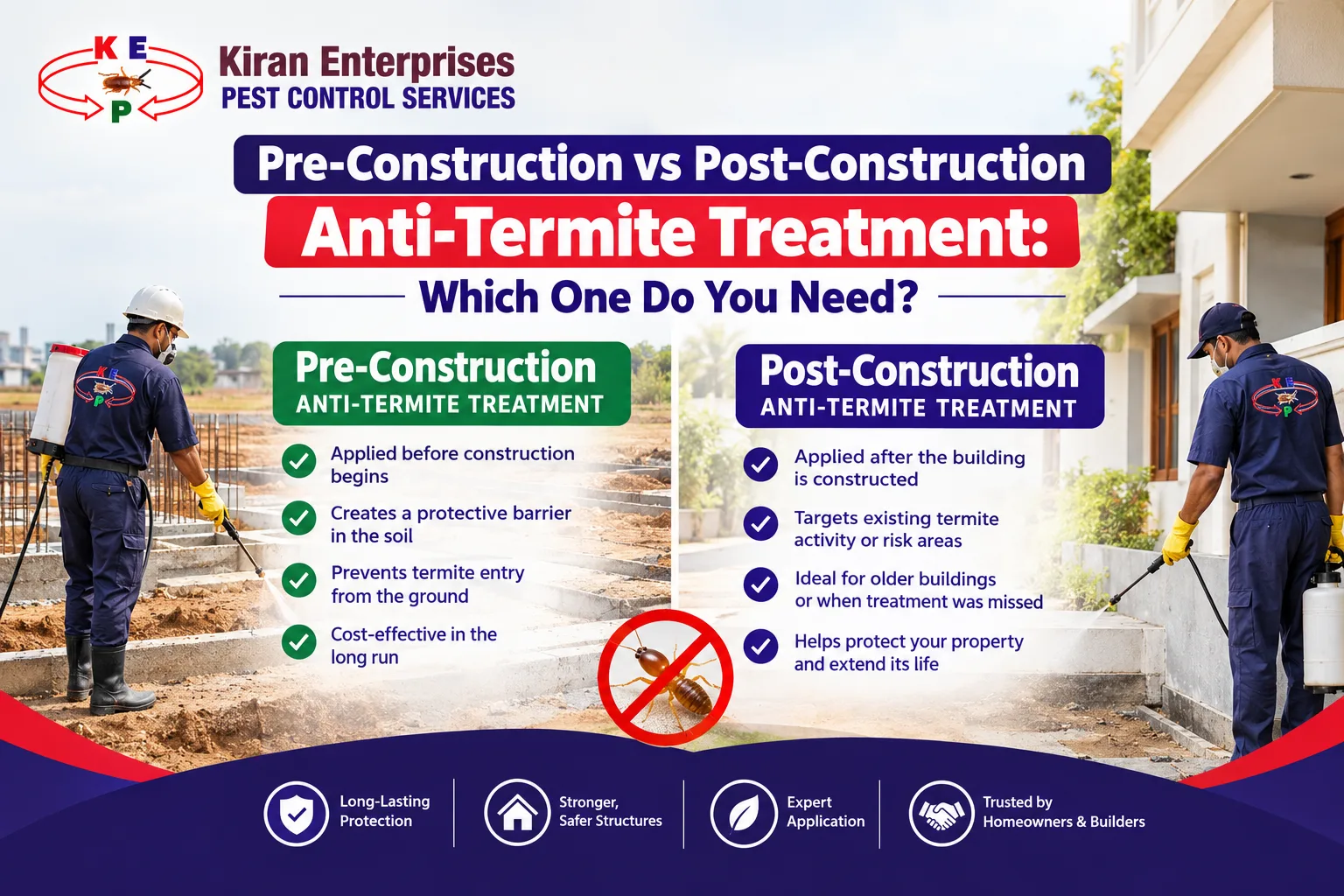
If you are building a house, you have probably heard the term pre construction anti termite treatment from your contractor, but no one has clearly explained what happens if you skip it or try to manage termites later. That gap is exactly where most Bangalore and Mysore homeowners make expensive mistakes.
Another group comes in much later, after they spot mud tunnels on walls or hollow-sounding wood, and starts searching for post-construction solutions. You do not want to be in that second group if you can avoid it. Let’s walk through what really changes between treating before and after construction, what it costs, and how to decide what you need for your project.
For a new home, anti termite treatment is not just someone spraying a random chemical around the plot. It follows a sequence on the excavated soil, under the foundation, and along the external perimeter before any flooring or plinth is completed.
For an existing building, the focus shifts to drilling through floors at regular intervals, injecting termiticide into the soil below, and sealing those holes neatly as part of a detailed termite control services plan.
In a typical pre construction anti termite treatment for an individual house, technicians treat the bottom and sides of foundation trenches once excavation is done, then the top of the plinth fill, and finally a band along the outer boundary of the building. This creates a continuous treated soil barrier under and around the structure.
For most home builds under three floors in Bangalore and Mysore, this stage usually finishes within one or two site visits, aligned with the civil work schedule, and gives the longest-lasting termite prevention you can get for that footprint.
From the contractor’s side, doing treatment before concrete and tiles go in is simpler, cheaper, and less disruptive. It also lets them showcase that the building is "termite protected" at handover, which buyers increasingly ask about when they compare builder termite treatment promises.
From your side as the owner, this is the only time the entire soil profile under the structure is fully open and accessible, which is why skipping it and hoping to fix termites later rarely works out well.
Once the home is completed and occupied, any anti termite work becomes a form of damage control. Technicians drill 12–18 mm holes along internal walls at fixed spacing, inject termiticide under pressure, and seal those holes to cut active colonies off from the building.
This kind of post construction termite treatment is usually done only after signs like discarded wings, mud tubes, or damaged door frames appear, which means some level of structural or cosmetic repair is already waiting for you.
Because flooring, skirting, and built-in furniture already cover most of the slab, no one can reach every point where termites may be entering. That is why even a solid round of anti termite treatment after construction often needs follow-up checks every year or two to stay effective.
In some older houses around Mysore with mixed foundations and patchy earlier work, technicians have to open small sections of flooring for direct access to soil, which adds to the overall termite management cost and disruption.
On new builds, pre-construction treatment is typically charged per square foot of built-up area, and for most independent houses the spend is a small percentage of your flooring budget, yet it protects the entire base structure from termite proofing failures.
By contrast, serious infestation in an existing home often adds replacement of door frames, skirting, and some furniture on top of the treatment bill, which quietly pushes the total termite prevention spend much higher than if the soil had been treated during construction.
Homeowners tend to look only at the quote from the pest company and ignore secondary costs. In reality, you may lose several days to drilling noise, dust cleaning, and rearranging furniture when you approve late termite control services in a fully furnished house.
In multi-storey buildings with multiple flats, coordinating access to all affected units and common areas can also increase the time and labour needed, especially if earlier builder termite treatment was skipped or done only in patches.
If your house is still on paper or in the excavation stage, choose full pre-construction work without hesitation, because this is the only way to treat the entire footprint in one go and lock in strong home termite protection for the long term.
If the structure is already finished and occupied, your only realistic option is a targeted programme, usually starting with inspection, drill-and-fill, and then planned follow-up visits based on the termite chemicals used and the level of risk around the building.
First, ask your contractor for the detailed schedule of construction pest control activities, including when foundation trenches, plinth fills, and external perimeters will be treated, so you can confirm the team actually comes on those specific days.
Second, ask for the product name, concentration, and application rate of the termite chemicals they plan to use, and keep a copy of the invoice and treatment certificate in your project file for future reference during resale or renovation.
A good company will start with a proper inspection, then give you a simple drawing marking treatment zones, drilling points, and likely colony movement, instead of just quoting a lump sum for generic anti termite treatment without explaining the method.
They should also be comfortable answering questions on safety, smell, and drying time, especially in homes with children or pets, and clearly explain how their termite proofing guarantees work over the next few years.
“What method will you use for this specific building type?” — Villas, row houses, and apartments need slightly different termite management approaches.
“How many visits are included?” — Clarify the interval and scope of each visit, not just the headline warranty period.
“What preparation is needed from our side?” — Ask which rooms will be drilled, how loud it will be, and how long furniture needs to be moved.
“What is excluded?” — For example, freestanding sheds or garden features may require separate treatment and pricing.
For new homes, choosing pre construction anti termite treatment is less about ticking a box on your builder’s checklist and more about avoiding years of patchwork fixes and hidden repair costs. For existing homes, you still have strong options, but they will always involve some compromise and a bit more disruption.
If you are planning or already living in a house in Bangalore or Mysore and want clear, practical guidance rather than guesswork, reach out to a reliable local specialist such as Kiran Enterprises to discuss the right mix of pre and post termite work for your site and budget, then schedule your inspection before the next construction milestone passes.
Contact Kiran Pest Control to discuss the issue and arrange an inspection.
Contact our teamGet a same-day inspection from our certified technicians.
Contact Our Team Chat on WhatsAppOr call +91 98452 73699