
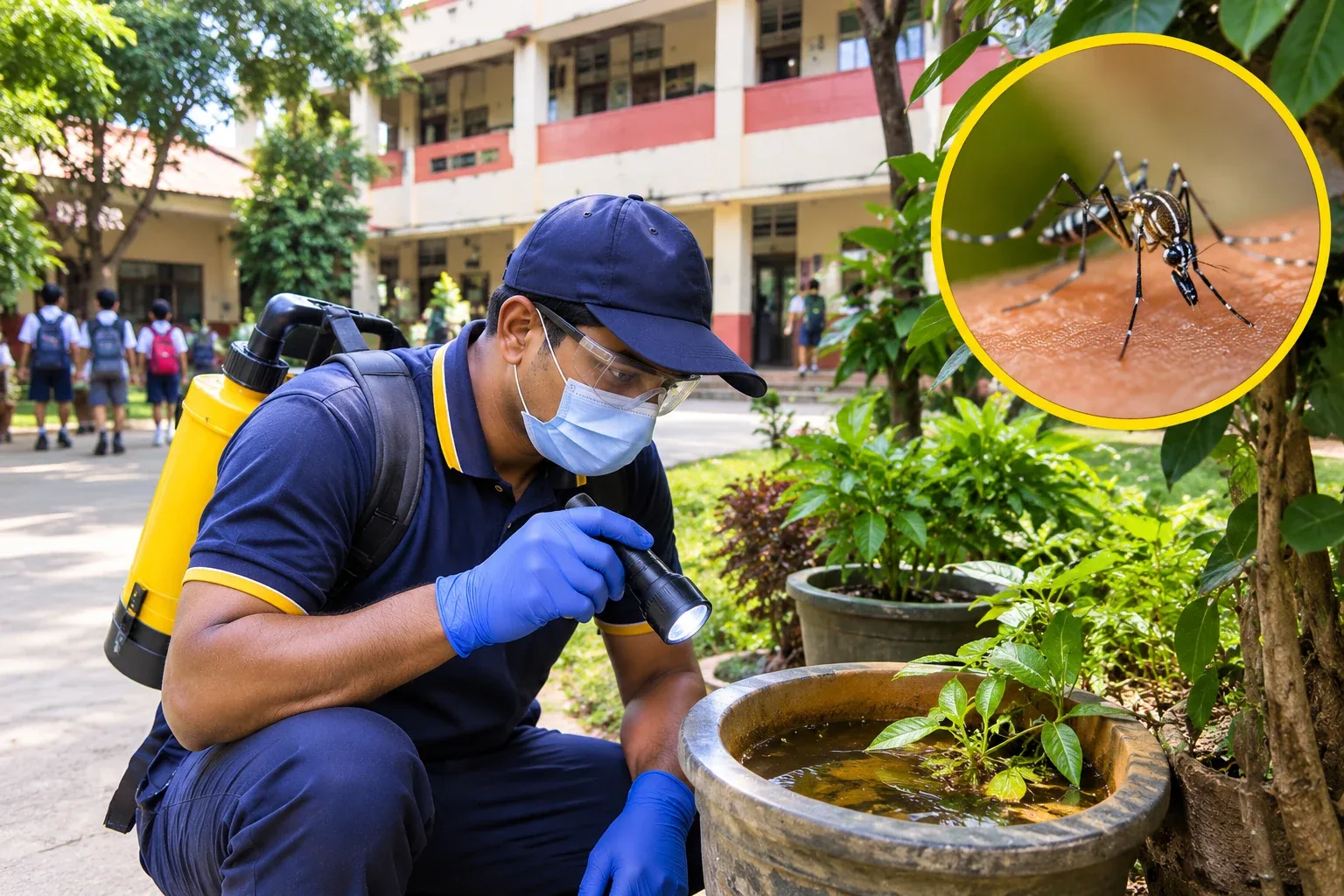
School Campuses Mosquitoes Control Services are important for identifying and managing mosquito activity in educational environments. Dengue mosquitoes, particularly Aedes species, can breed around school buildings when water collects in containers, discarded materials, plant trays and other outdoor areas.
Schools have classrooms, playgrounds, gardens, washrooms, water storage areas and open spaces where mosquitoes may find suitable resting and breeding locations. Regular inspection, water management and professional mosquito control can help schools maintain a cleaner and safer campus environment for students, teachers and staff.
Why Dengue Mosquitoes Are a Concern in School Campuses
Dengue is a mosquito-borne viral disease transmitted mainly by infected Aedes mosquitoes. These mosquitoes can be active during daylight hours, which makes awareness and prevention particularly important in places where students and staff spend time throughout the day.
Daytime Mosquito Activity
Unlike mosquitoes that are mainly active at night, Aedes mosquitoes commonly bite during the day. Students may encounter them around playgrounds, gardens, corridors, outdoor seating areas and other campus locations.
Water Collection Around Buildings
Aedes mosquitoes can breed in relatively small collections of standing water. Plant trays, discarded cups, buckets, unused containers, blocked drains and uncovered water storage items can become potential breeding locations when water remains undisturbed.
Impact on School Activities
Frequent mosquito activity can make outdoor activities and school events uncomfortable. A well-maintained campus with regular mosquito inspections and preventive measures supports a healthier learning environment.
Common Aedes Mosquito Breeding Areas in Schools
Identifying potential breeding locations is an important part of dengue mosquito prevention. School maintenance teams should inspect both visible and less noticeable areas where rainwater or stored water may collect.
Plant Pots and Garden Areas
Gardens and landscaped areas improve the appearance of school campuses, but plant trays and decorative containers can collect water. Inspect pots, trays, discarded plant containers and areas around irrigation systems regularly.
Roof Terraces and Drainage Areas
Blocked roof drains, damaged gutters and water collection points can create mosquito breeding opportunities. Maintenance teams should check rooftops, rainwater outlets and building corners after rainfall.
Water Storage Containers
Water drums, buckets, tanks and other storage containers should remain properly covered. Any containers that are no longer required should be removed or stored so they cannot collect rainwater.
Discarded Materials and Playground Areas
Old tyres, plastic containers, broken toys and discarded materials can hold water outdoors. Regular campus cleaning helps remove these potential breeding locations and makes inspections easier.
Washrooms and Utility Spaces
Inspect washroom surroundings, maintenance rooms, service areas and locations near water pipes. Leaks and poor drainage can create damp conditions that require attention.
How to Identify Aedes Mosquito Activity
Aedes mosquitoes are commonly recognised by their dark body and distinctive white markings on the legs and body. However, identifying a mosquito by appearance alone may not be enough to confirm the species or determine whether it carries dengue.
Look for Standing Water
Check containers, plant trays, discarded items and other places where water collects. The presence of standing water does not automatically confirm mosquito breeding, but it should be investigated and managed.
Observe Daytime Mosquito Activity
Noticeable mosquito activity around classrooms, gardens and playgrounds during the day should be reported to the school maintenance team. Professional inspection can help identify likely species and relevant risk areas.
Check for Larvae in Water Containers
Water containers should be inspected for mosquito larvae by trained personnel. If potential breeding is identified, the water source should be managed using appropriate methods and local public health guidance.
Professional Mosquito Control for School Campuses
Professional mosquito management begins with understanding the campus layout and identifying conditions that support mosquito breeding. A treatment plan should consider the school's buildings, gardens, water storage areas, drainage and outdoor activity spaces.
Campus Inspection
A pest control technician inspects areas where water may collect and where mosquito activity has been reported. The inspection may include gardens, terraces, playground surroundings, drains, utility areas and water storage locations.
Source Reduction
Removing standing water and managing containers is a key part of Aedes mosquito prevention. Empty unnecessary containers, clean suitable water-holding items and arrange repairs to leaking pipes or blocked drainage points.
Targeted Mosquito Treatment
Depending on the inspection findings, suitable professional mosquito control methods may be recommended. Any pesticide application should follow product-label instructions and applicable safety requirements, with particular attention to children, food areas, classrooms and playgrounds.
Safety and School Coordination
Treatment should be coordinated with school management so that students and staff are not exposed during application. The technician should explain any access restrictions, ventilation requirements and re-entry instructions before treated areas are used again.
Monitoring and Follow-Up
Professional mosquito management should include attention to recurring water collection and mosquito activity. Follow-up inspections can help schools identify conditions that need further maintenance or preventive action.
Noticing mosquito activity around your school? Arrange a professional campus inspection and discuss a suitable mosquito control plan.
Get a Free Quote Call NowHow Schools Can Prevent Dengue Mosquito Breeding
Professional treatment works best when supported by regular campus maintenance. School management, housekeeping teams, gardeners and facility staff can all contribute to reducing potential mosquito breeding locations.
Follow a Regular Water Inspection Routine
- Check plant trays, buckets and outdoor containers for collected water.
- Keep water storage containers properly covered.
- Inspect roof terraces, gutters and drainage outlets.
- Remove discarded cups, plastic containers and other water-holding waste.
- Report leaking pipes and blocked drains for timely maintenance.
Maintain Gardens and Playgrounds
Keep garden areas clean and remove unnecessary water-holding materials. Inspect playground equipment, decorative items and outdoor furniture after rainfall to identify places where water may remain.
Improve Awareness Among Students and Staff
Schools can include mosquito prevention in environmental hygiene awareness activities. Students should be encouraged to report stagnant water and avoid leaving discarded containers around classrooms and playgrounds.
Coordinate with Maintenance Teams
Assign responsibility for checking water storage areas, gardens, rooftops and drainage systems. Prompt reporting and maintenance help prevent small problems from becoming recurring campus concerns.
Choosing a Mosquito Control Service for Schools in Bangalore
Schools require a planned approach to pest management because children, teachers and support staff use the premises throughout the day. A professional service provider should understand the importance of inspection, appropriate treatment selection and clear safety communication.
Experience with Educational Environments
Ask whether the service provider can inspect classrooms, outdoor areas, gardens, drainage locations and other school facilities. The proposed treatment should reflect the actual conditions found during the inspection.
Suitable Treatment Methods
Different campus areas may require different preventive or treatment approaches. A professional technician should explain why a particular method is recommended and whether any areas need special preparation.
Clear Safety Instructions
School management should receive clear instructions about treatment timing, restricted areas, application precautions and re-entry requirements. This helps coordinate pest control work with school schedules and daily activities.
Ongoing Prevention Support
Ask whether the service includes guidance on breeding-site identification and preventive maintenance. Removing water sources and maintaining the campus are essential parts of long-term mosquito management.
Why Choose Kiran Enterprises Pest Control Services?
Kiran Enterprises Pest Control Services has been serving customers in Bangalore since 2006. The company provides pest management solutions for residential and commercial properties, with attention to inspection, suitable treatment selection and practical customer guidance.
For school campuses, mosquito management should consider outdoor areas, gardens, drainage, water storage and places where students and staff spend time. Professional inspection can help identify potential breeding locations and recommend appropriate control measures.
Learn more about our mosquito control services in Bangalore. School administrators and facility managers can also visit our contact page to discuss their requirements.
Planning mosquito control for your school campus? Contact Kiran Enterprises to discuss an inspection and suitable mosquito management service.
Get a Free Quote Call NowFrequently Asked Questions
Do Aedes mosquitoes bite during the daytime?
Yes. Aedes mosquitoes commonly bite during daylight hours, so school playgrounds, gardens and outdoor activity areas should be included in mosquito prevention efforts.
Where do dengue mosquitoes breed in school campuses?
They can breed in standing water found in plant trays, buckets, discarded containers, uncovered storage items, blocked drains and other water-holding locations.
Is fogging enough to control dengue mosquitoes?
Fogging may be considered in suitable circumstances, but it does not replace the removal of breeding sources. Water management, inspection and appropriate targeted control are important parts of mosquito prevention.
Is professional mosquito treatment safe for schools?
Professional treatment should be planned using suitable products and application methods, with precautions to protect students and staff. School management must follow the technician's instructions about restricted access and re-entry.
Does Kiran Enterprises provide mosquito control services in Bangalore?
Kiran Enterprises Pest Control Services provides pest management solutions in Bangalore. Call +91 98452 73699 or contact the team through WhatsApp to discuss school campus mosquito control requirements.
Conclusion
Dengue mosquitoes can create concerns around school campuses when water collects in containers, gardens, drainage areas and other outdoor locations. Regular inspection, removal of standing water, campus maintenance and responsible professional mosquito control can help reduce breeding opportunities.
If your school needs School Campuses Mosquitoes Control Services in Bangalore, contact Kiran Enterprises Pest Control Services to discuss a suitable inspection and prevention plan. Call +91 98452 73699 or message us through WhatsApp.
Need help with a pest problem?
Contact Kiran Pest Control to discuss the issue and arrange an inspection.
Contact our teamNeed Pest Control in Bangalore?
Get a same-day inspection from our certified technicians.
Contact Our Team Chat on WhatsAppOr call +91 98452 73699