
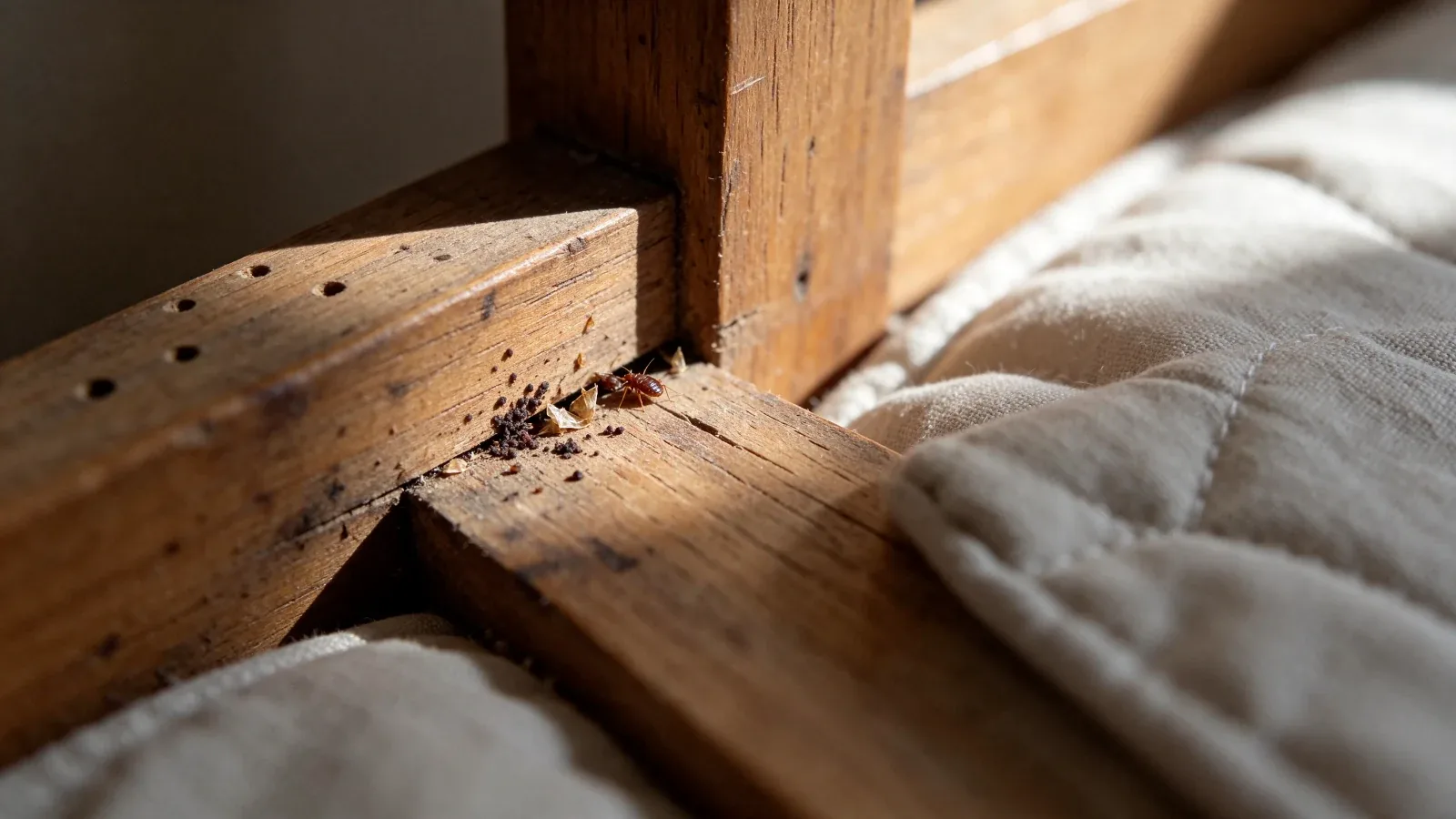
Recognising the Signs of Bed Bug Infestation in Wooden Beds can help Bangalore homeowners identify a pest problem before it spreads to mattresses, sofas, and other furniture. Wooden beds contain joints, screw holes, headboard gaps, and narrow crevices that provide convenient hiding places for bed bugs, making infestations difficult to detect during ordinary cleaning.
Bed bugs do not feed on wood, but they can hide inside wooden furniture and emerge to feed on sleeping occupants. This guide from Kiran Pest Control explains the common warning signs, where to inspect wooden beds, how to distinguish bed bugs from other pests, and when professional treatment may be necessary.
Why Do Bed Bugs Hide in Wooden Beds?
Wooden beds offer protected spaces where bed bugs can remain concealed during the day. These insects prefer narrow gaps close to sleeping areas because they can access a host without travelling far from their hiding places.
Traditional wooden cots, teakwood beds, storage beds, and modern wooden bed frames may all provide suitable hiding places when gaps and joints are present.
Common Hiding Places in Wooden Beds
- Headboard joints and decorative wooden carvings.
- Screw holes, bolts, and furniture connectors.
- Cracks between wooden panels and supporting rails.
- Gaps beneath wooden bed slats.
- Storage compartments and drawer runners.
- Areas where the mattress touches the wooden frame.
- Undersides of wooden supports and corner joints.
Bed bugs can also hide in nearby furniture, skirting boards, and mattress seams. Therefore, inspecting only the visible surface of a wooden bed may not reveal the full extent of an infestation.
Common Signs of Bed Bug Infestation in Wooden Beds
Bed bugs often leave physical evidence around their hiding places. Identifying these warning signs can help determine whether a wooden bed requires closer inspection.
Dark Brown or Black Spots on Wooden Surfaces
Small dark spots around bed frame joints, headboards, and wooden crevices may indicate bed bug faecal deposits. These marks can appear as dark dots or stains on wood, fabric, and other nearby surfaces.
However, dark marks can also result from dirt, mould, or other insects. Their location and association with additional bed bug evidence are important for accurate identification.
Small Reddish-Brown Insects
Adult bed bugs are flattened, oval-shaped insects with a reddish-brown appearance. They may be visible along wooden joints, beneath bed frames, or near mattress edges.
Young bed bugs, known as nymphs, are smaller and generally lighter in colour. Their appearance can make them difficult to notice against pale wood or bedding.
Tiny White Eggs in Wooden Cracks
Bed bug eggs are small, whitish, and oval-shaped. Female bed bugs may attach them inside protected wooden joints, screw holes, and narrow furniture crevices.
Because these eggs resemble tiny dust particles, careful inspection with a flashlight and magnifying glass may be necessary. Finding suspected eggs alongside live insects or faecal spots increases the likelihood of an infestation.
Pale Shed Skins Around Bed Frames
As young bed bugs develop, they shed their outer coverings. These empty skins may collect inside wooden joints, beneath bed frames, or along mattress seams.
Shed skins are often pale yellowish or translucent and resemble the shape of a bed bug. Their presence can indicate current or previous bed bug activity.
Small Blood Stains on Bedsheets
Small reddish or rust-coloured marks on bedsheets and pillowcases may sometimes be associated with bed bugs. Such stains can occur when a recently fed insect is accidentally crushed.
Blood stains alone do not confirm an infestation because they may have other causes. Inspect the mattress and wooden frame for additional physical evidence.
Unexplained Skin Reactions After Sleeping
Some people develop itchy marks or skin reactions after bed bug bites, while others show little or no visible reaction. These symptoms may raise suspicion when combined with evidence found around the bed.
Skin reactions cannot reliably identify bed bugs because other insects and medical conditions can produce similar symptoms. Physical inspection is needed to confirm the pest.
How to Inspect a Wooden Bed for Bed Bugs
A systematic inspection can help locate bed bugs and identify affected furniture areas. Avoid moving potentially infested items between rooms because this may spread insects to previously unaffected spaces.
Prepare the Inspection Area
Use a bright flashlight, magnifying glass, disposable gloves, and a mobile phone camera to examine suspicious locations. Keep a sealable container available if a sample needs to be collected for professional identification.
Follow These Inspection Steps
- Inspect the mattress: Examine seams, piping, labels, and edges where the mattress touches the wooden frame.
- Check the headboard: Shine a flashlight into decorative carvings, joints, and gaps behind the headboard.
- Examine wooden joints: Look closely at screw holes, bolts, supporting rails, and connected panels.
- Inspect underneath the bed: Check wooden slats, support structures, and hidden corners.
- Check storage compartments: Examine drawer runners, internal corners, and accessible joints in storage beds.
- Look for physical evidence: Search for live insects, whitish eggs, shed skins, and dark faecal marks.
- Document suspicious findings: Take clear photographs and record the affected locations for professional assessment.
Do not dismantle complicated furniture or scrape suspected eggs without appropriate precautions. Disturbing infested materials can cause bed bugs to move into other hiding places.
Found suspicious signs in your wooden bed? Arrange a professional bed bug inspection and receive guidance on suitable treatment options.
Get a Free Quote Call NowBed Bugs vs Termites and Wood Borers in Wooden Furniture
Not every pest-related sign in a wooden bed indicates bed bugs. Termites and wood-boring insects can also affect wooden furniture, but their behaviour and damage patterns are different.
Correct identification is essential because each pest requires a different control approach.
| Identification Feature | Bed Bugs | Termites | Wood Borers |
|---|---|---|---|
| Main Activity | Feed on blood and hide near sleeping areas | Feed on cellulose-containing materials | Larvae of certain species tunnel through wood |
| Common Evidence | Dark faecal spots, eggs, shed skins, live insects | Mud tubes, damaged wood, discarded wings | Exit holes and powdery wood debris |
| Effect on Wooden Beds | Use cracks and joints as hiding places | May damage wooden components | May create tunnels and weaken affected wood |
| Typical Inspection Areas | Headboards, mattress edges, joints | Wooden structures and concealed entry points | Wood surfaces, holes, and affected sections |
Bed bugs do not eat wood or create tunnels inside it. If a wooden bed shows powdery debris, structural damage, or unexplained holes, another wood-damaging pest may be responsible.
For suspected structural pest activity, explore our termite control services or wood borer control services in Bangalore.
How to Treat Bed Bugs Hiding in Wooden Beds
Successful bed bug management requires locating hiding places and selecting appropriate treatment methods. Wooden furniture can complicate treatment because insects and eggs may remain protected inside narrow joints.
Professional Inspection and Assessment
A trained technician examines the wooden bed, mattress, nearby furniture, and surrounding areas to identify infestation signs. The inspection helps determine where treatment should be focused and whether additional rooms or furniture require attention.
Targeted Chemical Treatment
Professional insecticides may be applied to permitted cracks, crevices, and other suitable locations according to product labels. The selected treatment depends on the infestation, furniture materials, and safety considerations.
Some insecticides have limited effectiveness against bed bug eggs, making follow-up monitoring important. Unapproved household chemicals should never be applied indiscriminately to beds or sleeping surfaces.
Professional Heat or Steam Treatment
Properly controlled heat can kill bed bugs and eggs when sufficient temperatures reach the insects for the necessary exposure. Steam may also be useful for certain accessible furniture seams and joints.
However, excessive heat or moisture can damage wood finishes, adhesives, and upholstery. Professional assessment is important before using these methods on wooden furniture.
Vacuuming and Physical Removal
Careful vacuuming may remove some accessible bed bugs, eggs, and shed skins from wooden joints and nearby surfaces. A suitable crevice attachment can help reach narrow gaps.
Vacuuming alone is unlikely to eliminate insects hidden deep inside furniture. Collected material should be securely contained and disposed of to reduce the risk of bed bugs escaping.
Follow-Up Monitoring
Some bed bugs or eggs may survive an initial treatment, depending on the method used and the accessibility of hiding places. Follow-up inspections help identify continuing activity and determine whether further treatment is necessary.
For professional assistance, learn more about bed bug control in Bangalore from Kiran Pest Control.
How to Prevent Bed Bugs in Wooden Beds
Bed bugs can enter clean and well-maintained homes through luggage, clothing, second-hand furniture, and other belongings. Preventive inspection and early detection can help reduce the risk of an infestation becoming established.
Inspect Second-Hand Wooden Furniture
Before bringing a used wooden bed, cot, or headboard into your home, examine its joints, screw holes, and hidden surfaces. Look for live insects, dark spots, eggs, and shed skins.
Keep Sleeping Areas Accessible
Reduce unnecessary clutter around beds and avoid storing large amounts of belongings beneath wooden frames. Accessible furniture is easier to inspect and monitor for pest activity.
Use Suitable Mattress Encasements
Bed bug-resistant mattress encasements can make mattress inspections easier and help contain insects already present inside an encased mattress. They do not prevent bed bugs from hiding in wooden frames or nearby furniture.
Be Careful After Travelling
Inspect luggage and belongings when returning from places where bed bugs may have been present. Avoid placing potentially infested bags directly onto beds or upholstered furniture.
Maintain Regular Inspections in Accommodation Properties
Hotels, hostels, serviced apartments, and rental properties in Bangalore should include wooden bed frames and headboards in routine pest monitoring procedures. Staff should be trained to recognise suspicious signs and report them promptly.
Early identification can help property managers arrange appropriate inspections and reduce the chance of insects spreading through furniture or belongings.
Worried about bed bugs hiding in wooden furniture? Contact Kiran Pest Control for a professional inspection and a treatment plan suited to your property.
Get a Free Quote Call NowFrequently Asked Questions
Can bed bugs live inside wooden beds?
Yes. Bed bugs can hide inside wooden joints, cracks, screw holes, and headboard gaps. They do not feed on wood, but these concealed spaces provide shelter close to sleeping occupants.
What are the earliest signs of bed bugs in a wooden bed?
Early warning signs may include live insects, small dark faecal spots, pale shed skins, or whitish eggs around bed frame joints and mattress edges. Unexplained skin reactions may also raise suspicion, but physical evidence is needed for confirmation.
Do bed bugs damage wooden furniture like termites?
No. Bed bugs feed on blood and do not eat or tunnel through wood. Termites and certain wood-boring insects can damage wooden furniture, while bed bugs primarily use cracks and joints as hiding places.
Can bed bugs be removed without throwing away a wooden bed?
In many cases, wooden beds can be treated without disposal. The appropriate approach depends on the furniture's condition, infestation severity, and accessibility of hiding places, so professional inspection is recommended before deciding to discard furniture.
Can bed bugs return after treating a wooden bed?
Yes. Bed bugs may reappear if live insects or viable eggs remain in untreated hiding places or if insects are introduced again through belongings. Follow-up monitoring and appropriate treatment can help address continuing activity.
Conclusion
Recognising the Signs of Bed Bug Infestation in Wooden Beds can help Bangalore homeowners and businesses identify pest activity before it becomes more difficult to manage. Dark faecal spots, live insects, hidden eggs, shed skins, and suspicious marks around wooden joints are important warning signs that deserve careful inspection.
Kiran Pest Control (Kiran Enterprises) is a licensed pest control company serving Bangalore since 2006. For professional bed bug treatment in Bangalore, request a free quote or contact our team at +91 98452 73699. Explore more pest control articles or visit the Kiran Pest Control homepage for additional information.
Need help with a pest problem?
Contact Kiran Pest Control to discuss the issue and arrange an inspection.
Contact our teamNeed Pest Control in Bangalore?
Get a same-day inspection from our certified technicians.
Contact Our Team Chat on WhatsAppOr call +91 98452 73699