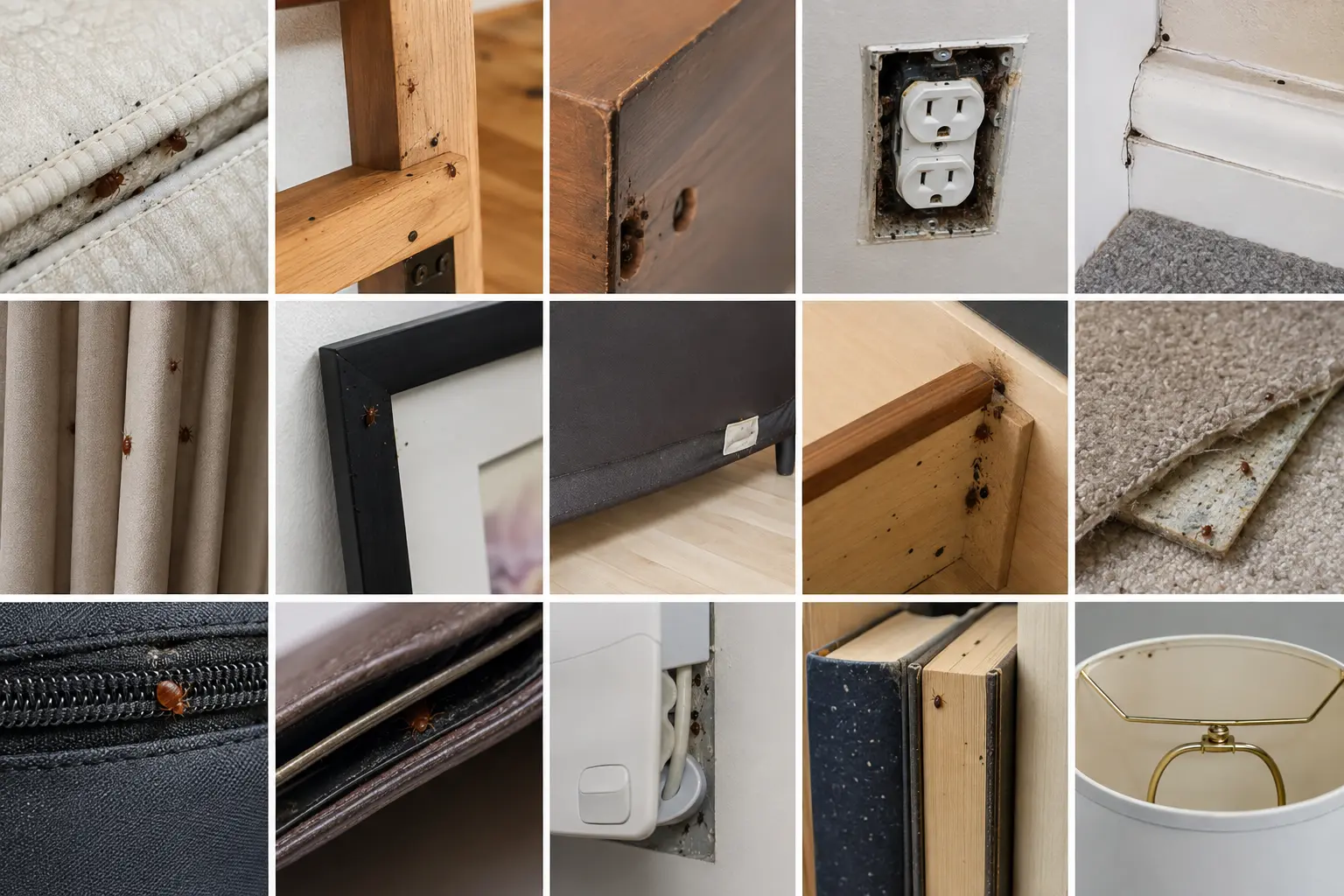
You flick off the lights, lie down, and a thought hits you: if something is biting me at night, where do bed bugs hide during the day? That uneasy feeling is very real, and understanding their favorite hiding spots is the first step to stopping them.
Bed bugs are experts at squeezing into tight gaps, traveling with luggage, and living right next to you without being seen, which is why so many people miss early signs. Once you know exactly where they like to stay and how to check those spots properly, you can catch problems early while they’re still manageable.
Bed bugs don’t just wander randomly; they choose areas that keep them close to sleeping humans, yet protected from light and movement. Any place that stays dark, has tiny cracks, and sits near where you rest is high on their list.
Most people only think about the bed itself, but a full bed bug inspection has to go beyond the mattress. They’ll branch out to nearby furniture, walls, and soft items when the population grows or when they’re disturbed by cleaning or DIY sprays.
The first area to search is always the bed, because it combines warmth, carbon dioxide from your breath, and easy access to exposed skin. If you wake up with unexplained bites, start by checking every layer of the bed slowly and methodically.
Pay attention to seams, tufts, labels, and the corners where fabric meets stitching; these tight lines act like ready-made shelters for a growing colony. A flashlight and an old bank card or similar tool to run along edges can help expose insects that flatten themselves in narrow gaps.
The most obvious starting point is the mattress, especially if you’ve already worried about bed bugs in mattress covers, corners, or piping. Gently pull back seams and lift the edges where the top and side panels meet.
You’re not only looking for live insects, but also tiny white eggs, shed skins, and black dots that look like ink stains. Those dark spots are digested blood and often appear in small clusters or lines along the stitching.
After checking the mattress, move on to the structure that holds it up, because hidden gaps in metal or wooden frames are perfect for pests. Dismantling parts of the frame, if possible, gives you a clearer view of screw holes and connecting brackets.
People are often surprised by how many insects can cram into less than a centimetre of space, which is why you should inspect any crack around bed bugs in bed frame components carefully. A vacuum with a crevice tool can help draw out insects and debris from these tight joints.
Headboards mounted on the wall or fixed to the bed often sit flush against paint or wallpaper, creating narrow gaps that stay dark all day. If your headboard is upholstered, the fabric folds and tacks along the back are especially attractive to pests.
Take the time to pull the bed slightly away from the wall so you can look behind the headboard and along the lower edge. Move slowly and use a flashlight because disturbing these areas can send hidden bed bugs running for new cover.
Once the bed area becomes crowded or heavily disturbed, bed bugs expand into nearby furniture. Any place where people sit or nap often becomes part of the infestation pattern over time.
Living rooms, guest rooms, and even home offices can host pests for months, especially if visitors sit down briefly and then leave, unknowingly transporting them in bags or clothing. That’s why looking beyond the sleeping area is crucial if bites keep showing up.
Many infestations spread into the lounge area, and people only notice once bites appear after watching TV or resting. The folds where cushions meet, zipper lines, and the fabric underside are frequent hiding spots.
Take off removable cushions and check the seams, especially if you suspect activity from bed bugs in sofa upholstery or armrests. Tip the piece of furniture forward so you can inspect underneath and along the frame.
Any furniture sitting within a metre or two of the bed can support a growing population, especially if it has drawers or shelves. Insects will often gather underneath drawers, on the backside, or inside tiny screw holes.
If you’ve had persistent bites, open each drawer and look at the joints carefully, then remove one or two to see the runners. These locations are common bed bug hotspots during larger infestations that have been active for several weeks or months.
Soft seating around the dining table or breakfast nook can also become infested, particularly in smaller homes where sleeping and eating areas are close together. The tack strips underneath the seat and the fabric folds near the legs can shelter insects between meals.
Flipping each chair over and checking the underside feels tedious, but it’s an important part of finding every last bed bug hiding places once you’ve confirmed an infestation. Missing just one cluster can lead to a fresh resurgence later.
Bed bugs don’t only cling to fabric; they’re very capable of moving into cracks in the building itself. Once they reach these areas, DIY sprays often fail to contact them directly, which allows the infestation to simmer in the background.
If you live in an apartment or attached housing, structural pathways also give pests a way to travel between units, especially through shared walls or utility lines. That’s one reason professional treatment is often recommended in multi-unit buildings.
Any gap between wall surfaces can become a hiding area, but peeling paper is particularly attractive. Even a slight bubble can provide enough space for a small group to live unnoticed for weeks.
Homeowners are often shocked to find bed bugs behind wallpaper when they finally strip an accent wall or repaint a room. Carefully prying back loose edges with a putty knife can help you check without damaging large sections.
The line where the wall meets the floor collects dust, pet hair, and other debris, and pests will mix right into that layer. They slip under baseboards, into nail gaps, and along the edge where carpet tucks into the wall.
Slowly running a credit card or similar thin tool along that gap often dislodges insects or droppings that were hidden from simple visual checks. For homes with hard floors, examine any separation between floorboards that could shelter signs of bed bugs like black specks and tiny eggs.
While not as common as beds and sofas, fabric window treatments can support a smaller population, especially in bedrooms and lounges. The folds at the top of curtains and the seams of blackout linings stay shaded and fairly undisturbed.
When inspecting, slowly slide your fingers along the heading tape and top hems to feel for rough debris or tiny shells. You should also take a close look at the window frame corners, where cracks can hide bed bugs in furniture near sitting areas.
By the time infestations reach these areas, they’re usually well established, but that’s exactly why you can’t ignore them. The more places you inspect, the better your chances of stopping the cycle before it spreads further.
Small, portable items and cluttered corners tend to be ignored during quick cleanups, yet they’re perfect hiding zones. Focusing on these overlooked locations can make the difference between full control and repeated re-infestations.
Suitcases and travel bags are a classic source of new infestations, especially after hotel stays or overnight trips. Bugs tuck themselves into zipper folds, seams, and the fabric around handles, then climb out once the bag is back in your home.
If you spot any suspicious marks, set the luggage in the bathtub or on a hard surface, then check each compartment by hand. Treat or isolate the item quickly if you suspect signs of bed bugs picked up during travel.
Clothing stacked on the floor or piled on chairs gives pests easy shelter close to their food source. They move between items, ride along to other rooms, and return to the bed at night without you noticing.
Hard plastic or metal hampers are easier to keep clean, and washing bedding on high heat is still one of the best ways to reduce bed bug hotspots around sleeping spaces. Always bag and seal infested items before carrying them through the house.
Warm devices with vents, like alarm clocks, game consoles, or even extension cord strips, create quiet refuges during the day. Although less common, these spots can harbour persistent pockets of pests that survive cleaning.
Shining a bright light into vents or gently tapping devices over a white surface can help you see if any insects fall out. If you’re treating a serious infestation, consider having a professional check electronics that sit close to bed bugs in bed frame components or other major clusters.
Area rugs with curled edges, welcome mats, and bathroom mats can all hide insects that are trying to avoid activity and vacuuming. They prefer the darker, less disturbed parts near furniture legs and wall edges.
Lifting each rug carefully and inspecting the underside, especially near the corners, helps you catch hidden bed bugs that might otherwise be missed. Rolling and sealing infested rugs in plastic before treatment can keep them from spreading.
Although pets aren’t a preferred food source, bugs will live near them if their resting spots are close to humans. Pet beds, soft crates, and fabric-covered perches can all become secondary hiding spots.
Regularly washing pet bedding on a hot cycle and drying on high heat gives you extra control over bed bug hiding places that share space with your pets. Always check seams and tags before bringing new pet items into a home with a known issue.
Plastic bins, cardboard boxes, and old shoes tucked under the bed provide endless nooks and layers for pests to explore. Because these items are rarely moved, populations can build up quietly over time.
Pulling everything out, vacuuming thoroughly, and switching to sealed containers makes it harder for bed bugs in furniture or clutter to stay close to your sleeping area. It also makes follow-up inspections far quicker and more accurate.
Learning where do bed bugs hide is only useful if you follow it up with a structured inspection. Move methodically from the bed outward, checking each category of hiding spot rather than jumping around the room.
Keep a flashlight, some zip-top bags, and a notepad nearby so you can collect samples and record what you see. Photographing clusters or stains can also help a professional identify the scope of the problem accurately.
Work in small sections, starting with the mattress and frame, then moving to nearby tables, chairs, and storage areas. Any item you remove from the room should be bagged or sealed to avoid tracking insects through the rest of the house.
If you’re unsure what you’re seeing, place a suspected insect or shell into a clear bag or tape it to white paper. Those samples become valuable evidence during a professional bed bug inspection, helping technicians choose the right treatment plan.
Once you’ve confirmed activity, resist the urge to spray random chemicals across every surface, as that can drive insects deeper into walls or neighbouring rooms. Instead, focus on reducing clutter, laundering bedding and soft items on high heat, and vacuuming carefully.
Professional pest managers can then apply targeted treatments to bed bugs in sofa, beds, and structural gaps using methods that reach deep into cracks. Follow-up visits and monitoring tools like mattress encasements and interceptors help ensure the infestation is fully resolved.
Bed bugs are small, but once you know where do bed bugs hide, you start to see how much of your home can support them if they’re left alone. The real key is early detection: checking beds, sofas, and nearby structures regularly so you can react before they spread far.
If you’ve noticed bites, stains, or live insects in any of these 15 spots, it’s time to act rather than hope they’ll disappear on their own. Reach out to a trusted local team like Kiran Enterprises for a thorough inspection and tailored treatment plan that targets every stage of the infestation, from the first egg to the last adult.
Get a same-day inspection from our certified technicians.
Chat on WhatsAppOr call +91 98452 73699