
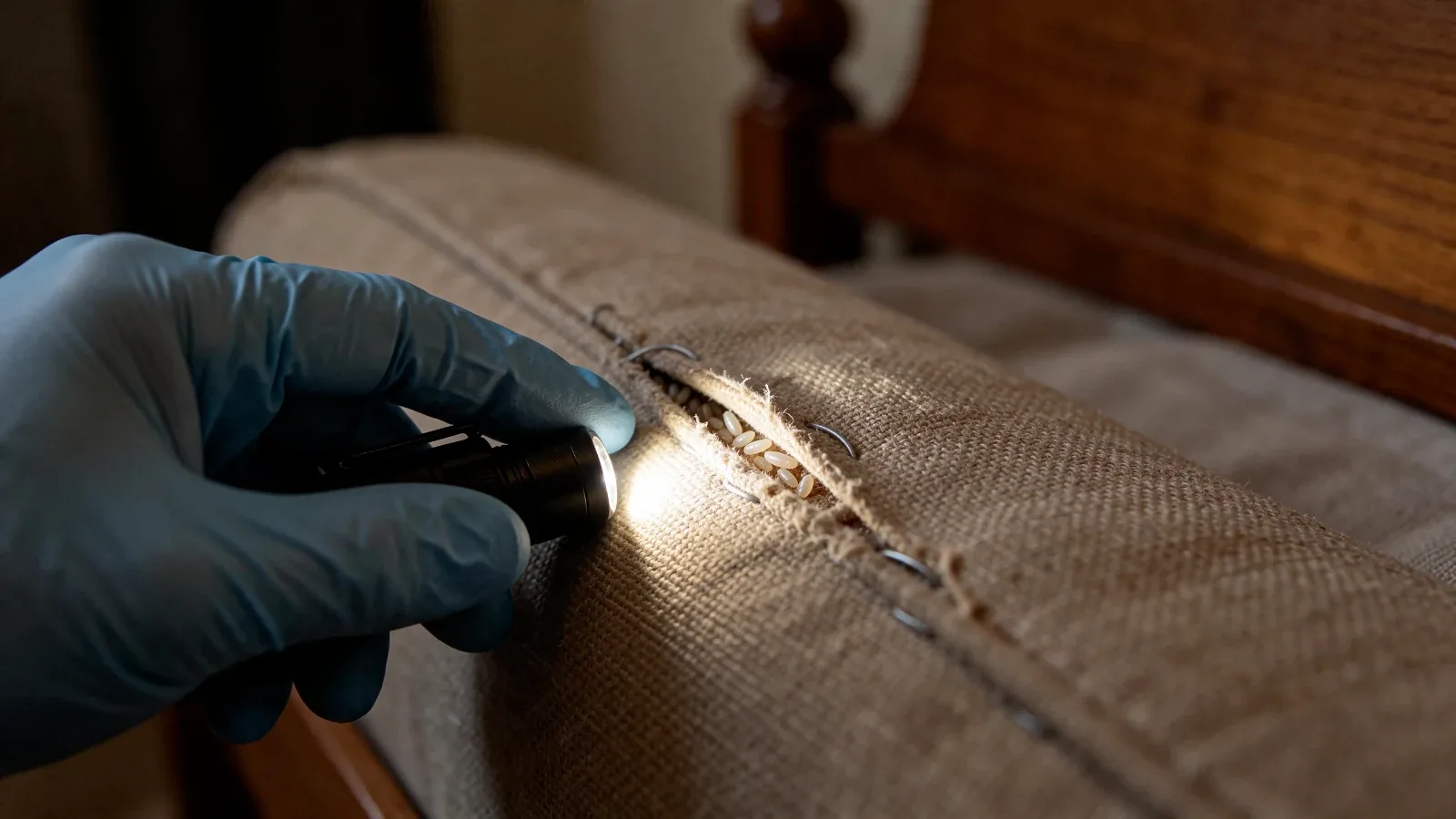
Understanding Why Bed Bug Eggs Make Treatment Difficult is essential for homeowners, tenants, hotel managers, and businesses dealing with persistent bed bug infestations. Even when visible bed bugs disappear after treatment, hidden eggs may remain in furniture, mattresses, and narrow cracks, allowing the infestation to continue.
Bed bug control requires more than eliminating the insects that can be seen. Kiran Pest Control explains how bed bug eggs affect treatment results, why some control methods struggle to reach them, and what Bangalore property owners can do to manage infestations effectively.
Understanding Bed Bug Eggs and Their Role in Infestations
Bed bugs develop through different life stages, beginning as eggs before emerging as young insects called nymphs. Female bed bugs deposit eggs in protected locations, often close to areas where people sleep or rest.
These eggs are small, pale, and difficult to notice during ordinary household cleaning. Their concealed locations and protective outer covering contribute to the challenges of bed bug treatment.
What Do Bed Bug Eggs Look Like?
Bed bug eggs are typically whitish, oval-shaped, and slightly translucent. They may be attached individually or in small groups to furniture surfaces, mattress stitching, and other protected locations.
Because their colour resembles dust or tiny household particles, homeowners may overlook them without careful inspection. A flashlight and magnifying glass can help identify suspicious eggs.
Where Are Bed Bug Eggs Commonly Found?
- Mattress seams, piping, and fabric folds.
- Wooden bed frame joints and headboard gaps.
- Sofa stitching and upholstered furniture.
- Cracks around bedside tables and drawers.
- Furniture screw holes and narrow crevices.
- Protected gaps near sleeping and resting areas.
These hiding places make eggs difficult to locate and expose to treatment. Even a carefully cleaned bedroom may contain concealed eggs that are not immediately visible.
Why Bed Bug Eggs Make Treatment Difficult
Bed bug eggs create treatment challenges because they differ from active insects in their location, movement, and response to control methods. Understanding these differences helps explain why a treatment that reduces visible activity may not completely resolve an infestation.
Protective Egg Covering
Bed bug eggs have an outer shell that helps protect the developing insect. This covering can reduce the effectiveness of certain insecticides, particularly products that are more effective against exposed or moving bed bugs.
However, eggs are not resistant to every treatment method. Effectiveness depends on the product, application, exposure conditions, and whether the treatment reaches the eggs.
Eggs Remain Hidden in Narrow Spaces
Bed bugs frequently deposit eggs inside protected cracks, mattress seams, and furniture joints. These areas may be difficult to inspect or treat without specialised equipment and appropriate techniques.
Surface spraying alone may not reach eggs concealed deep inside furniture. This is why identifying harbourage areas is an important part of professional bed bug management.
Some Eggs May Hatch After Treatment
A treatment may reduce adult bed bugs and nymphs while leaving some viable eggs behind. When those eggs hatch, newly emerged bed bugs may become active again, even if the property initially appears free from infestation.
This does not automatically mean that every treatment has failed. It may indicate that additional monitoring or follow-up treatment is needed as part of the planned control programme.
Eggs Cannot Be Controlled Through Movement-Based Methods
Unlike adult bed bugs and nymphs, eggs cannot move through treated surfaces. Control methods that depend on insects contacting a residual insecticide may therefore have limited direct effects on eggs that remain attached in protected locations.
Newly hatched nymphs may encounter treated surfaces later, but the outcome depends on the insecticide, application quality, and continued effectiveness of the treatment.
How Hidden Bed Bug Eggs Affect Treatment Success
Bed bug treatment success depends on addressing the entire infestation rather than focusing only on visible insects. Hidden eggs can complicate control when inspection, preparation, and follow-up are incomplete.
Why Bed Bugs May Reappear After Treatment
Homeowners sometimes notice bed bugs again after an initial reduction in activity. Possible explanations include surviving eggs, untreated hiding places, insecticide resistance, or bed bugs introduced again through belongings and furniture.
Determining the actual cause requires inspection. Assuming that every recurrence comes from surviving eggs may overlook other important infestation sources.
Why Furniture Inspection Matters
Mattresses, headboards, sofas, and wooden furniture contain numerous concealed spaces. Without checking these locations, treatment may miss important areas where eggs and live bed bugs remain.
Professional inspections focus on identifying signs such as live insects, eggs, shed skins, and dark faecal spots. These findings help technicians determine the extent of infestation and select suitable treatment methods.
Why Treatment Planning Is Important
Effective bed bug management often involves combining inspection, preparation, targeted treatment, monitoring, and follow-up. The appropriate approach depends on the property, infestation severity, furniture materials, and available treatment options.
For Bangalore homeowners and businesses, professional bed bug control services can help identify hidden infestation areas and develop a treatment plan based on actual conditions.
Are bed bugs returning after treatment? Schedule a professional inspection to identify hidden infestation areas and discuss suitable treatment options.
Get a Free Quote Call NowWhich Treatment Methods Can Help Control Bed Bug Eggs?
Different bed bug treatment methods have different strengths and limitations. No method should be assumed to eliminate every hidden egg without considering the conditions of application.
Professional Heat Treatment
Controlled heat treatment can kill bed bugs and their eggs when the required temperature reaches the insects for sufficient exposure. Professional equipment and monitoring are important because furniture, clutter, and concealed spaces may heat unevenly.
Uncontrolled household heating methods should not be used as substitutes for professional treatment. They can create fire hazards, damage belongings, and fail to reach protected hiding places.
Targeted Chemical Treatment
Professional chemical treatment may involve insecticides selected for the infestation and approved application areas. Some products have limited activity against eggs, while others may affect particular life stages under suitable conditions.
Technicians must follow product labels and applicable safety requirements. Treatment selection should also consider insecticide resistance, furniture materials, and exposure risks to occupants.
Steam Treatment
Properly applied steam can help control exposed bed bugs and eggs when sufficient heat reaches them. It may be useful along certain mattress seams, upholstery edges, and accessible furniture joints.
Steam must be applied carefully because excessive moisture or heat may damage delicate fabrics, wood finishes, and electrical components. Deeply concealed eggs may remain unaffected if the steam does not reach them.
Vacuuming and Physical Removal
Vacuuming can remove some visible bed bugs, eggs, and debris from accessible surfaces. Crevice attachments may help reach mattress edges, upholstery seams, and furniture joints.
However, vacuuming cannot reliably remove eggs attached deep inside narrow cracks. Collected material should be securely contained and disposed of appropriately to prevent insects from escaping.
Follow-Up Inspections and Treatments
Follow-up inspections help determine whether bed bug activity continues after the initial treatment. Depending on the method used and inspection findings, further treatment may be recommended to address surviving insects or newly hatched nymphs.
The timing and frequency of follow-up visits should be based on the treatment plan, product instructions, and observed infestation activity rather than assuming the same schedule is appropriate for every property.
How Bangalore Homeowners and Businesses Can Improve Treatment Results
Property owners play an important role in supporting professional bed bug treatment. Appropriate preparation, careful handling of belongings, and continued monitoring can make treatment more effective.
Prepare the Property Before Treatment
- Follow the pest control technician's preparation instructions.
- Provide access to beds, headboards, sofas, and affected furniture.
- Avoid moving potentially infested belongings into unaffected rooms.
- Handle bedding and washable fabrics according to the recommended cleaning instructions.
- Inform the technician about previous treatments and areas where bed bugs were observed.
Preparation requirements may vary depending on whether the treatment involves heat, steam, insecticides, or a combination of methods.
Avoid Common DIY Treatment Mistakes
Spraying random household chemicals, using excessive insecticide, or applying unsuitable products to mattresses can create unnecessary health and safety risks. These actions may also disturb bed bugs without adequately addressing hidden eggs.
Do not use outdoor pesticides indoors or apply chemicals to sleeping surfaces unless the product label specifically permits that use. Professional guidance is preferable when an infestation is suspected.
Monitor Furniture After Treatment
Continue checking mattress seams, bed frames, and nearby furniture for live insects, shed skins, or other signs of activity. Suitable bed bug monitors may also help detect ongoing activity.
Report new sightings to the pest control provider rather than immediately applying additional products. Accurate information helps determine whether further treatment or investigation is necessary.
Protect Hotels and Rental Properties
Hotels, hostels, serviced apartments, and rental properties in Bangalore may face additional challenges because guests and belongings move between rooms. Staff awareness, careful inspections, and documented pest management procedures can help identify activity before it spreads.
When bed bugs are confirmed, affected rooms and relevant adjacent areas should be assessed according to the infestation findings. Avoid transferring potentially infested furniture or bedding without suitable containment measures.
Concerned about hidden bed bug eggs in your property? Contact Kiran Pest Control for professional assessment and guidance on managing persistent bed bug activity.
Get a Free Quote Call NowFrequently Asked Questions
Why are bed bug eggs harder to eliminate than adult bed bugs?
Bed bug eggs are often concealed in narrow spaces and have a protective outer covering that can reduce their susceptibility to certain insecticides. Unlike moving bed bugs, eggs cannot contact treated surfaces on their own, making thorough inspection and appropriate treatment selection important.
Can bed bug eggs survive chemical treatment?
Some bed bug eggs may survive certain chemical treatments, particularly when the product has limited activity against eggs or does not reach their hiding places. Treatment effectiveness depends on the insecticide, application method, and infestation conditions.
Can bed bugs return after professional treatment?
Yes, bed bug activity may continue or reappear if viable eggs, live insects, or untreated harbourages remain. Reintroduction from infested belongings is another possibility, so follow-up inspection helps identify the cause.
Does steam treatment kill bed bug eggs?
Steam can kill bed bug eggs when sufficient heat reaches them for an appropriate exposure period. However, eggs concealed deep inside furniture may survive if the heat does not penetrate their hiding places, and unsuitable steam application can damage materials.
Is follow-up treatment necessary for bed bug infestations?
Follow-up inspection is important for confirming treatment progress, and additional treatment may be necessary depending on the initial method and remaining activity. A qualified technician can recommend an appropriate schedule based on the infestation and treatment findings.
Conclusion
Understanding Why Bed Bug Eggs Make Treatment Difficult helps Bangalore homeowners and businesses recognise why eliminating visible insects may not be enough. Their protective covering, concealed locations, and potential to survive some treatment methods make careful inspection, appropriate control techniques, and follow-up monitoring essential parts of bed bug management.
Kiran Pest Control (Kiran Enterprises) is a licensed pest control company serving Bangalore since 2006. For professional bed bug treatment in Bangalore, request a free quote or contact our team at +91 98452 73699. Explore more pest control articles or visit the Kiran Pest Control homepage for additional information.
Need help with a pest problem?
Contact Kiran Pest Control to discuss the issue and arrange an inspection.
Contact our teamNeed Pest Control in Bangalore?
Get a same-day inspection from our certified technicians.
Contact Our Team Chat on WhatsAppOr call +91 98452 73699