
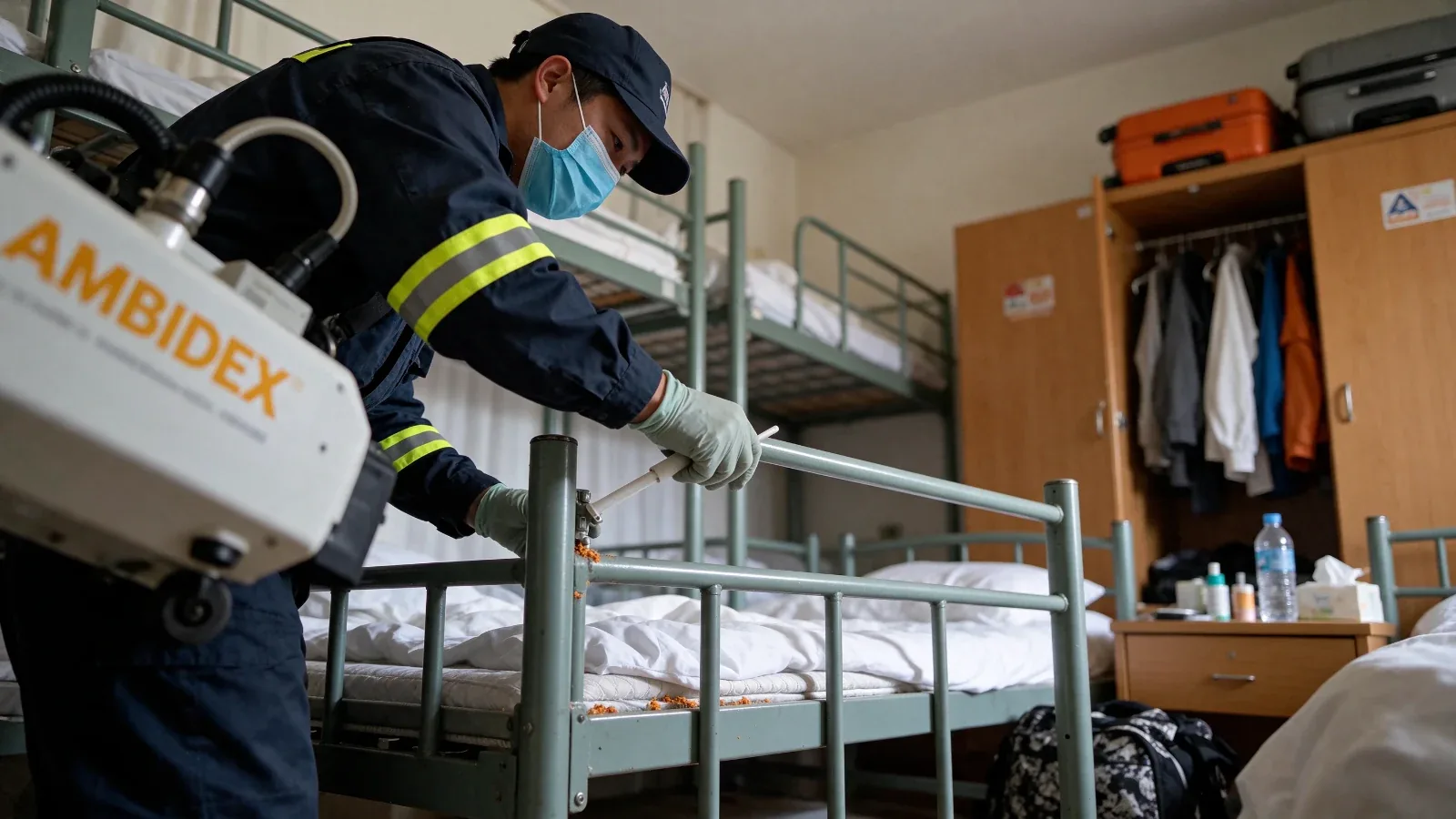
Understanding Why Bed Bugs Spread in Hostels helps students, hostel wardens, and property managers in Bangalore recognise the conditions that allow these insects to move between sleeping areas. Shared bedrooms, frequent resident movement, luggage, and closely arranged furniture can create opportunities for bed bugs to enter and establish themselves.
Bed bugs are not caused by poor hygiene, and even clean hostels can experience infestations. Knowing how they travel, where they hide, and when to arrange professional inspection can help residents and management respond before the problem spreads further.
Why Hostels Are Vulnerable to Bed Bug Infestations
Hostels bring residents and their belongings together in shared accommodation. Bed bugs can accidentally enter through luggage, backpacks, clothing, and furniture before hiding near sleeping areas.
Frequent Movement of Residents
Students and working professionals may arrive from different locations, return from holidays, or change accommodation. Bed bugs can travel unnoticed inside belongings brought from an infested place.
The presence of bed bugs does not establish which resident introduced them.
Shared Sleeping Arrangements
Rooms containing bunk beds or closely arranged single beds offer several potential hiding places. Bed bugs can crawl between accessible areas and may spread when infested items are moved.
Closely Packed Furniture
Mattresses, bed frames, storage units, and bedside furniture may be positioned close together. This can make inspection more difficult and provide additional protected spaces for insects.
Delayed Reporting
Residents may mistake bed bug activity for mosquito bites or hesitate to report suspected insects. Delayed investigation can allow an infestation to become established in additional hiding places.
Confidential reporting encourages earlier action without blaming occupants.
How Bed Bugs Spread Between Hostel Rooms
Bed bugs cannot fly or jump, but they can crawl and travel unnoticed on belongings. Understanding their movement helps hostel managers avoid actions that accidentally transport insects.
Through Luggage and Backpacks
Bed bugs may hide in luggage seams, backpacks, and other transported items. When belongings are placed near beds, insects may move into nearby furniture.
Through Shared Furniture
Moving mattresses, chairs, bed frames, or storage items between rooms can transport concealed bed bugs. Furniture with suspected activity should not be transferred without appropriate assessment.
Through Existing Structural Openings
Bed bugs may occasionally crawl through accessible gaps around wall junctions, skirting boards, and service penetrations. They do not tunnel through solid walls.
Professional inspection can help assess whether adjoining rooms are affected.
Through Improper Linen Handling
Carrying potentially infested bedding uncovered through corridors may spread insects. Suspected affected linen should be contained before transportation and handled according to professional guidance.
Through Second-Hand Mattresses
Used mattresses and furniture may contain bed bugs even when they appear clean. Hostel management should inspect incoming furniture before placing it in occupied rooms.
Common Bed Bug Hiding Places in Hostel Bedrooms
Bed bugs usually hide close to sleeping and resting areas. Their small, flat bodies allow them to occupy narrow spaces that are easily overlooked during ordinary cleaning.
Mattress Seams and Bed Frames
- Mattress piping and stitched edges.
- Mattress labels and protected fabric folds.
- Metal bunk bed joints and connections.
- Wooden bed frame cracks and existing gaps.
- Headboard connections and accessible undersides.
Storage Furniture and Study Areas
Bed bugs may hide in accessible joints of lockers, bedside tables, and other furniture close to sleeping areas. Inspection should focus on locations where suspicious evidence has been observed.
Curtains and Upholstered Furniture
Fabric folds, cushion seams, and upholstered furniture joints may provide additional hiding places. These areas are especially relevant when insects have already been confirmed nearby.
Warning Signs Residents Should Report
- Live bed bugs: Small, flat, reddish-brown insects.
- Dark spots: Possible bed bug faecal marks.
- Shed skins: Pale insect skins near hiding places.
- Eggs: Small, pale eggs attached to protected surfaces.
- Blood marks: Small reddish stains on bedding.
Itchy skin marks may raise suspicion but cannot independently confirm a bed bug infestation.
Noticed bed bugs in your hostel rooms? Contact Kiran Pest Control for professional inspection and suitable bed bug management recommendations.
Get a Free Quote Call NowHow Hostel Residents Can Help Prevent Bed Bugs
Residents play an important role in recognising suspicious activity and preventing accidental movement of infested belongings. Simple precautions can support hostel management's pest control efforts.
Inspect Travel Belongings
Check luggage seams and backpacks when exposure to bed bugs is suspected. Avoid placing potentially infested belongings directly on beds or upholstered furniture.
Report Suspicious Signs Promptly
Inform the hostel warden or property manager if live insects, unusual spotting, or shed skins are observed. Early reporting allows management to arrange appropriate inspection.
Avoid Moving Infested Items
Do not carry suspected infested mattresses, pillows, or furniture into another room. Unnecessary movement can introduce insects into previously unaffected areas.
Handle Clothing and Bedding Carefully
Keep suspected infested fabrics securely contained. Suitable items may be laundered and heat-dried according to their care labels.
Keep cleaned belongings separate from potentially infested materials.
Avoid Unsafe Household Remedies
Do not apply petrol, kerosene, alcohol, or unapproved insecticides to mattresses and furniture. These substances can create safety hazards and may not reach concealed bed bugs.
Bed Bug Prevention Responsibilities for Hostel Management
Hostel wardens and property managers should establish a clear process for receiving complaints, arranging inspections, and coordinating treatment when necessary.
Maintain a Reporting Procedure
Encourage residents to report suspected activity without embarrassment. Record the room location, reported signs, and action taken.
Train Housekeeping Staff
Staff should recognise common bed bug signs during routine room servicing. They should also understand safe linen handling and know when to request professional assistance.
Inspect Incoming Furniture
Check replacement mattresses, bunk beds, and upholstered furniture before installation. Avoid accepting furniture with confirmed bed bug activity without appropriate treatment.
Coordinate Inspections of Nearby Rooms
When bed bugs are confirmed, adjoining rooms may require inspection if evidence suggests possible spread. Not every room automatically needs chemical treatment.
Maintain Treatment Records
Keep records of professional inspections, treatment recommendations, and follow-up findings. Documentation helps management respond consistently to recurring concerns.
Professional Bed Bug Treatment for Hostels in Bangalore
Professional treatment begins with identifying bed bugs and locating affected areas. The approach should consider shared occupancy, furniture construction, and resident safety.
Detailed Room Inspection
A trained technician examines mattresses, bunk bed joints, furniture seams, and other suspected hiding places. Inspection helps determine the extent of activity and whether nearby rooms require assessment.
Controlled Steam Treatment
Steam can kill bed bugs and eggs when sufficient heat reaches them. It may be suitable for certain mattress seams and accessible furniture surfaces.
Heat and moisture can damage sensitive materials, so suitability must be assessed before treatment.
Targeted Insecticide Application
Approved insecticides may be applied to suitable hiding places according to product-label directions. Not every insecticide is appropriate for mattresses, bedding, or frequently contacted surfaces.
Residents should follow all applicable room re-entry instructions.
Follow-Up Monitoring
Bed bugs may remain concealed or emerge from eggs that were not effectively treated. Follow-up inspection helps determine whether additional control measures are needed.
Why Choose Kiran Pest Control?
Kiran Pest Control (Kiran Enterprises) is a licensed pest control company serving Bangalore since 2006. We provide pest management services for residential and commercial properties, focusing on professional inspection, appropriate treatment methods, and practical prevention guidance.
Hostel wardens and property managers can contact our team to discuss suspected infestations and suitable treatment requirements. Learn more about our bed bug control services in Bangalore or visit our contact page.
Need professional bed bug control for your hostel? Request assistance from Kiran Pest Control to assess affected rooms and recommend appropriate treatment, monitoring, and prevention measures.
Get a Free Quote Call NowFrequently Asked Questions
Why do bed bugs spread quickly in hostels?
Shared sleeping areas, frequent resident movement, and transported belongings can create opportunities for bed bugs to spread. Delayed reporting and moving infested furniture may also contribute. The actual extent of an infestation depends on the circumstances and should be assessed professionally.
Can bed bugs move from one hostel room to another?
Yes. Bed bugs may travel through accessible structural openings or be transported on luggage, furniture, and bedding. Professional inspection can help determine whether adjoining rooms are affected and require treatment.
Does regular cleaning prevent bed bugs in hostels?
Regular cleaning supports hygiene and makes suspicious signs easier to notice, but it cannot guarantee prevention. Bed bugs can enter clean properties through luggage and furniture. Early reporting and professional inspection remain important.
Should every hostel room be sprayed if bed bugs are found?
Not necessarily. Inspection should determine which rooms are affected and whether adjoining areas require attention. Chemical treatment should be based on confirmed activity and appropriate professional assessment rather than indiscriminate spraying.
How can hostel managers book bed bug treatment in Bangalore?
Hostel managers can contact Kiran Pest Control at +91 98452 73699 or request a quotation through our website. Our team can discuss suspected activity, recommend professional inspection, and explain suitable treatment and follow-up options.
Conclusion
Understanding Why Bed Bugs Spread in Hostels helps Bangalore residents and property managers recognise common introduction routes, hiding places, and prevention challenges. Early reporting, careful handling of belongings, professional inspection, and coordinated treatment can help reduce the risk of continued spread.
For professional hostel bed bug control assistance in Bangalore, contact Kiran Pest Control at +91 98452 73699 or request a free quote. Explore our pest control blog for more practical information about shared accommodation pest management, bed bug prevention, and professional treatment.
Need help with a pest problem?
Contact Kiran Pest Control to discuss the issue and arrange an inspection.
Contact our teamNeed Pest Control in Bangalore?
Get a same-day inspection from our certified technicians.
Contact Our Team Chat on WhatsAppOr call +91 98452 73699