
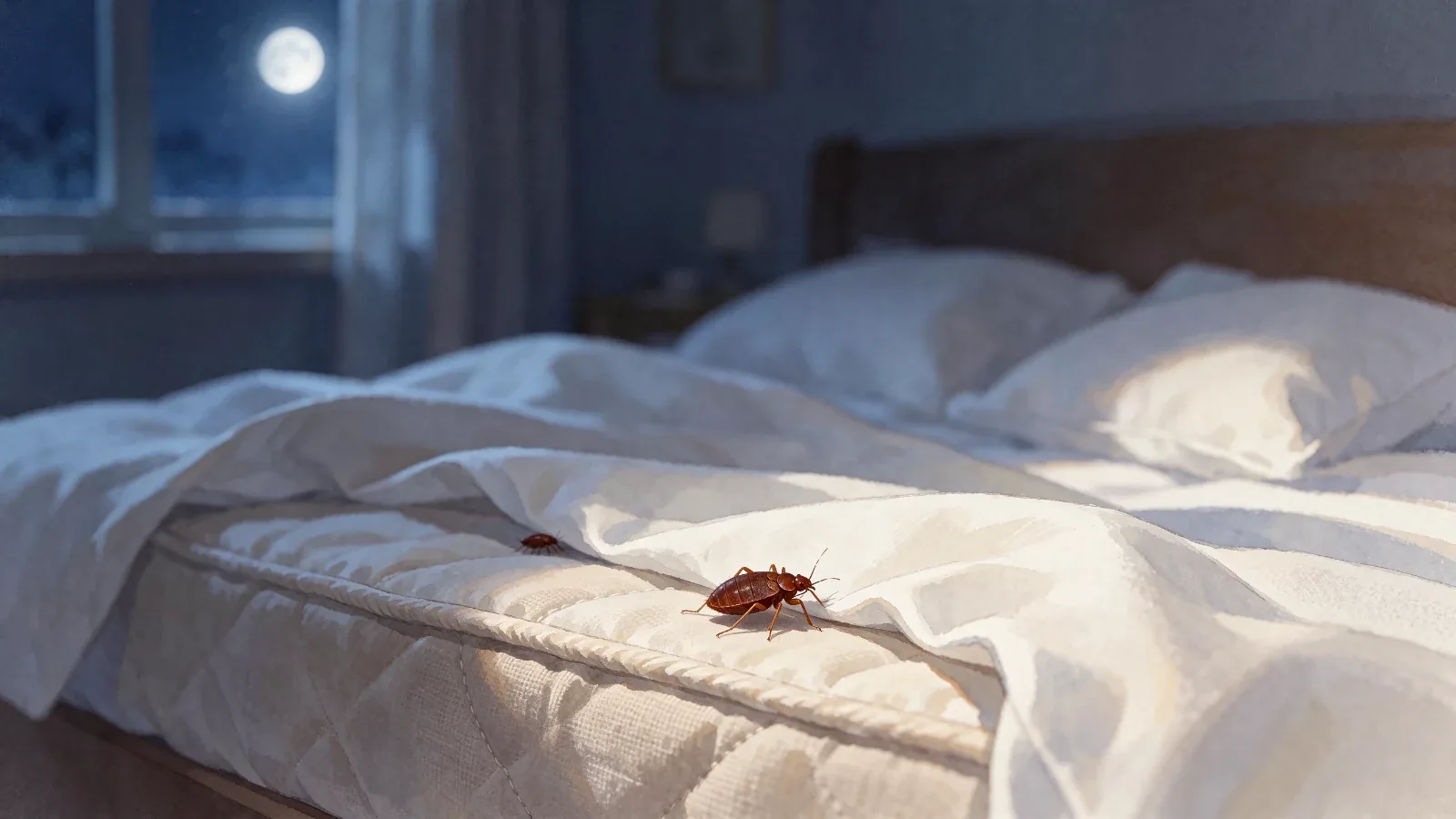
Why Do Bed Bugs Come Out at Night? This is a common question among Bangalore homeowners, tenants, hotel managers, and people who experience unexplained bites after sleeping. Bed bugs are generally more active during periods when their hosts are resting, which often occurs at night. Their feeding behaviour is influenced by host availability, body heat, exhaled carbon dioxide, and other environmental cues.
Bed bugs are small, wingless insects that feed on the blood of humans and other warm-blooded animals. They usually remain hidden in mattress seams, bed frames, and protected cracks between feeding opportunities. Understanding why they emerge at night can help you recognise an infestation, identify hiding places, and take practical steps to protect your home.
Why Are Bed Bugs More Active at Night?
Bed bugs are commonly described as nocturnal insects because their activity often increases during nighttime hours. However, their behaviour is closely connected to the sleeping patterns of their hosts rather than darkness alone.
When people remain relatively still in bed, bed bugs have an opportunity to approach and feed with less disturbance. This makes sleeping areas particularly attractive to them.
Sleeping People Are Easier to Approach
Bed bugs feed by inserting specialised mouthparts into the skin and taking a blood meal. A person who is sleeping generally moves less frequently than someone who is awake and active.
This reduced movement can make feeding easier. Bed bugs may return to protected hiding places after feeding.
Darkness Provides Favourable Conditions
Bed bugs often prefer concealed environments and may be more active in darkness. However, light does not completely prevent them from emerging or feeding.
If a suitable host is available, bed bugs may feed during daylight. Their behaviour depends on feeding opportunities, disturbance, and other conditions.
Bed Bugs Follow Host Activity Patterns
Bed bug activity can adjust to the routine of available hosts. In properties where people sleep during the day, bed bugs may become active during those resting periods.
This is relevant for Bangalore residents who work night shifts or have irregular sleeping schedules.
What Attracts Bed Bugs to People While Sleeping?
Bed bugs use several biological cues to locate potential hosts. They do not depend on sight alone when searching for a blood meal.
Human Body Heat
Human bodies release warmth that can help bed bugs identify nearby hosts. Temperature differences may provide useful information as insects approach a sleeping person.
However, body heat is not the only factor influencing their movement.
Carbon Dioxide from Breathing
People release carbon dioxide when breathing. Bed bugs can detect carbon dioxide and use it as part of their host-seeking behaviour.
Exhaled carbon dioxide works alongside other cues, including warmth and chemical signals associated with human presence.
Human Body Odours
Bed bugs respond to certain chemical cues associated with human skin and body odour. These signals may help them locate suitable feeding opportunities.
Personal hygiene does not determine whether bed bugs will infest a property. Clean and well-maintained homes can also experience bed bug problems.
Availability of a Blood Meal
Bed bugs require blood meals for normal development and reproduction. When a suitable host becomes available, hungry insects may emerge from their hiding places.
This is why bed bug activity is often noticed around beds, sofas, and other furniture where people regularly rest.
Where Do Bed Bugs Hide Before Coming Out at Night?
Bed bugs generally remain concealed between feeding opportunities. Their flattened bodies allow them to enter narrow spaces close to sleeping and resting areas.
Identifying these hiding places is important because treating only visible insects may leave concealed activity untreated.
Mattress Seams and Piping
Mattress seams provide narrow, protected spaces where bed bugs can hide. Adults, nymphs, and eggs may be found around stitching, piping, and fabric folds.
Inspect accessible mattress edges for live insects, dark spotting, shed skins, and pale eggs.
Bed Frames and Headboards
Wooden bed frames and headboards often contain joints, cracks, and concealed gaps. These locations provide shelter close to sleeping occupants.
Bed bugs may emerge from these spaces when suitable feeding conditions are present.
Sofas and Upholstered Furniture
Bed bugs are not restricted to bedrooms. They may hide inside sofas, upholstered chairs, and other furniture where people regularly rest or sleep.
Fabric seams, cushion folds, and furniture joints can provide suitable shelter.
Wall Cracks and Skirting Boards
Bed bugs may shelter in suitable cracks around skirting boards, wall joints, and nearby structural openings. In some buildings, these spaces may also provide routes between connected rooms.
Sealing appropriate gaps can reduce available hiding places, but sealing alone will not eliminate an established infestation.
Luggage and Personal Belongings
Bed bugs may hide inside suitcase seams, backpacks, and other personal belongings. These items can also transport insects between properties.
Inspect luggage carefully after travel when exposure to bed bugs is suspected.
Noticing bed bug activity around your bed at night? Contact Kiran Pest Control for a professional inspection and guidance on suitable treatment options.
Get a Free Quote Call NowCan Bed Bugs Bite During the Day?
Yes. Although bed bugs often feed during nighttime resting periods, they can also bite during daylight. Their feeding behaviour depends on the availability of hosts and the conditions around their hiding places.
Bed Bugs Are Not Strictly Nocturnal
Bed bugs commonly show nighttime activity, but they are capable of feeding whenever suitable opportunities arise. Darkness is not an absolute requirement for feeding.
For example, bed bugs may become active when someone sleeps during the day.
Night Shift Workers and Daytime Sleepers
People who work night shifts may sleep during daylight hours. Bed bugs can respond to their resting patterns and may feed while they are asleep.
This means changing sleeping hours does not reliably prevent bed bug bites.
Can Bed Bugs Bite While You Are Sitting?
Bed bugs may feed when a person remains relatively still on a sofa, upholstered chair, or other resting surface. Such activity is possible during the day or night.
If suspicious insects are found around frequently used seating, inspect accessible seams and furniture joints.
Does Leaving the Light On Prevent Bed Bug Bites?
No. Keeping bedroom lights on is not a dependable way to prevent bed bugs from feeding. Hungry bed bugs may emerge despite illumination when suitable hosts are present.
Effective prevention requires identifying and addressing the infestation rather than relying on lighting changes.
How to Identify Bed Bug Activity at Night
Bed bugs are difficult to detect because they often remain concealed. Physical evidence around sleeping areas is more useful than relying only on unexplained skin reactions.
Common Warning Signs
- Live bed bugs: Small, oval, reddish-brown insects near mattresses and furniture.
- Dark spotting: Tiny faecal marks on mattress seams, headboards, or nearby surfaces.
- Shed skins: Pale, empty insect coverings left behind during development.
- Bed bug eggs: Small, pale eggs attached to protected surfaces.
- Blood stains: Small marks on bedding that may sometimes accompany an infestation.
- Skin reactions: Itchy marks that may raise suspicion but cannot independently confirm bed bugs.
Inspect Your Bed Carefully
Use a flashlight to examine mattress seams, bed frame joints, headboards, and accessible areas near the bed. Look for physical evidence of insects rather than assuming every skin reaction is caused by bed bugs.
If you find a suspected insect, preserve it in a sealed container for professional identification.
Check Nearby Furniture
Inspect bedside tables, upholstered chairs, and furniture joints near sleeping areas. Bed bugs may occupy these locations even when the mattress shows limited visible activity.
When signs appear in several rooms, a broader inspection may be necessary.
Why Bite Marks Alone Are Not Enough
Skin reactions vary between individuals, and some people may not develop noticeable marks after bed bug bites. Other insects and skin conditions can also produce similar symptoms.
Confirming the presence of bed bugs requires reliable physical evidence or professional identification.
How to Prevent Bed Bug Bites and Control Nighttime Activity
Reducing bed bug activity requires practical prevention measures and appropriate treatment when an infestation is confirmed. Household cleaning can support control, but it may not reach insects hidden deep inside furniture or structural gaps.
Keep Sleeping Areas Easy to Inspect
Reduce unnecessary clutter around beds and keep furniture accessible for inspection. Check mattress seams and bed frames when warning signs appear.
Keeping the bedroom organised makes monitoring easier but does not guarantee protection from bed bugs.
Avoid Moving Infested Bedding
Do not transfer potentially infested mattresses, pillows, or bedding into unaffected rooms. Hidden insects may travel with these items and establish new hiding places.
Handle exposed fabrics carefully and use suitable laundering and drying methods.
Inspect Second-Hand Furniture
Examine used mattresses, sofas, bed frames, and upholstered chairs before bringing them indoors. Look carefully at seams, joints, and protected cracks.
Avoid collecting discarded furniture when its condition and history are unknown.
Take Precautions After Travelling
Inspect luggage and personal belongings when exposure to bed bugs is suspected. Keep potentially exposed bags away from beds and upholstered furniture until checked.
For additional prevention guidance, explore the Kiran Pest Control blog.
Do Not Depend on Home Remedies
Unverified household remedies may fail to reach bed bugs concealed inside furniture joints and structural gaps. Improper pesticide use can also create unnecessary health and safety risks.
Avoid using petrol, kerosene, unlabelled pesticides, or chemical mixtures on mattresses and furniture.
Professional Bed Bug Treatment in Bangalore
Professional assistance is advisable when live bed bugs are confirmed, signs persist, or several rooms may be affected. Because bed bugs can hide in narrow spaces and remain active outside nighttime hours, treatment should address the infestation rather than only visible insects.
Professional Bed Bug Inspection
A qualified technician examines likely hiding places and looks for evidence such as live insects, eggs, shed skins, and characteristic spotting. The inspection helps identify affected areas and determine whether nearby rooms also require assessment.
Professional identification can help distinguish bed bugs from other household insects.
Suitable Bed Bug Treatment Methods
Depending on the infestation and property conditions, professional management may involve targeted insecticide applications, physical removal, suitable heat-based measures, and follow-up monitoring. The selected approach should follow applicable product instructions and safety requirements.
Occupants should follow all preparation, re-entry, and post-treatment guidance provided by the technician.
Why Follow-Up Monitoring Matters
Bed bug eggs and concealed insects may remain difficult to detect during an initial inspection. Follow-up monitoring helps determine whether activity continues after treatment.
The need for additional treatment depends on the selected method, infestation conditions, and professional assessment.
Bed Bug Control for Bangalore Homes and Businesses
Kiran Pest Control (Kiran Enterprises) is a licensed pest control company serving Bangalore since 2006. The company provides pest management services for residential and commercial properties.
If you suspect bed bugs in your apartment, independent house, hotel, hostel, or paying guest accommodation, explore professional bed bug control services in Bangalore or contact Kiran Pest Control for assistance.
Need help controlling bed bugs that emerge at night? Request a quote from Kiran Pest Control and discuss an inspection and suitable treatment plan for your property.
Get a Free Quote Call NowFrequently Asked Questions
Why do bed bugs come out mostly at night?
Bed bugs are often active at night because people are usually resting and moving less during this period. They also respond to host-related cues such as body heat, exhaled carbon dioxide, and human odours.
Can bed bugs bite during daylight?
Yes. Bed bugs can feed during daylight when suitable hosts are available. Their activity is influenced by sleeping patterns and feeding opportunities rather than darkness alone.
Will sleeping with the lights on stop bed bugs?
No. Keeping lights on is not a reliable method of preventing bed bug bites. Hungry bed bugs may still emerge when a suitable host is present.
Where do bed bugs hide after feeding?
Bed bugs commonly return to protected spaces such as mattress seams, bed frame joints, headboards, upholstered furniture, and nearby cracks. These locations allow them to remain concealed between feeding opportunities.
How can I stop bed bugs from biting me at night?
Confirm the infestation through careful inspection, avoid moving infested belongings, and arrange appropriate pest management. Professional treatment and follow-up monitoring can help address bed bugs hidden around sleeping areas.
Conclusion
Understanding why bed bugs come out at night helps Bangalore homeowners and businesses recognise their feeding behaviour and identify potential infestations. Bed bugs often emerge when people are resting because suitable hosts are available and movement is reduced. However, they can also feed during daylight, so changing sleeping hours or leaving lights on will not reliably prevent bites.
Kiran Pest Control (Kiran Enterprises) provides professional pest management services in Bangalore. If you suspect bed bugs in your home, apartment, hotel, or hostel, call +91 98452 73699, connect through WhatsApp, or request a free quote to discuss suitable bed bug control options.
Need help with a pest problem?
Contact Kiran Pest Control to discuss the issue and arrange an inspection.
Contact our teamNeed Pest Control in Bangalore?
Get a same-day inspection from our certified technicians.
Contact Our Team Chat on WhatsAppOr call +91 98452 73699