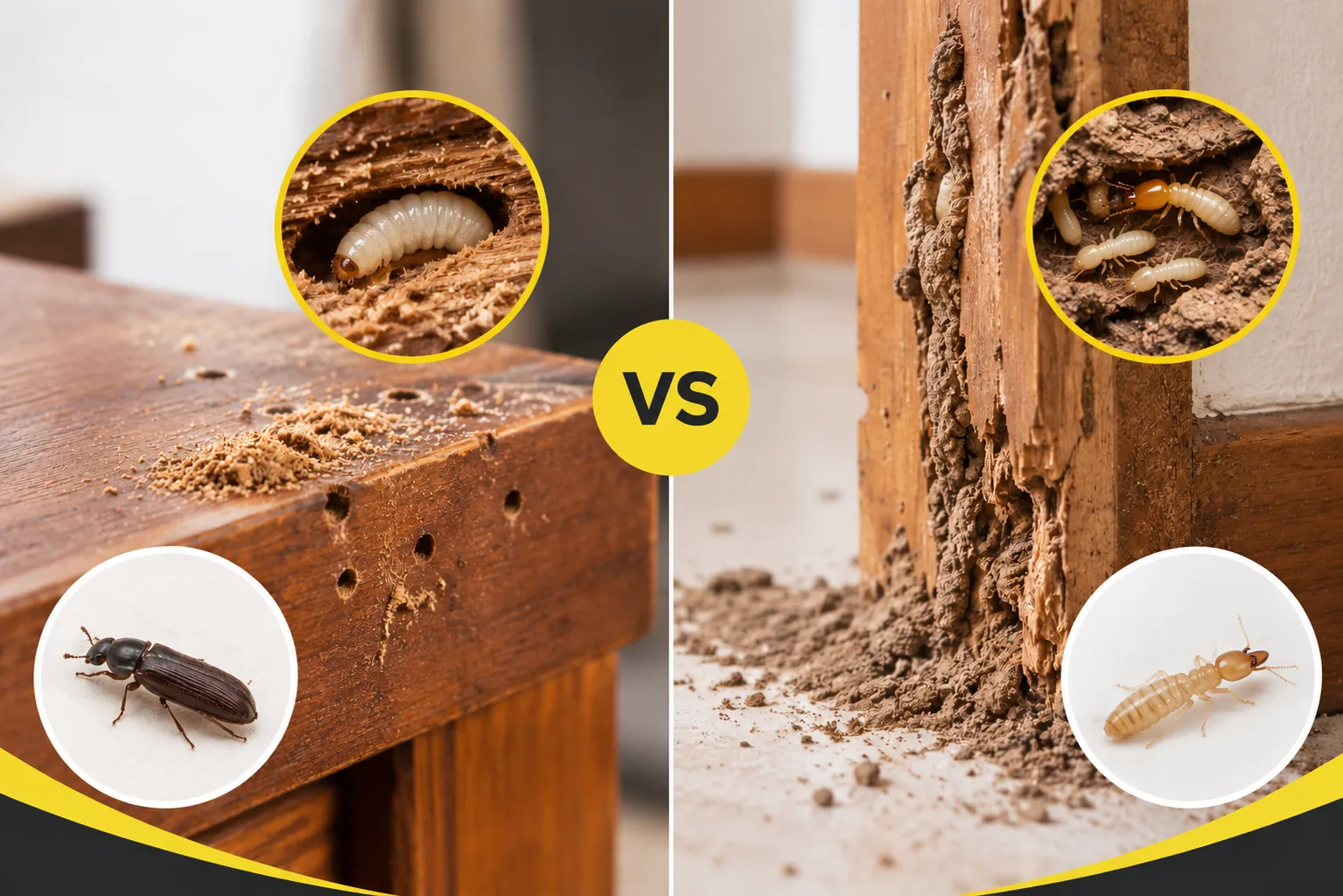
If you’re searching for wood borers vs termites, chances are some piece of wood in your home looks suspicious and you’re worried you’ll pick the wrong treatment. Getting the pest wrong is how people in Bangalore and Mysore end up spending thousands on termite drills when the real problem is beetle larvae quietly tunnelling through a single chair.
The good news: you don’t need to be a biologist to tell these wood pests apart. You just need to know what to look for on the surface of the wood, inside the damage, and around the room. Once you can identify which pest you’re dealing with, you can choose the right treatment plan and stop the spread before it reaches the rest of your furniture.
Termites and wood borers damage timber in very different ways, and that means a mistake in diagnosis often leads to wasted money and half-solved problems. Termite treatment usually targets hidden colonies in soil and walls, while borer control focuses on larvae already inside the timber.
Pick the wrong one and you end up treating the soil while beetles keep emerging from your bed frame, or spraying a single cupboard while subterranean termites keep eating the door frames behind the paint.
For many homeowners, the first sign is simply "something white" or "powder on the floor" near wooden furniture pests. The shape and texture of that mess already tells you a lot about what’s going on inside the timber.
Wood borers usually create small, neat, round exit holes, about the size of a ballpoint pen tip. Under and around these holes, you’ll find a fine, talcum-like powder that feels soft when you pinch it. This powder is called frass, and it means the adult beetle has already left the wood.
If you can access a broken edge or a hidden back panel, the pattern of internal damage gives a strong clue in the termite vs wood borer question. Termite galleries tend to be broad and muddy, with soil, droppings, and saliva glued together in irregular tunnels.
Wood borers, on the other hand, leave cleaner tunnels that follow the grain of the wood. The inside often looks packed with a mix of fine dust and tiny pellets. In softwoods, the boards can feel spongy but still look fairly intact until you press or tap them.
Another way to tell wood borers vs termites apart is by watching how the problem spreads across your home. Termites are social insects living in large colonies, so once they find timber, they typically attack multiple points along walls, skirting, and door frames.
Wood borers are often brought in through a single infested item, especially with wooden furniture damage on second-hand or custom-made pieces that used unseasoned timber. Months later, you may see fresh powder under just one or two items, not across the entire room.
In Bangalore and Mysore, high humidity and older construction styles mean there are many entry points for these pests. For wood insect control, the usual termite route is through soil that touches foundation, garden beds against exterior walls, or moisture-prone bathrooms and kitchens.
Borers often arrive via new furniture, stored timber, or damp loft areas. Keeping an eye on recently bought wooden items for the first year helps you catch borer activity before it spreads.
If you don’t want to pull out a magnifying glass, focus on a few simple checkpoints that separate wood borers vs termites fast. This helps during a quick home pest inspection before you call in a professional.
“Frass type” — Fine, flour-like powder suggests borers. Coarser, sand-like pellets or mud trails suggest termites.
“Hole size” — Small, round exit holes point to borers. Termites rarely leave clean round holes; they prefer hidden pathways.
“Sound test” — Tap the wood. A hollow, papery sound along a stretch of skirting or door frames is more typical of termites.
“Spread” — One or two items affected hints at borers. Multiple walls and fixtures affected hints at termites.
If you’re still unsure, take clear close-up photos of the damage and frass, then share them with a local pest management expert who knows regional species and building styles.
In local houses, termite mud tubes often appear first in dim corners behind storage units, particularly on ground floors where pest management has never been done. These pencil-width mud lines on walls or foundations are almost always termite highways.
In contrast, borer signs are far more common on decorative items, puja room shelves, wooden toys, and antique pieces. Residents often notice powder when sweeping under these items long before they see any structural weakness.
Once you’re confident that borers are the problem, the next step is targeted wood borer treatment. The goal is to kill larvae still feeding inside the timber and protect nearby items that may be at risk.
Professionals typically inject insecticide into the visible exit holes, then apply a surface treatment on the entire piece. Severely damaged items may need to be discarded, especially if they’ve lost structural strength or you see extensive internal tunnelling.
To protect prized items, combine treatment with smart storage practices focused on wood protection. Keep wooden pieces away from damp walls, fix any leaks promptly, and avoid stacking cardboard or fabrics directly against timber, as this traps moisture.
When buying new or second-hand furniture, inspect undersides, joints, and corners for tiny holes or fresh dust. Asking for well-seasoned or kiln-dried wood reduces the risk of hidden larvae arriving with your purchase.
Termites need a very different approach. Effective termite treatment doesn’t stop at the visible damage; it focuses on the colony that may be several metres away in soil or inside walls. This is why DIY sprays on the surface almost never solve the problem for long.
In Bangalore and Mysore, pest control teams often use a combination of drilling and chemical barriers around foundations, along with monitoring stations where needed. This helps cut off termite access routes while targeting those already inside the structure.
If you see mud tubes, distorted door frames, or paint that "bubbles" when pressed, it’s time for a professional pest inspection. Termites can hollow out critical beams long before obvious breakages appear.
Call in an expert quickly if the damage is near structural elements, if you hear faint clicking sounds inside walls, or if several rooms show unexplained hollow patches in timber.
Stopping the immediate infestation is only half the job; long-term pest management is about breaking the conditions that attract these insects in the first place. Both borers and termites prefer damp, unsealed, and poorly ventilated wood.
Simple habits help a lot: fix plumbing leaks fast, keep furniture slightly away from walls, allow airflow behind large cupboards, and avoid direct soil contact with exterior wooden elements. Periodic professional inspections, especially in older homes, catch small problems early.
Once you know the visual and behavioural differences between wood borers vs termites, choosing the right treatment becomes far less stressful, and you can act with confidence instead of guessing. A short inspection with a torch, a screwdriver, and a bit of patience often tells you which pest you’re up against.
If you’re based in Bangalore or Mysore and still unsure what’s damaging your wood, book a professional assessment with Kiran Enterprises, mention wood borers vs termites when you call, and get a clear plan before the damage spreads any further.
Contact Kiran Pest Control to discuss the issue and arrange an inspection.
Contact our teamGet a same-day inspection from our certified technicians.
Contact Our Team Chat on WhatsAppOr call +91 98452 73699