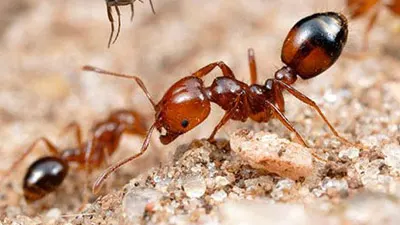
Monomorium / Camponotus spp.
Ants live in large colonies and lay down scent trails that guide worker ants straight to food sources inside a home.
Once a reliable food or water source is found, a trail can bring hundreds of ants indoors within hours.
Small, 2–5 mm, ranging from black to reddish-brown depending on species
Distinct narrow "waist" segment between thorax and abdomen
Elbowed (bent) antennae, unlike the straight antennae of termites
Travel in visible single-file trails along walls, counters, and floors
Wall cavities, under floor tiles, and behind skirting boards
Garden soil, potted plants, and areas near building foundations
Kitchen cabinets, near sugar, food crumbs, and pet food bowls
Gaps around windows, door frames, and utility pipe entries
Contaminate food and food-prep surfaces as they forage
Some species can deliver a mild bite or sting to sensitive individuals
Large trails indoors are a persistent hygiene nuisance in kitchens
Nesting near electrical fittings can occasionally affect connections
Visible ant trails leading to food, water, or waste bins
Small mounds of fine soil near foundations or garden beds
Ants appearing shortly after food or crumbs are left out
Winged ants indoors, which can signal a nearby mature colony
Our ant control team can inspect, confirm, and clear the problem — usually with a same-day appointment across Bangalore.