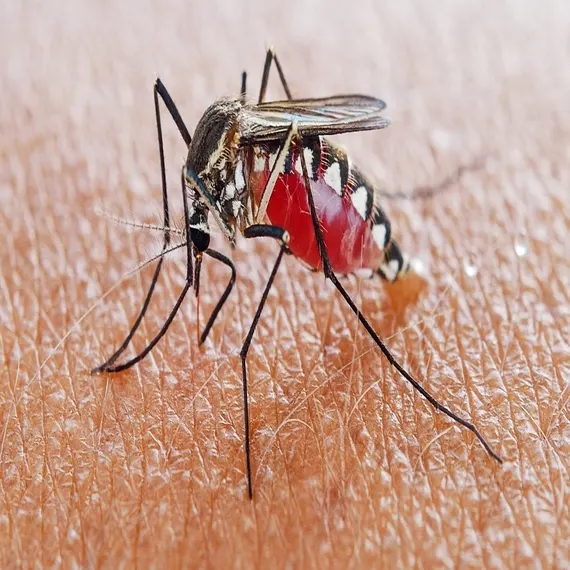
Aedes aegypti / Aedes albopictus / Culex quinquefasciatus / Anopheles stephensi
Mosquitoes lay eggs in or near water, and their larvae develop in standing water before emerging as adults. In Bengaluru, water collecting in containers, drains and building sites can create breeding opportunities, especially after rain.
Different mosquitoes bite at different times and use different breeding sites. Knowing whether activity is coming from day-biting Aedes or night-biting species such as Culex or Anopheles helps guide inspection and prevention.
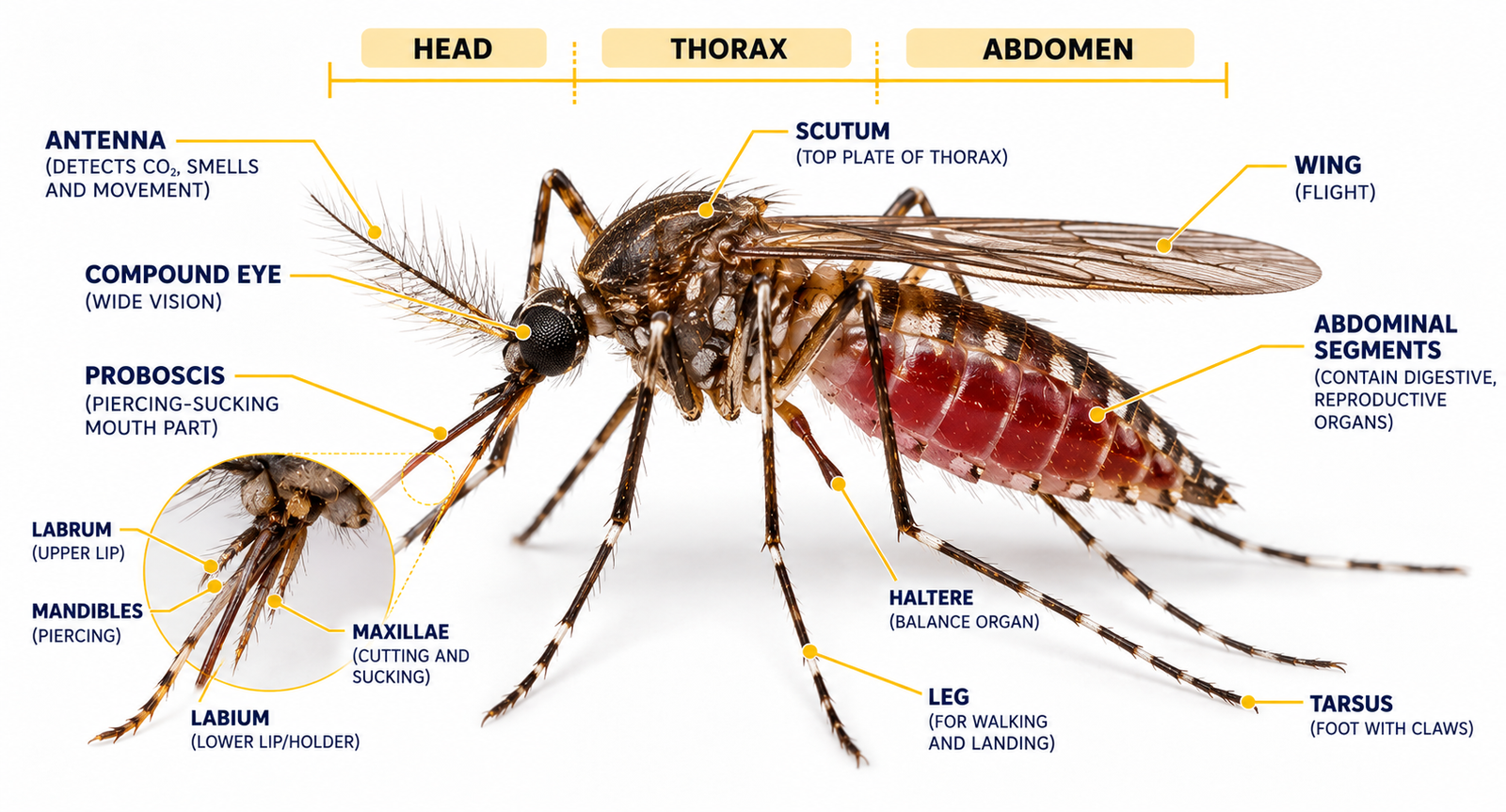
Mosquitoes have a narrow body divided into head, thorax and abdomen. Females use a proboscis to take a blood meal; the long legs and wings help them move between resting and feeding sites. The fine antennae and other sensory structures help mosquitoes detect their surroundings and potential hosts.
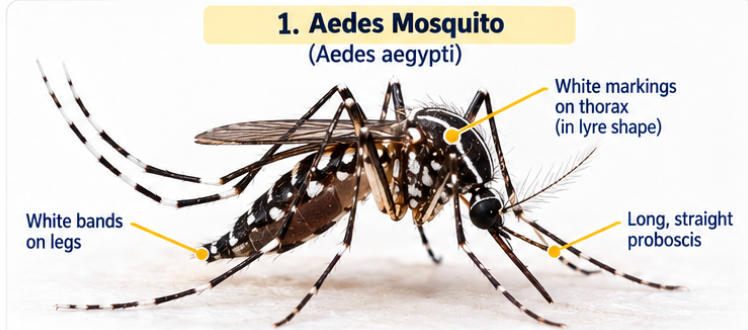
Yellow Fever Mosquito
Aedes aegypti
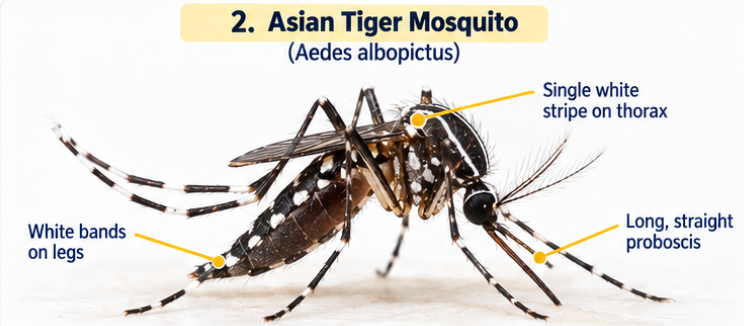
Asian Tiger Mosquito
Aedes albopictus
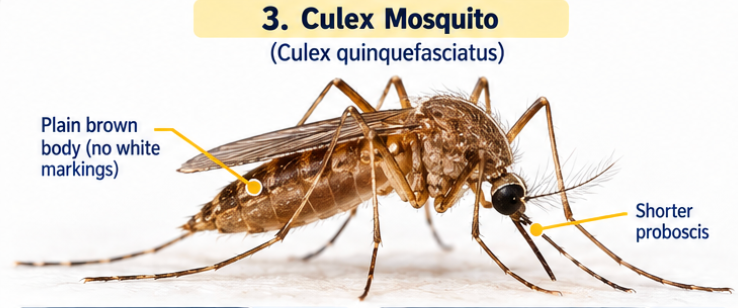
Common House Mosquito
Culex quinquefasciatus
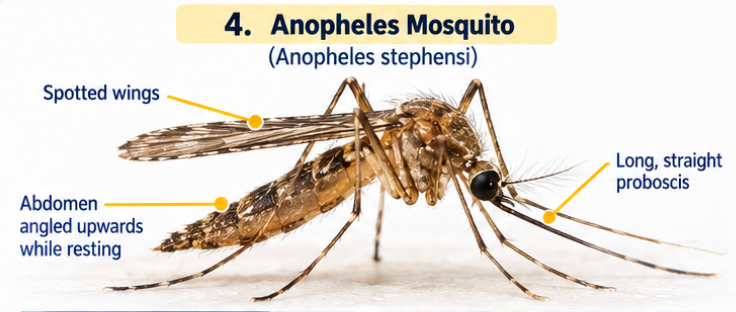
Asian Malaria Mosquito
Anopheles stephensi
Slender body, 4–8 mm long, with long thin legs and a piercing proboscis
Aedes: black body with distinct white stripes on legs and body
Culex and Anopheles: duller brown-grey colouring
Larvae ("wrigglers") are visible near the surface of standing water
Flower pots, coolers, and open water tanks
Clogged terrace drains and roof gutters
Discarded tyres, buckets, and construction debris holding rainwater
Overgrown plants and shaded, damp garden corners
Infected Aedes mosquitoes can transmit dengue and chikungunya
Infected Anopheles mosquitoes can transmit malaria
Culex quinquefasciatus is a key vector of lymphatic filariasis in India
Bites cause itching and swelling even without disease transmission
Frequent biting indoors, especially near dusk and dawn
Visible larvae wriggling in stored water or containers
Persistent buzzing sounds near ears at night
A noticeable rise in bites after rain or monsoon showers
These species differ in appearance, breeding preferences and disease risks. A photograph can help with a first look, but reliable species identification may require an entomologist or public-health team.
A small, dark mosquito with bold pale markings on its legs and body. It often breeds in water held in household containers such as buckets, coolers, pots and tanks, and commonly bites during the day. It is an important vector of dengue, chikungunya and Zika viruses.
This dark mosquito has conspicuous white bands on its legs and a pale stripe on the thorax. It can breed in small natural or artificial water-holding sites around homes and gardens and may bite during daylight hours. It can transmit dengue and chikungunya viruses.
Usually brownish and active after sunset, this mosquito often breeds in stagnant, organically polluted water, including some drains and wastewater sites. It is the main vector of lymphatic filariasis in much of India.
This urban malaria vector can breed in clean or relatively clean standing water, including water storage structures. Adult Anopheles rest at an angle to the surface, and some have spotted wings. It is active mainly from dusk through the night and can transmit malaria.
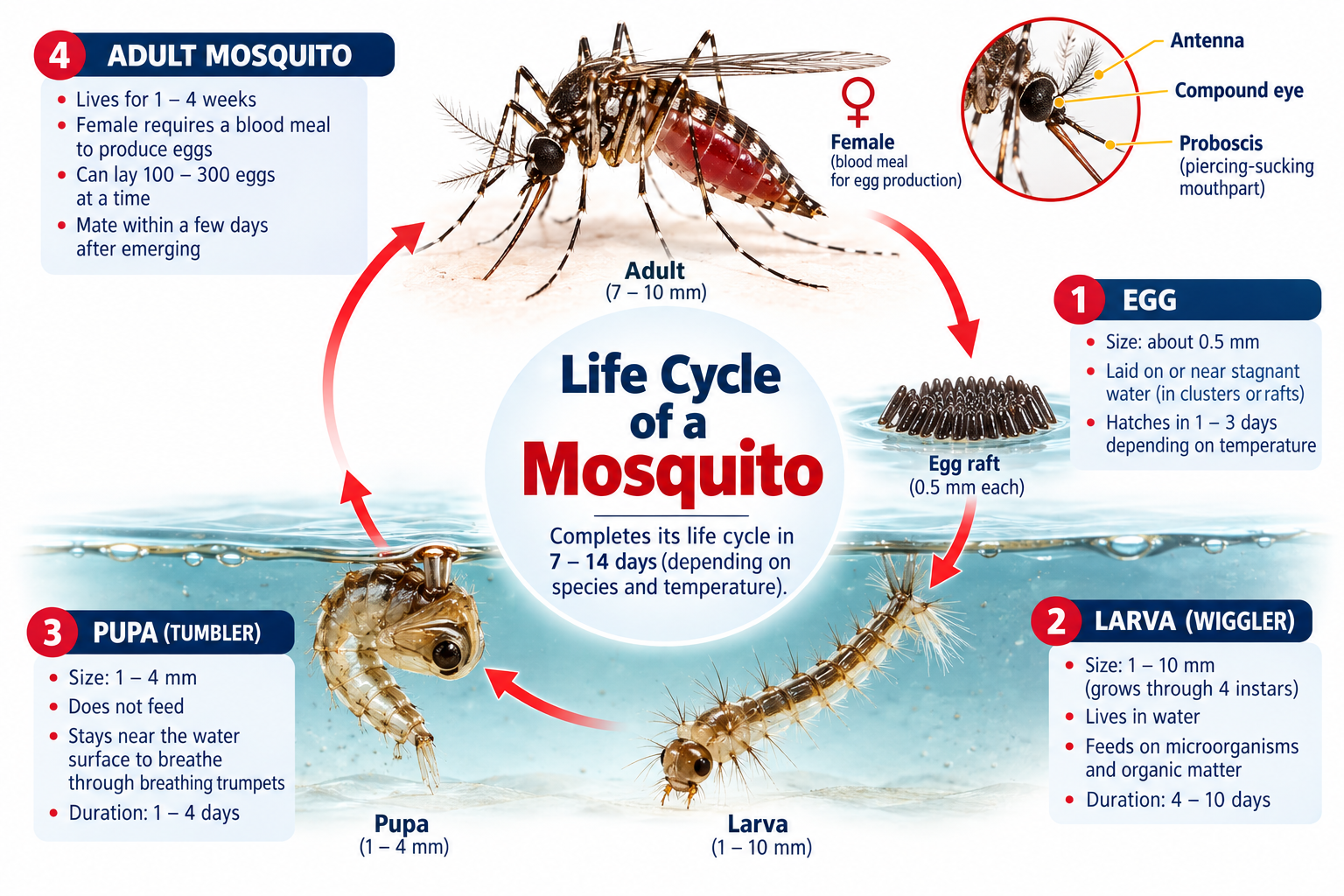
Mosquitoes pass through four stages: egg, larva, pupa and adult. The first three stages are aquatic, so finding and removing standing water is a practical way to interrupt development. How quickly mosquitoes mature depends on species and local conditions such as temperature and food availability.
A breeding site can be much smaller than a pond. Check places where water can collect or remain undisturbed, including:
Water storage tanks, buckets, coolers, flowerpot trays and uncovered containers.
Discarded tyres, bottles, coconut shells, tarpaulins and construction materials that catch rainwater.
Blocked terrace drains, gutters and low points where rainwater pools.
Poorly maintained drains, wastewater channels and other persistent stagnant water sites.
Water-holding plants or garden items near shaded walls and balconies.
A weekly check around the home can help prevent containers from becoming long-standing breeding sites. Combine source reduction with personal protection, especially during periods of high mosquito activity.
Empty, scrub, cover or turn over items that hold water; change water in trays and vessels regularly.
Keep overhead and ground-level water tanks tightly covered and repair leaking taps or pipes.
Clear leaves and debris from terrace drains and gutters so water can flow away.
Use window and door screens, bed nets where appropriate, and locally recommended repellents according to label directions.
For shared spaces or persistent breeding, inform the building manager or local civic health team so the source can be inspected.
In August 2026, Bengaluru’s central civic corporation reported expanding mosquito-control work in vulnerable areas, including larval control, while asking residents to remove breeding sites. That public-health approach reflects an important point: fogging alone cannot remove eggs and larvae developing in standing water, so source reduction around homes and shared premises also matters.
Our mosquito control team can inspect, confirm, and clear the problem — usually with a same-day appointment across Bangalore.