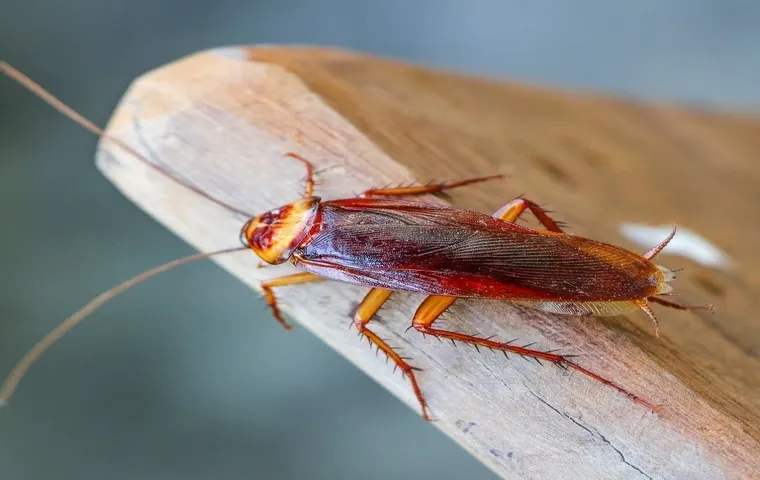
Fast-breeding scavengers that hide in kitchens, drains, and electrical panels.
Blattella germanica / Periplaneta americana
Cockroaches are among the most common household pests in Bangalore, thriving in the warm, humid conditions found in kitchens, bathrooms, and drains.
A single female can produce hundreds of offspring in a year, which is why a few sightings usually point to a much larger hidden colony nearby.
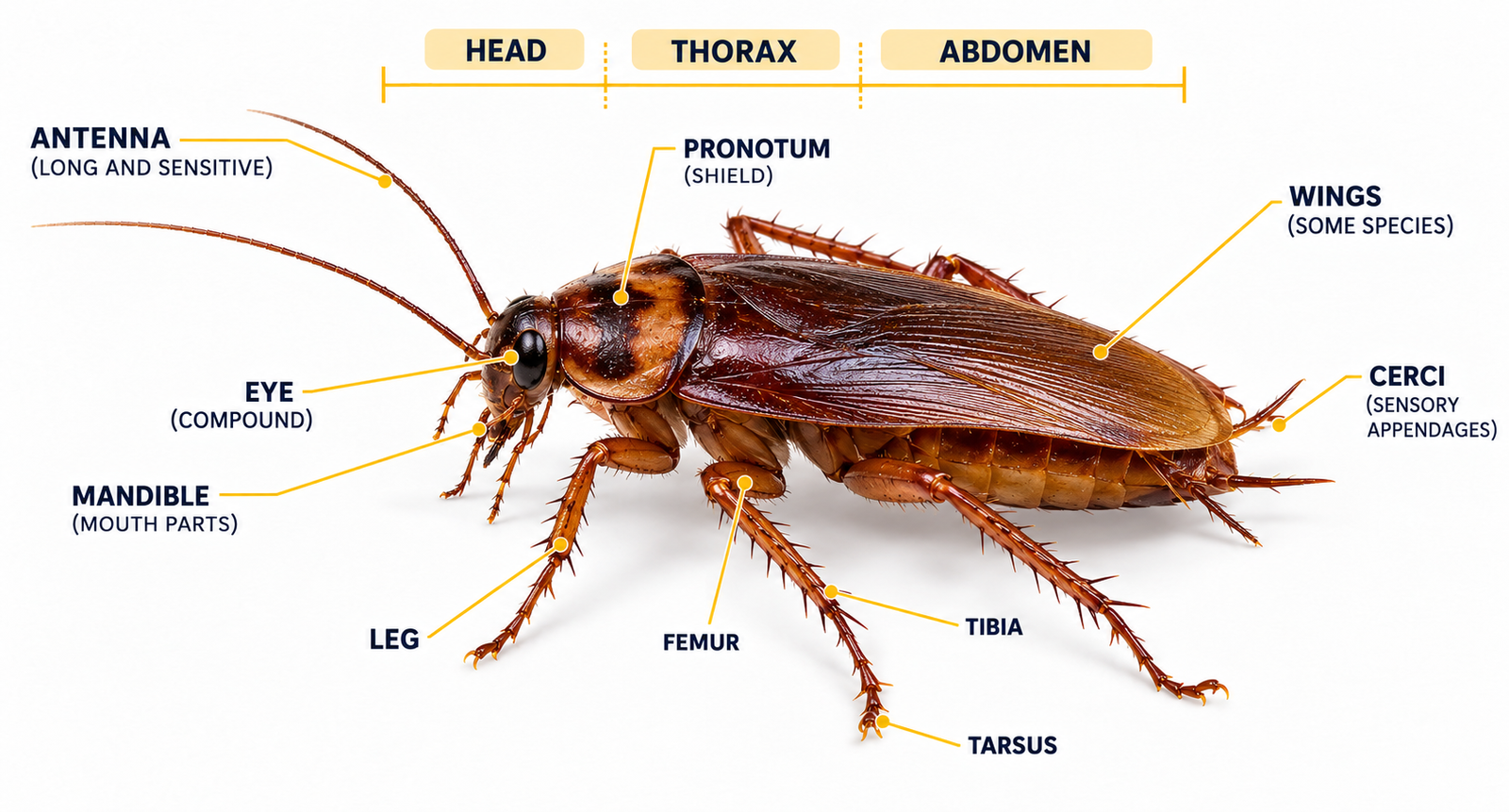
A cockroach's body is divided into three regions — head, thorax, and abdomen. Long, sensitive antennae and compound eyes help it navigate in the dark, while mouthparts (mandibles) let it feed on almost anything. Spiny legs, built for quick bursts of speed, break down into the femur, tibia, and tarsus, and a shield-like pronotum covers the front of the thorax. Some species carry wings across the abdomen, and a pair of sensory cerci at the rear tail-end pick up vibrations and air movement, warning the roach when to flee.


Reddish-brown to dark brown, oval, flattened body
German cockroaches: 1.3–1.6 cm, with two dark stripes behind the head
American cockroaches: 3.5–5 cm, larger and reddish-brown with a yellowish band
Long, thread-like antennae and six spiny legs built for fast movement
Behind refrigerators, stoves, and other warm appliances
Under sinks, inside cabinets, and around drain pipes
Cracks in tiles, skirting boards, and electrical panels
Cardboard boxes, grocery bags, and clutter in storerooms
Carry bacteria such as Salmonella and E. coli on their bodies and legs
Shed skin and droppings that can trigger asthma and allergies
Contaminate food, utensils, and food-prep surfaces as they forage
Can spread quickly to neighbouring units in apartments and hostels
Roaches seen moving during daylight hours
A musty, oily odour near cabinets or drains
Small, dark, pepper-like droppings along skirting boards
Brown, capsule-shaped egg cases (oothecae) behind appliances
Knowing which cockroach you have can help explain where it is hiding and why it is appearing. These three cockroach species are commonly encountered in homes and commercial premises.
The German cockroach is one of the most common indoor cockroach species found in homes, apartments, restaurants and commercial kitchens. It is relatively small and usually light brown to tan. Adults typically have two dark parallel stripes behind the head, which can help with identification.
Where they hide: kitchen cabinets, behind refrigerators, around sinks and plumbing, food storage areas, electrical appliances, restaurant kitchens, commercial food-preparation areas, and bathroom or utility areas.
Signs: small cockroaches in the kitchen, droppings around cupboards and appliances, egg cases in hidden areas, an unpleasant odour in heavy infestations, night-time sightings, and small nymphs near food or moisture.
Why control is difficult: German cockroaches reproduce quickly and hide in very small cracks and gaps. Visible adults may be only part of an infestation; eggs, nymphs and adults can remain concealed. Professional inspection and targeted treatment can help locate harbourage areas.
The American cockroach is one of the larger species encountered around buildings. It is reddish-brown, with a distinctive yellowish outline around the pronotum, the shield-like structure behind its head. Despite its name, it is widely distributed around the world, including India.
Where they hide: drains, sewage and drainage systems, manholes, basements, garbage areas, kitchens, bathrooms, commercial buildings and food establishments. They can enter through drains, plumbing openings, cracks, doors and other access points.
Signs: large cockroaches around drains, activity after dark, droppings near walls and corners, egg cases in concealed locations, activity around damp areas, and an unpleasant odour where activity is heavy.
Why they enter buildings: they seek food, moisture, warmth and shelter. Poor sanitation, leaking plumbing, standing water and accessible food waste can increase infestation risk.
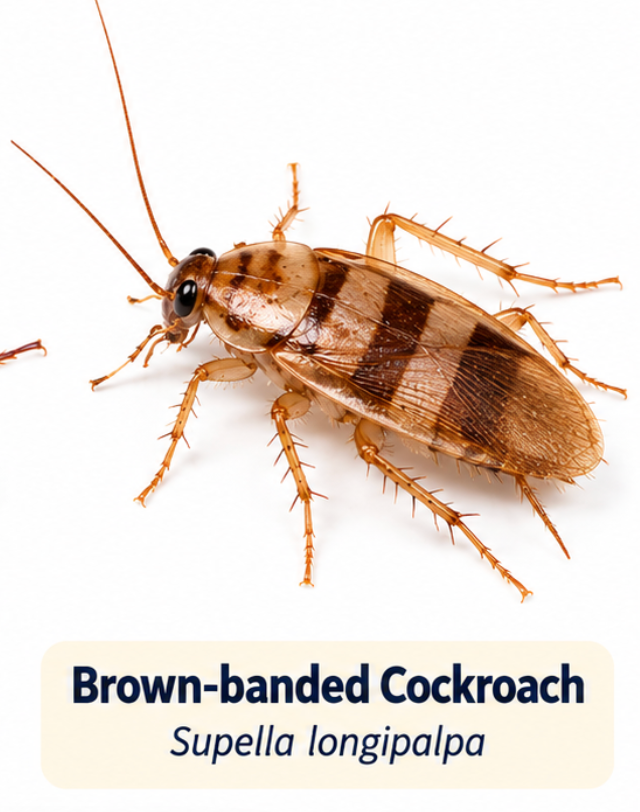
The brown-banded cockroach is a smaller species identified by lighter bands across its body and wings. It can be difficult to detect and can live in relatively dry areas compared with species that depend more on damp locations.
Where they hide: cupboards, furniture, electrical appliances, wall cavities, ceilings, storage areas, behind picture frames, and other dry, warm indoor spaces.
Signs: small cockroaches in rooms, light-coloured body bands, egg cases attached to hidden surfaces, droppings around furniture and cupboards, activity around appliances, and nymphs in concealed areas.
Why they are difficult to find: they can hide in elevated and less obvious locations. Sightings in bedrooms, cupboards, furniture or electrical equipment may mean the infestation is not limited to the kitchen.
| Feature | German Cockroach | American Cockroach | Brown-Banded Cockroach |
|---|---|---|---|
| Scientific name | Blattella germanica | Periplaneta americana | Supella longipalpa |
| Typical size | Small | Large | Small |
| Colour | Light brown or tan | Reddish-brown | Light brown |
| Key identification | Two dark stripes behind head | Yellowish pronotum margin | Light bands across body |
| Common locations | Kitchens, appliances, cupboards | Drains, damp areas, basements | Furniture, cupboards, dry areas |
| Activity | Mostly nocturnal | Mostly nocturnal | Mostly nocturnal |
| Common attraction | Food, warmth, moisture | Food, moisture, shelter | Food, warmth, shelter |
Seeing one cockroach does not always show how extensive an infestation is. Check for other evidence around likely hiding places:
Small dark spots or smears may appear around cupboards, corners, appliances and other hiding areas.
Cockroach egg cases, known as oothecae, may be found in protected locations.
Small young cockroaches can indicate that breeding is taking place nearby.
Heavy infestations may produce a persistent unpleasant smell.
Cockroaches are generally more active at night. Seeing multiple cockroaches after dark can indicate an infestation.
Treating only the cockroaches that are visible is a common mistake. Cockroaches can hide in cracks and crevices, behind appliances, inside cabinets, plumbing voids, electrical equipment, wall cavities, drains and furniture. Effective cockroach management generally involves inspection, identification, sanitation and targeted treatment, along with steps to reduce the food, water and shelter available to pests.
If cockroach activity continues despite household sprays or DIY treatments, a professional inspection can help identify where cockroaches are hiding, how they are entering, what is attracting them, where breeding may be occurring, and which treatment approach is appropriate. Kiran Pest Control provides professional cockroach pest control, cockroach control and cockroach treatment for homes, apartments, restaurants, offices, commercial properties and other establishments across Bangalore and Karnataka.
Don’t just treat the cockroaches you can see. Identify the source of the infestation. Contact Kiran Pest Control for professional cockroach inspection and treatment in Bangalore and Karnataka.