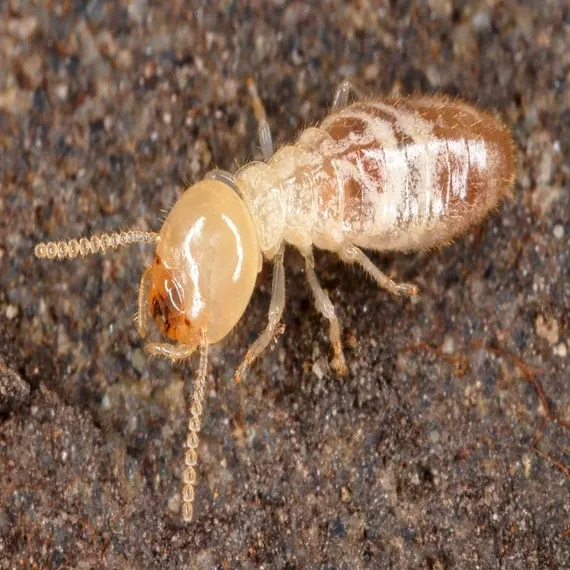
Silent structural pests that hollow out wood, furniture, and door frames from the inside.
Odontotermes spp. (subterranean termites)
Termites feed mainly on materials containing cellulose, including wood and paper. Because colonies can remain hidden in soil, timber and wall voids, damage may go unnoticed until visible signs appear.
In Bengaluru, subterranean termites can reach buildings through soil and concealed entry points. Mud tubes, hollowed timber and discarded wings after a swarm are useful clues, but an inspection is needed to confirm active termites and locate their source.
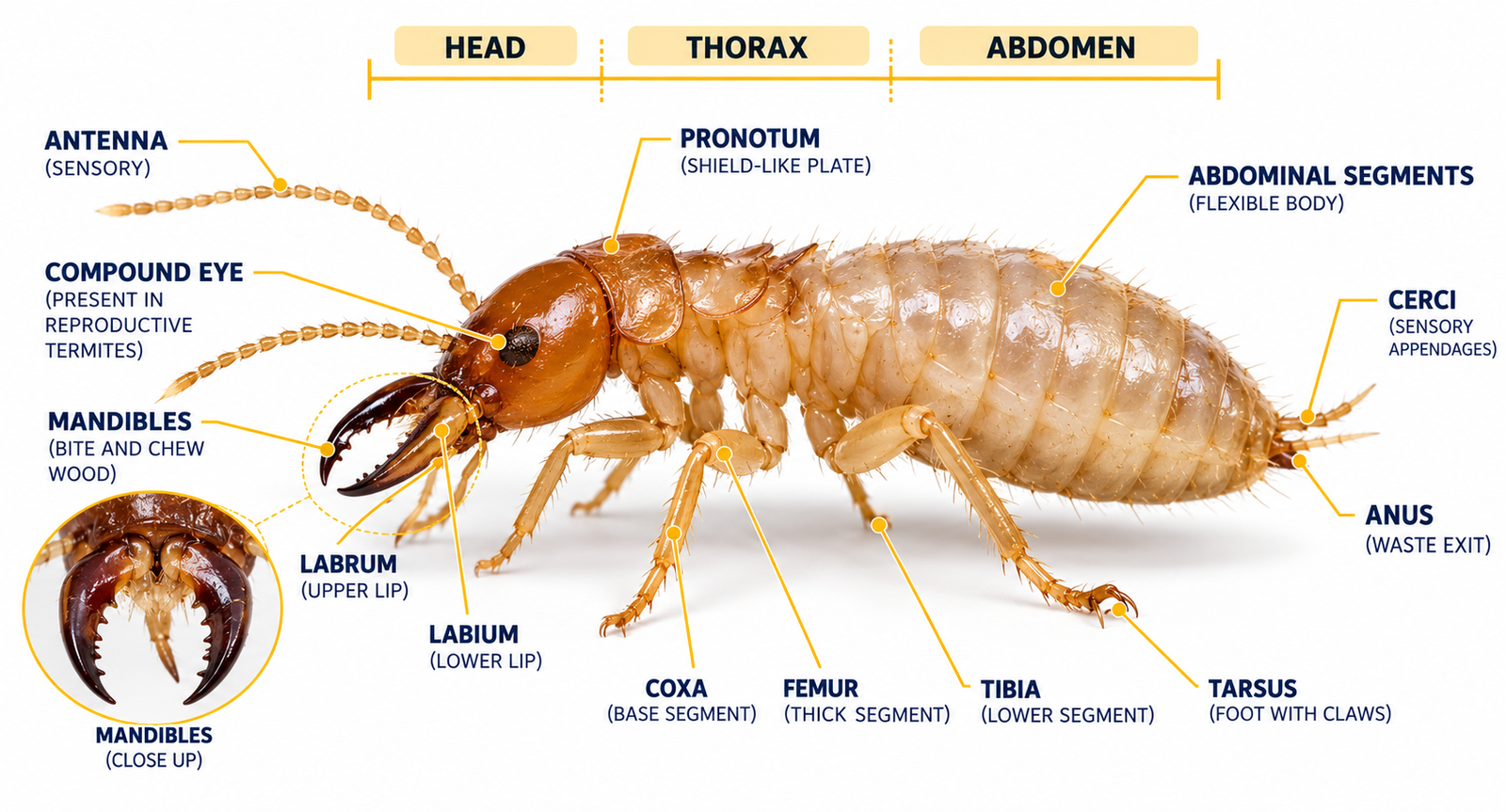
A termite has a head, thorax and segmented abdomen. Workers have strong mandibles for feeding on cellulose-rich material, while soldiers have enlarged jaws for colony defence. Winged reproductives, called alates or swarmers, have two pairs of similar-length wings; workers and soldiers are wingless.
Pale, cream-coloured, soft-bodied insects, 4–10 mm long
Straight, bead-like antennae, unlike the bent antennae of ants
Winged reproductives ("swarmers") have two pairs of equal-length wings
Worker termites avoid light and are rarely seen without disturbing a nest
Wooden furniture, door and window frames, and false ceilings
Soil beds adjoining building foundations
Damp basements, storerooms, and areas with water leakage
Wall voids and skirting boards near ground contact
Not a direct health hazard to people, but a major structural risk
Weakened wooden beams and frames can compromise building safety
Damage often voids the value of furniture, flooring, and fittings
Repair costs typically far exceed the cost of preventive treatment
Mud tubes running along walls, skirting, or foundations
Hollow-sounding wood when tapped
Discarded wings near windowsills and light fixtures after a swarm
Blistered or sagging paint and warped wooden surfaces
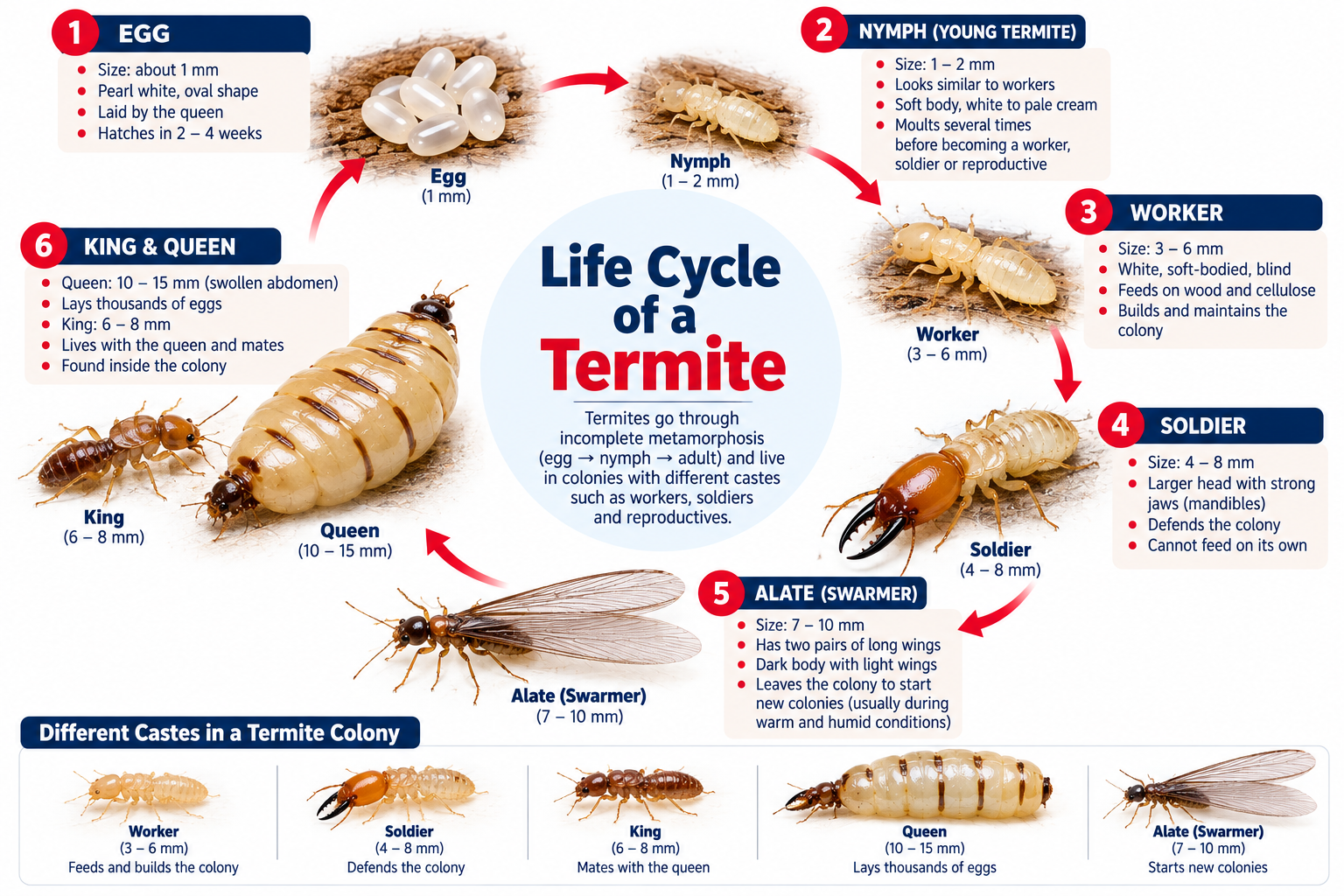
Termites develop through incomplete metamorphosis: egg, immature nymph and adult. Nymphs moult as they grow, and colony needs and species influence which caste they develop into. A mature colony may contain workers, soldiers and reproductives, each with a different role.
During a reproductive swarm, winged alates leave an established colony. A male and female that find a suitable protected site can shed their wings, pair and begin a new colony. The first young are cared for by the founding pair until workers emerge and take over much of the colony’s feeding and building.
Workers: forage for food, care for young and maintain galleries and shelter.
Soldiers: defend the colony; their enlarged jaws make them distinct from workers.
King and queen: primary reproductives that mate and produce eggs in an established colony.
Alates: winged reproductive termites that disperse during swarming and may establish new colonies.
The exact termite species matters, but the location and moisture conditions around the infestation can offer an initial clue. A pest professional can identify the group and choose a suitable inspection and treatment plan.
These termites live in soil or other protected, moist areas and may build mud tubes to reach timber above ground. They are the group described in this page’s identification details.
Drywood termites live within dry timber and do not need a soil connection. Small piles of dry, pellet-like frass near wood can be a clue, although other causes should be ruled out.
Dampwood termites are associated with timber that stays wet or decayed. Persistent leaks and damp wood should be repaired as part of addressing the conditions that support them.
Winged termites and flying ants may emerge around the same season and are easy to confuse. Termite swarmers usually have straight antennae, a broad waist and two pairs of similar-length wings. Flying ants have elbowed antennae, a pinched waist and forewings longer than their hindwings. Shed wings near windows or doors can indicate a nearby swarm, but do not by themselves show where the colony is located.
Check timber, skirting, door frames and concealed edges for changes that may point to termite activity. Avoid breaking open suspected galleries before an inspection, since their route and condition can help establish where they are active.
Mud shelter tubes on foundations, walls, pipes or the back of furniture.
Timber that sounds hollow, feels weakened or has a thin surface over eaten wood.
Blistered paint, buckled trim or doors and windows that have become difficult to close.
Piles of shed wings near lights, windows or entry points after humid, rainy weather.
Small pellets or frass beneath timber, which may point to drywood termites and should be checked.
Winged termites often disperse in warm, humid weather around the monsoon season. Seeing a swarm outdoors does not automatically mean a building is infested; repeated indoor swarms, shed wings or other signs near timber are good reasons to arrange an inspection. An Indian government termite-prevention guideline also notes the seasonal appearance of winged termites after early monsoon showers.
Prevention focuses on limiting hidden access to timber and reducing persistent dampness around the building. These steps do not replace treatment where a colony is already active, but they can make conditions less favourable.
Repair plumbing leaks and direct rainwater away from foundations and walls.
Keep firewood, cardboard and spare timber off the ground and away from exterior walls.
Avoid direct contact between untreated wood and soil; keep foundations and inspection gaps visible where possible.
Remove wood scraps and cellulose debris from damp crawl spaces, store rooms and utility areas.
Have mud tubes, damaged timber or repeated indoor swarms checked by a termite-control professional.
Our termite control team can inspect, confirm, and clear the problem — usually with a same-day appointment across Bangalore.