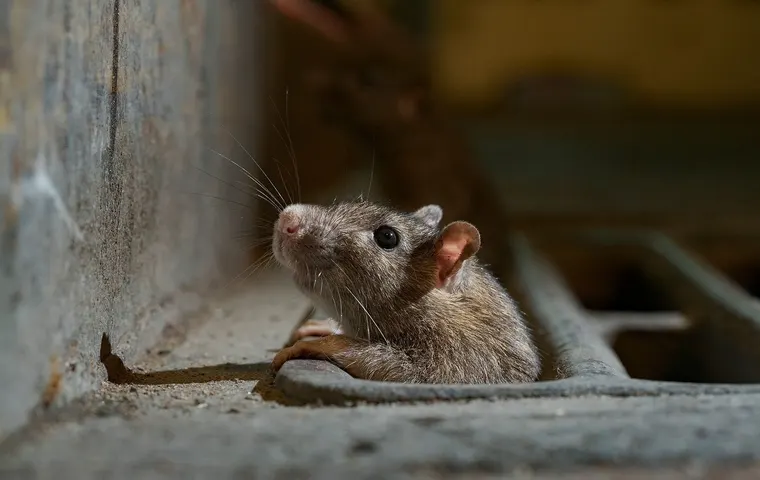
Wire-chewing, food-contaminating rodents that multiply fast once they find a way in.
Rattus rattus / Mus musculus
Rats and mice slip through gaps as small as a coin and, once inside, damage wiring, insulation, and stored food.
A single pair can produce dozens of offspring within months, so early action makes a real difference to how big the problem gets.
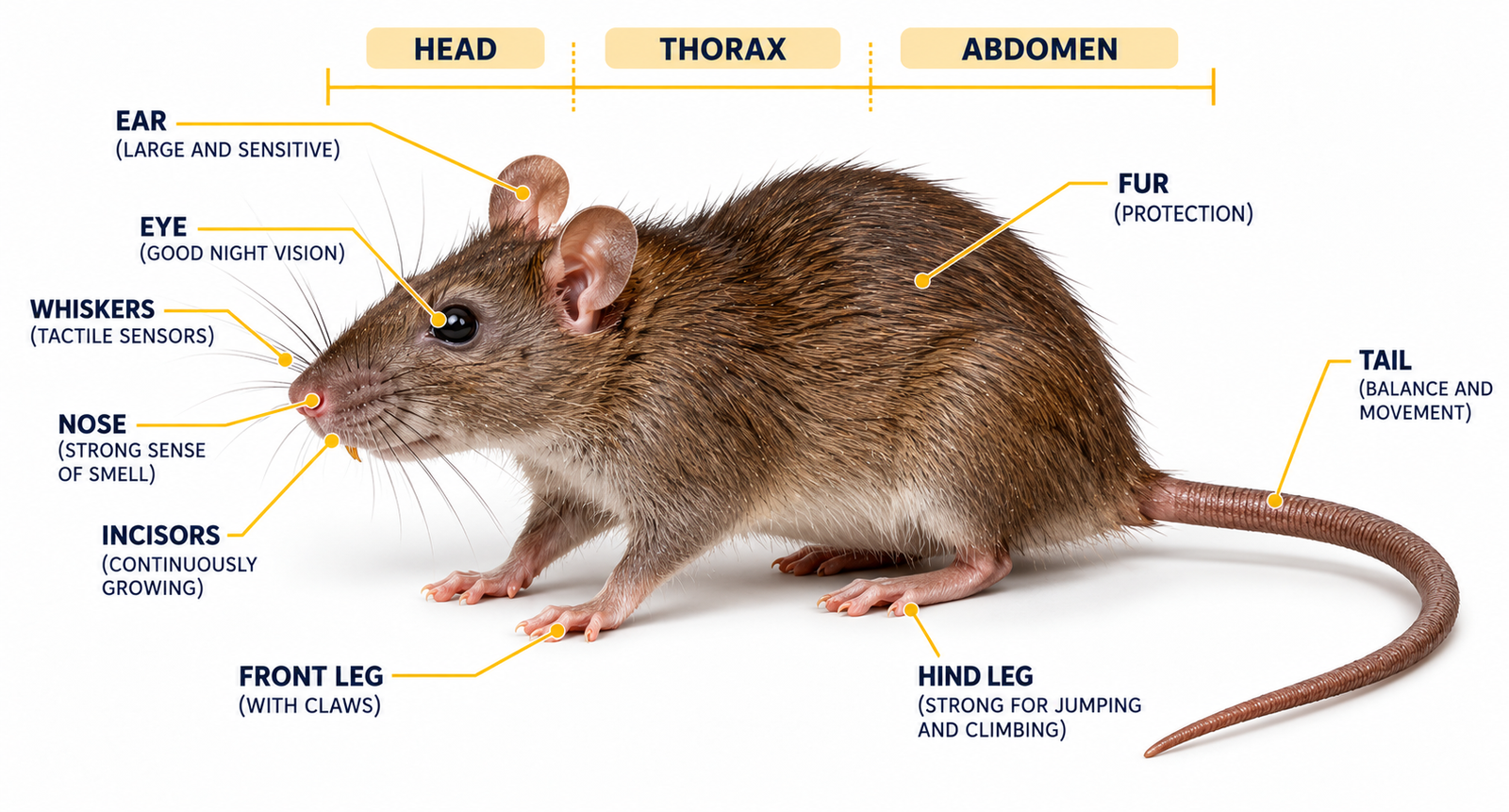
A rodent's body is divided into head, thorax, and abdomen. Large, sensitive ears and good night vision help it stay alert after dark, while tactile whiskers and a strong sense of smell guide it through tight, dark spaces. Its incisors grow continuously, which is why rats and mice gnaw constantly to keep them worn down. Clawed front legs grip and climb, while stronger hind legs power jumping, and a long tail provides balance and helps it move across ledges and wires with ease.



Rats: 20–25 cm body with a long, scaly tail, brown or black fur
Mice: smaller, 6–9 cm body, grey-brown fur, proportionally larger ears
Sharp, continuously growing front teeth used for gnawing
Move along walls and edges rather than open floor space
False ceilings, roof voids, and wall cavities
Behind kitchen cabinets and near waste storage areas
Store rooms, warehouses, and basements with stacked cartons
Drains, sewer lines, and gaps around pipework
Carry pathogens linked to leptospirosis, salmonella, and hantavirus
Droppings and urine can contaminate stored food and work surfaces
Gnawing on electrical wiring is a recognised fire-safety hazard
Fleas and mites carried on rodents can also bite people and pets
Gnaw marks on wires, boxes, or furniture
Droppings near pantries, storerooms, or under sinks
Scratching sounds in walls or ceilings, mainly at night
Dark grease marks along skirting boards from repeated travel
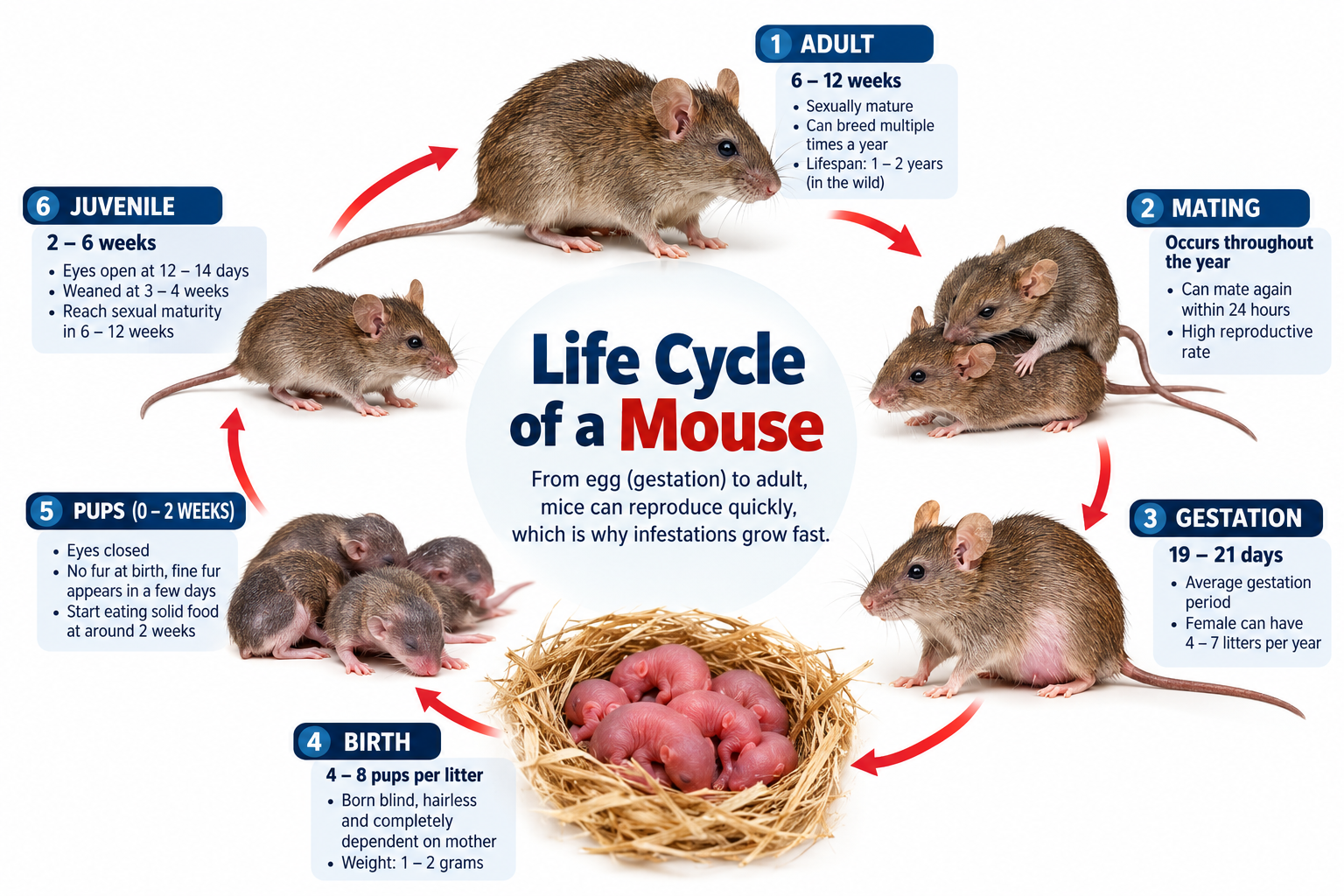
A female mouse carries her pups for a very short pregnancy — just 19 to 21 days — before giving birth to a litter of 4 to 8 pups. Newborns weigh only 1 to 2 grams and are blind, hairless, and completely dependent on their mother.
Fine fur appears within a few days, and pups start nibbling solid food at around two weeks. Their eyes open at 12 to 14 days, they are weaned by 3 to 4 weeks, and they can start breeding themselves anywhere from 6 to 12 weeks old.
Adult mice can mate throughout the year — often again within 24 hours of giving birth. In warm, food-rich conditions, the kind many Bangalore kitchens and storerooms provide year-round, a single female can produce 4 to 7 litters a year, which is why a couple of mice can turn into a full infestation within a few months. Most mice live only 1 to 2 years in the wild, so this rapid breeding cycle is how the population keeps growing.
Mice are nocturnal and do most of their foraging, gnawing, and nest-building after dark, which is why scratching or squeaking behind walls is usually heard at night rather than during the day.
Because their incisors never stop growing, mice gnaw constantly to keep them worn down — on wiring, wood, plastic, and packaging alike, which is what makes them a genuine fire and property risk and not just a nuisance.
They are omnivorous and opportunistic, eating grains, food scraps, pet food, and kitchen waste, and their strong sense of smell and memory let them return repeatedly to a reliable food source. Agile climbers and jumpers, they can squeeze through gaps barely wider than a pencil, which is how they get into kitchens and storerooms that look completely sealed.
For nests, mice look for warm, hidden spots close to food — behind kitchen cabinets, inside false ceilings, in storerooms, and along wall cavities — lining them with shredded paper, fabric, and cardboard. A mother often keeps more than one nest ready so she can move her pups if she senses danger.
Size — mice measure 6–9 cm in body length; rats are noticeably larger at 18–25 cm
Tail — a mouse's tail is thin and lightly haired; a rat's is thick, scaly, and hairless
Droppings — mouse droppings are small and rod-shaped (3–6 mm); rat droppings are larger and blunt-ended (10–20 mm)
Behaviour — mice are curious and will approach new objects, including traps; rats are more cautious and tend to avoid anything unfamiliar
Features — mice have a pointed snout and large ears relative to head size; rats have a blunter nose and proportionally smaller ears
Our rodent control team can inspect, confirm, and clear the problem — usually with a same-day appointment across Bangalore.