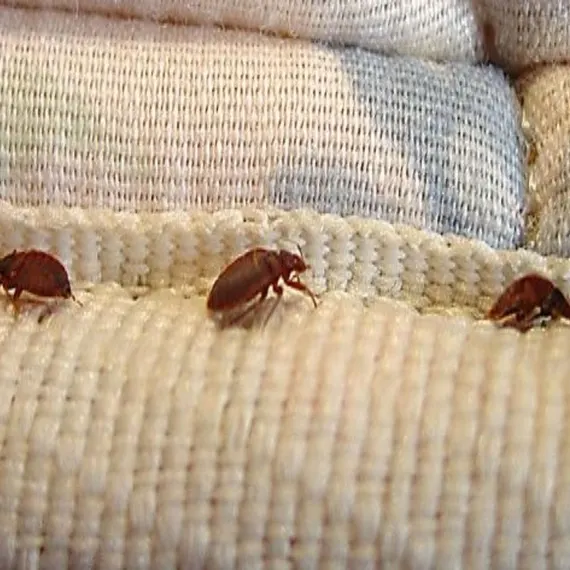
Nocturnal, blood-feeding insects that hide in mattress seams and furniture joints by day.
Cimex lectularius / Cimex hemipterus
Bed bugs (Cimex lectularius and Cimex hemipterus) are small, reddish-brown insects that feed on human blood, usually while people sleep. About the size of an apple seed, their flat, oval bodies help them hide in cracks, crevices and seams.
Bed bugs do not spread disease, but bites can cause itching, allergic reactions and sleepless nights. They are skilled hitchhikers that can travel in luggage, clothing and secondhand furniture, and can be difficult to eliminate without a thorough treatment plan.
They may go unnoticed while hiding near sleeping areas, giving an infestation time to grow and spread to other rooms or nearby apartments. Nymphs and adults can survive for extended periods without feeding; cooler conditions can prolong survival, so an empty room or a short absence may not resolve an infestation.
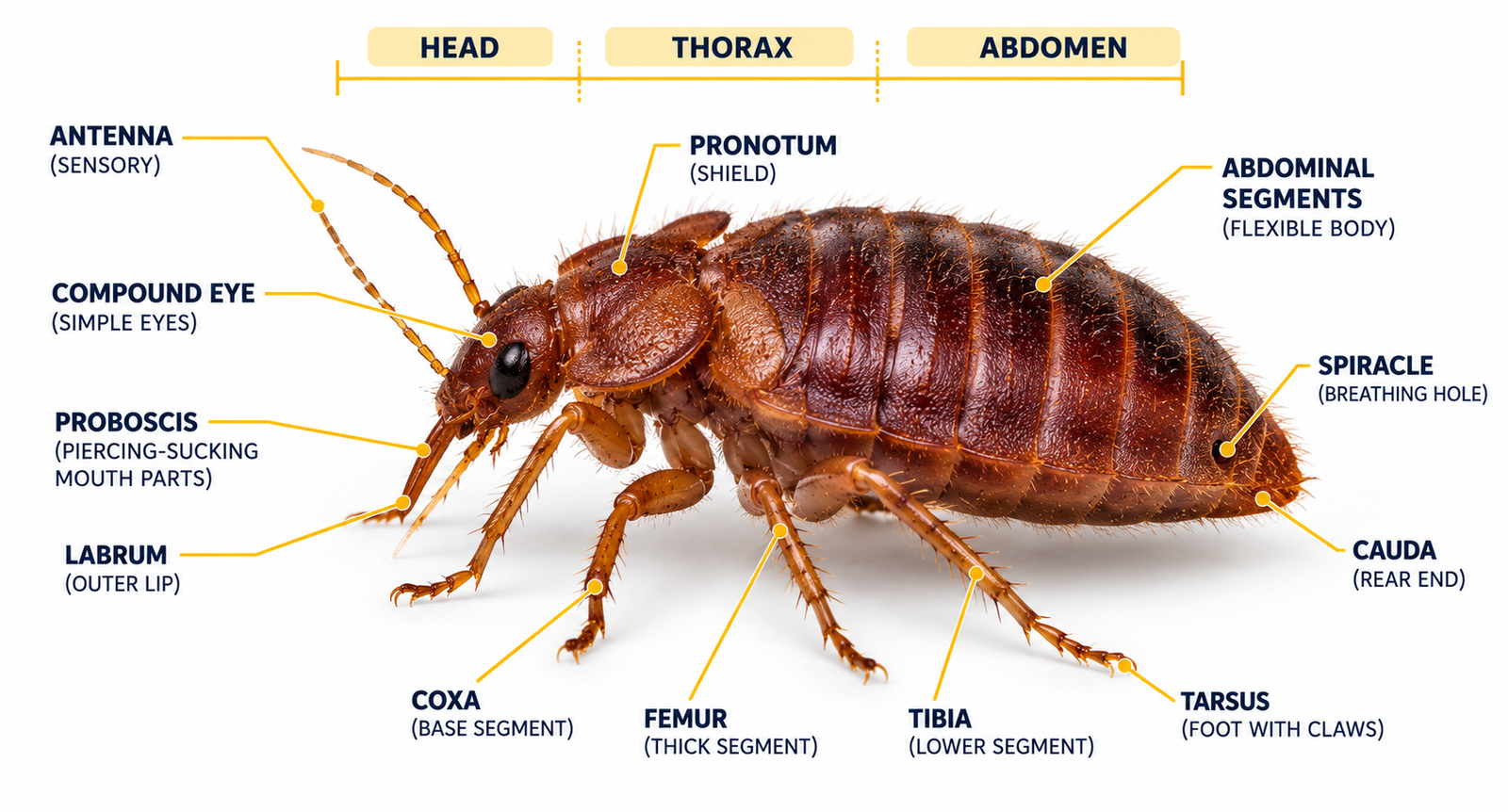
Bed bugs have a small head, a broad thorax and a segmented, oval abdomen. Their antennae and eyes are on the head, while a piercing-sucking mouthpart (proboscis) is used to feed. Six legs support movement through narrow seams and cracks. The abdomen can become longer and more swollen after a blood meal.
Reddish-brown, oval, flattened body about the size of an apple seed
Swells and turns darker red after feeding on blood
Wingless, with six legs and short antennae
Eggs are tiny, pale, and often found in seams and cracks
Mattress seams, bed frames, and headboards
Skirting board cracks and behind wall art near beds
Sofa and furniture joints, especially in shared living spaces
Suitcase linings and folded clothing after travel
Bites cause itchy, red welts, often in a line or cluster
Scratching bite marks can lead to secondary skin infections
Heavy infestations can disturb sleep and cause anxiety
Do not transmit disease, but spread quickly between rooms and units
Small, itchy bite marks in a line or cluster on exposed skin
Rust-coloured spots on sheets or mattress seams
A sweet, musty odour in the bedroom
Tiny pale eggs or shed skins near mattress seams
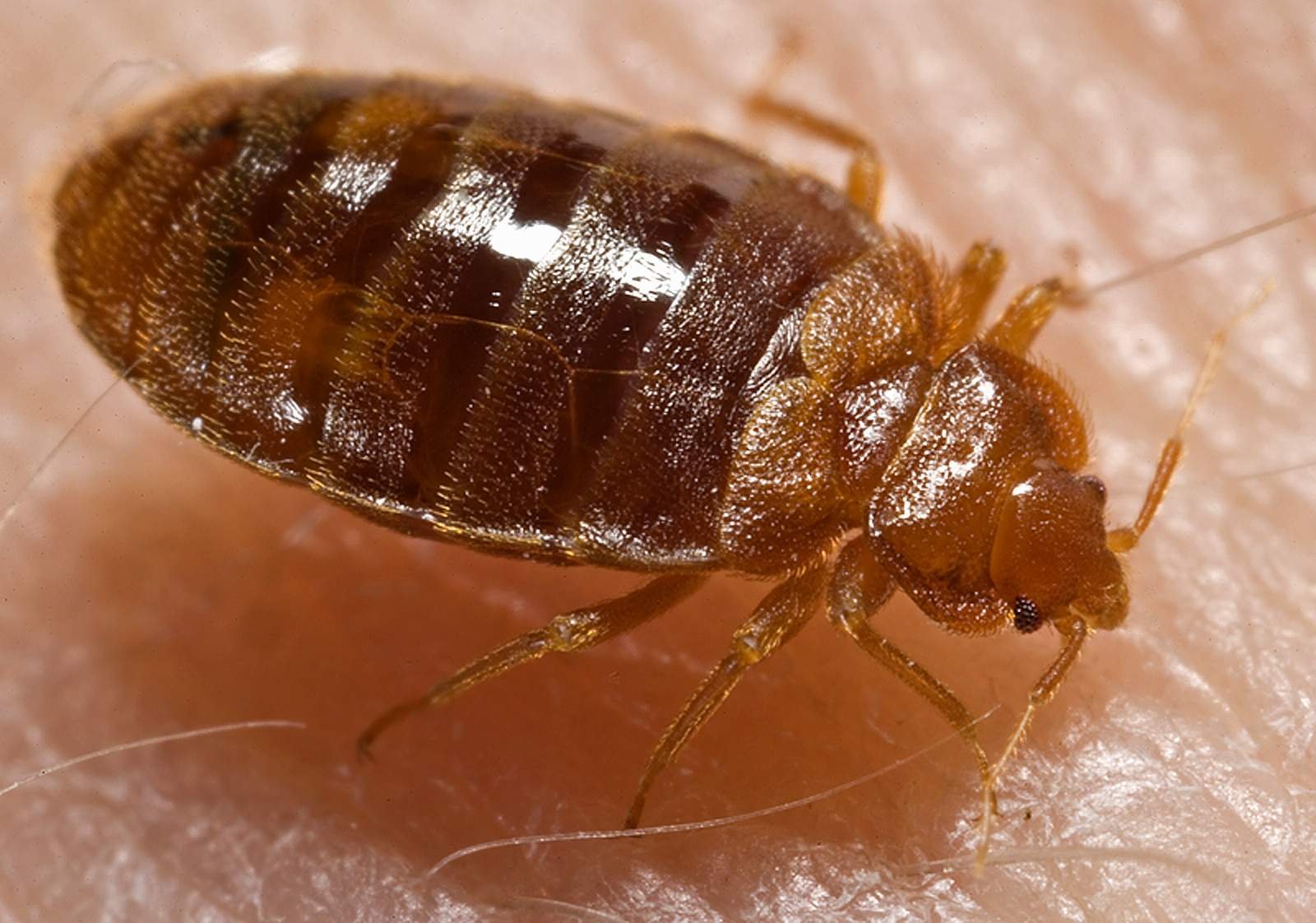
Bed bugs are often mistaken for fleas, ticks, carpet beetles and other small insects. An unfed bed bug is flat, oval and translucent to brown; after feeding, its body becomes more enlarged and takes on a deeper reddish colour. Look for insects as well as other evidence, including rust-coloured or dark spots on bedding, shed skins and pale eggs in protected seams and cracks.
Bites may appear as itchy red marks in a line or cluster, but skin reactions vary: some people react strongly and others do not react at all. Mosquitoes, fleas, allergies and skin conditions can cause similar marks, so bites by themselves cannot confirm a bed bug infestation. If you are unsure, an inspection can help identify the insect and its hiding places.
Carpet beetles: adults may have patterned wings, and their larvae are often bristly. They do not feed on human blood.
Booklice and dust mites: these are much smaller and are not shaped like the visible, apple-seed-sized bed bug.
Cockroach nymphs: they have longer antennae and a different body shape, and they move quickly. They do not bite people for blood.
Fleas: laterally flattened and built for jumping, unlike the broad, flat shape of a bed bug.
Ticks and mites: they have eight legs as adults, while bed bugs have six. Some mites and chiggers can cause itchy skin reactions.
Bat bugs: close relatives of bed bugs that can look very similar; reliable identification may require expert inspection.
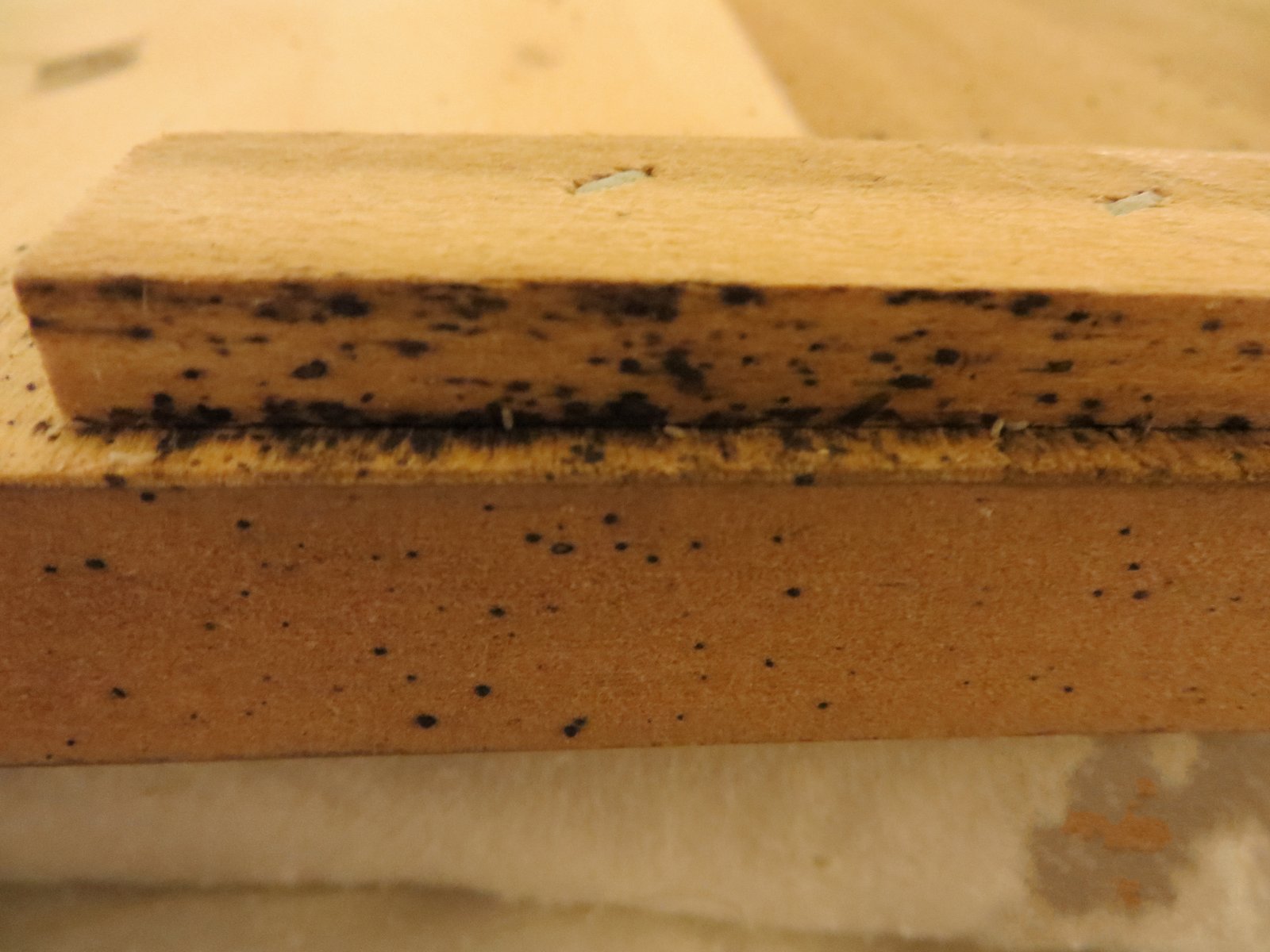
Inspect mattress seams, piping, labels and corners, as well as the box spring and nearby cracks within a short distance of the bed. Use a flashlight to check tight spaces. Look for:
Dark or rusty-red fecal spots on sheets and mattress surfaces; spots may smear when dampened.
Translucent shed skins left behind as bed bugs grow through successive stages.
Tiny pale eggs, about 1 mm long, and eggshells around seams and protected corners.
Live bugs or nymphs: small, oval and flat before feeding, becoming more swollen and reddish after a blood meal.
Before unpacking, place your suitcase on a hard surface away from the bed. With a flashlight, inspect mattress seams and labels, the headboard, bed frame, nearby nightstands and upholstered furniture. Check sheets and pillowcases for small dark or rust-coloured spots, eggs, shed skins or live insects.
Keep luggage on a rack away from the bed and walls while you inspect.
If you find suspicious signs, notify hotel staff and request another room away from the affected room.
Bites appearing after a night are not proof on their own; inspect for physical signs and report concerns promptly.
Bed bugs bite and feed on blood; they do not sting. Feeding can take several minutes, and people may not notice it happening. Bed bugs are not known to transmit disease to people, but bites can cause itching and, in some people, stronger allergic skin reactions. They are mainly active at night and tend to hide near places where people sleep, including beds and sofas. In larger infestations, they may spread to nearby furniture, clothing and other rooms.
Itchy red welts may occur in clusters or lines on exposed skin, such as the face, neck, arms and hands.
Skin reactions can appear hours or days later, and some people have no visible reaction.
Mosquito and flea bites, allergies and other skin conditions can look similar. Confirm by checking for insects, spots, eggs or shed skins rather than relying on bites alone.
Bed bugs feed on blood, most often from people while they sleep. They usually hide close to a regular host and come out to feed, then return to a protected harborage. They are not social insects and do not build a nest like ants or bees, but individuals often aggregate in suitable hiding places near a blood source.
A mated female can lay eggs over time when she has access to blood meals. The male’s mating method, called traumatic insemination, involves piercing a specialized area of the female’s abdomen and depositing sperm into her body cavity. This unusual behavior is studied by entomologists; it is not necessary to understand these details to inspect or control an infestation.
Eggs are tiny and pale, and nymphs pass through five molts before becoming adults. Each nymphal stage needs a blood meal to develop. In favourable conditions, eggs may hatch in about a week and development can take several weeks, but temperature and feeding opportunities affect the timing. Egg production and adult lifespan also vary with conditions, so fixed figures such as a 37-day life cycle or a set lifetime egg count should be treated as estimates rather than guarantees.
Bed bugs do not make a structured nest. They gather in protected harborages, often near places people rest or sleep. Around these hiding places, an inspection may find live insects, eggs, shed skins and dark fecal spots. A musty odour can occur in a heavy infestation, but its absence does not rule bed bugs out.
Bed bugs hide during the day in narrow, protected spaces, usually near a sleeping or resting area. As an infestation grows, they can spread farther from the host. Inspect seams, joints and cracks rather than relying on the room looking clean; cleanliness alone does not determine whether bed bugs are present.
Mattress seams, piping, labels and box spring joints.
Cracks in bed frames, headboards, bedside furniture and upholstered sofas or chairs.
Baseboards, carpet edges, loose wallpaper, picture frames and wall or floor gaps near resting areas.
Luggage, bags, folded clothing and secondhand furniture that can carry bed bugs between locations.
In larger infestations, protected gaps in nearby furnishings and other items in the room.
Early signs can be easy to miss. Check sleeping areas and nearby furniture for physical evidence, especially if you have unexplained bites or have recently travelled.
Fecal spots: small dark marks on mattress seams, bedding, bed frames or nearby surfaces; they may bleed or smear when dampened.
Shed skins: pale, papery exoskeletons left behind as nymphs grow.
Eggs and eggshells: tiny, pale eggs attached in protected cracks and seams.
Live bugs: flat, oval, reddish-brown adults or smaller, paler nymphs near hiding places.
Odour: a sweet, musty smell may occur in a heavy infestation, but it is not a reliable early sign.
Bites: itchy marks may appear in clusters or lines, but reactions differ and bites alone cannot identify the pest.
An infestation can spread from its first hiding places to nearby rooms and belongings if it goes unnoticed. Finding physical signs early gives an inspection and treatment plan a better chance to address the affected areas before the problem becomes more widespread. Bed bugs do not go away just because a room is empty for a short time; contact a pest professional if you find live insects or repeated signs. Kiran Pest Control can inspect the area and advise on the next steps.
Bed bug control works best when the insect is correctly identified and the affected areas are handled methodically. Some populations resist certain insecticides, so repeating a household spray can miss hidden bugs and may move them into new spots. Preparation, professional treatment and follow-up monitoring are more dependable parts of a plan.
A bite or rash cannot identify the pest by itself. If you find an insect, eggs or other physical evidence, limit movement between the affected room and the rest of the home while you arrange an inspection.
Leave larger belongings where they are. Seal smaller washable items in a bag before taking them to the dryer so insects are not carried through the home.
Use a high-heat dryer cycle for at least 30 minutes on fabrics that can safely tolerate it; laundering by itself may not eliminate bed bugs or eggs. Store finished items in a clean sealed bag.
If you vacuum seams or cracks, seal the collected debris and dispose of it in an outdoor bin.
A purpose-made mattress and box-spring encasement can close off common hiding places. Interceptors fitted beneath bed legs can help track activity over time.
Arrange an inspection with a qualified pest professional. Do not apply a pesticide to bedding, clothes or furniture unless its label specifically allows that use.
Bags, garments and used furnishings can transport bed bugs between places. A quick inspection before unpacking or bringing an item indoors can help catch signs early.
Before opening bags, look over mattress seams, the headboard, bed frame and nearby furniture for insects, cast skins or dark spotting.
Keep bags closed on a luggage stand, away from the bed. Report any evidence to the property and ask staff to move you away from the affected room.
Check suitcase seams and pockets before storing the bag; keep it off beds and upholstered furniture until inspected.
Where fabric care instructions permit, tumble-dry travel clothes on high heat for at least 30 minutes. Place treated clothes in a clean bag.
If you suspect the luggage itself has been exposed, keep it apart from sleeping areas and ask a pest professional about suitable treatment.
Inspect seams, joints, screw holes and undersides of used beds, sofas and chairs before accepting delivery.
Examine pre-owned clothes and fabric goods before mixing them with household laundry; use a high-heat dryer when the item allows.
If you spot evidence, keep the item contained and get treatment advice. Do not spray household products on fabrics or furniture unless the label specifically lists that application.
In June 2026, The New Indian Express reported complaints about bed bugs in one ward at Victoria Hospital. A hospital official said the affected ward received cleaning and pest-control treatment and that the issue had been resolved. The report also noted that personal bedding and belongings can carry insects into shared sleeping spaces, underscoring why inspection matters in both homes and institutions.
Bed bugs hide in mattress seams, bed frames, headboards, furniture joints, skirting cracks and other narrow spaces. Eggs and insects can be missed by casual cleaning or a single surface spray. Some bed bug populations also show resistance to certain insecticides, which is one reason treatment needs to be planned carefully. A thorough inspection, suitable treatment of hiding places and follow-up checks are often needed to address an infestation and reduce the chance of it spreading.
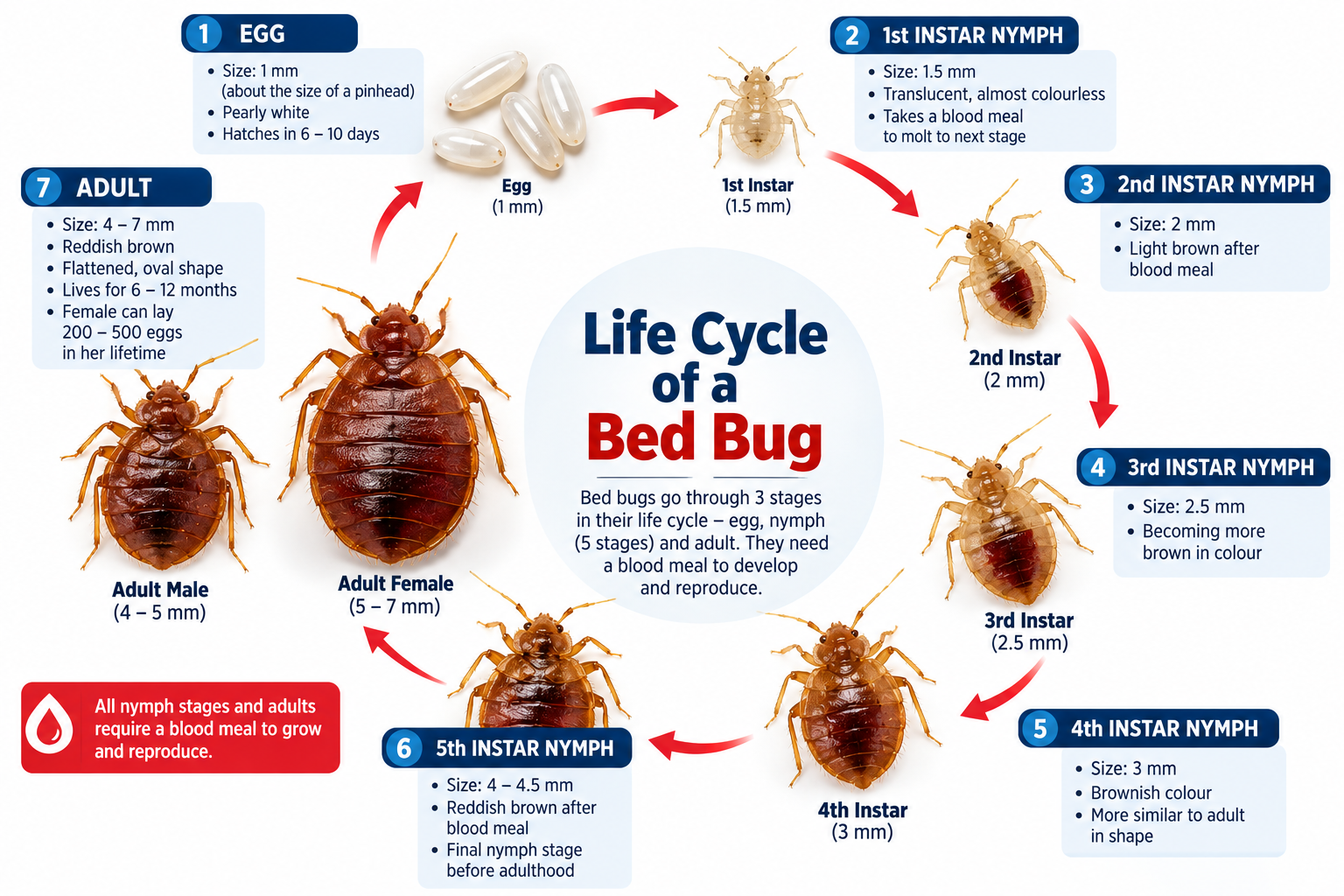
Bed bugs develop through three main stages: egg, nymph and adult. Nymphs pass through several growth stages and need blood meals to develop. Under favourable conditions, development can be rapid, but temperature and access to a host affect how quickly it proceeds. Eggs and hidden nymphs can be difficult to reach, so treatment and follow-up should account for the full life cycle.
Bites alone cannot confirm bed bugs. Contact Kiran Pest Control for an inspection and a treatment plan based on the signs and hiding places found.